Potted Azalea Care: Growing Methods and Precautions
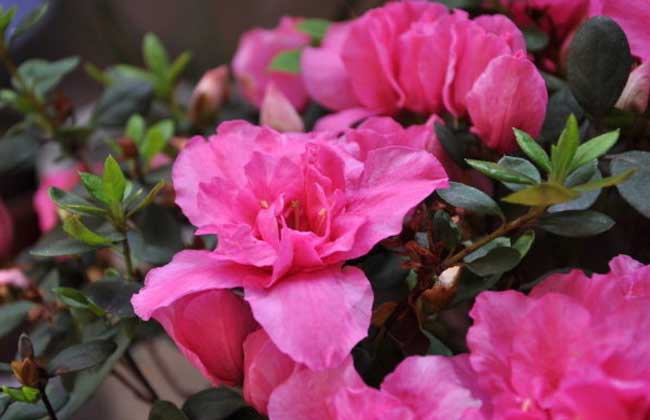
Azalea, also known as shan zhizhu, yingshanhong, zhaoshanhong and so on, is an evergreen or semi-evergreen shrub of the genus Rhododendron in the family Ericaceae, with bright red corollas. It is regarded as a famous flowering plant with high ornamental value and is cultivated in parks all over the world. In China, Jiangxi, Anhui and Guizhou have azalea as their provincial flower. Let's take a look below at how to care for a potted azalea!
Azalea Growth Habits
Azaleas prefer a cool, moist, well-ventilated semi-shaded environment. They fear both intense heat and severe cold. The optimum growth temperature is 12°C to 25°C. When the summer temperature exceeds 35°C, new shoots and new leaves grow slowly, and the plant enters a semi-dormant state. In summer, protect from sun and provide shade; in winter, pay attention to keeping warm and preventing cold. Avoid blazing sun exposure; azaleas are suited to growing under diffused light of low intensity. If the light is too strong, tender leaves are easily scorched, and the edges of both new and old leaves become burnt, which in serious cases can cause the plant to die. In winter, azaleas grown in the open ground need measures to protect against cold so they can overwinter safely.
How do you care for a potted azalea?
1. Soil: Potted azaleas should be planted in loose, humus-rich acidic soil. When planting azaleas, make sure the potting soil is rich in humus and acidic. In addition, make sure the soil is loose, well aerated and well drained. Never use clay or alkaline soil. The pH value of the acidic soil should be kept between 5.5 and 6.5.
2. Temperature: For potted azaleas, maintain indoor temperature. There are many azalea varieties, and their temperature requirements differ. Most azaleas like a warm environment, with a suitable temperature between 15°C and 28°C. In winter, room temperature generally should not be lower than 10°C. When the temperature is too high, azaleas will also stop growing, so in summer it is best to place them in a cool, ventilated spot; in winter, place them indoors and, if necessary, raise the indoor temperature to prevent cold damage.
3. Watering: Potted azaleas should be watered more during the flowering period and in summer. Azaleas naturally like a moist environment, and during the flowering period from April to June they need even more sufficient water, so water once every evening. In summer, when the climate is hot and dry, evaporation is greater, so water once a day as well. In spring and autumn, watering once every 4 days is enough. In winter, azaleas enter dormancy, so watering can be reduced.
4. Sunlight: Potted azaleas must not be exposed to excessive sun. Azaleas cannot be exposed to direct sun; when placed in the sun, some shade should be provided to prevent scorching the branches and leaves. However, the specific amount of light should vary with the season. For example, in spring and autumn, when sunlight is not strong, about 20% shading is enough; during the flowering period and in summer, 60% shading should be provided.
5. Water quality: Potted azaleas are best watered with natural water. Good natural water sources include fish tank water, rainwater, pond water, and river water. Usually you can store some "aged water" (kunshui); aging water means placing the water and the azalea in the same temperature location for one or two days, so the water reaches the same temperature as the soil and also retains more nutrients.
6. Fertilizing: Potted azaleas should be fertilized lightly and frequently. They like fertilizer but dislike concentrated fertilizer, so do not apply too much at one time. In February to March, to promote the growth of branches and leaves, apply a dilute fertilizer mainly of nitrogen and potassium, once every 10 days. April to June is the flowering period, when phosphorus fertilizer should be the main component and potassium fertilizer supplementary, applied once every 5 days. When the temperature is above 28°C, stop fertilizing. In winter, fertilize less as well. In daily care, apply some alum fertilizer water or add a little ferrous sulfate to the water to maintain the acidity of the potting soil.
7. Repotting: Potted azaleas should be repotted in time. When the azalea grows larger, it should be repotted promptly to avoid affecting growth. Generally, a 5-cun pot is suitable for a 5-year-old plant, a 6-cun pot for a 7- to 10-year-old plant, and an 8-cun pot for plants 11 years or older. When repotting, add an appropriate amount of slow-release fertilizer.
8. Pruning: Pruning and shaping is an important measure in routine maintenance work. It can regulate growth and development, thereby promoting vigorous growth. In routine pruning, cut off a small number of diseased branches and weak, old branches, and according to the shape of the canopy remove some overly dense branches to increase ventilation and light penetration, which benefits plant growth. For azalea gardens, inspections should be made frequently; if dead branches or diseased branches are found, they should be removed promptly to reduce the spread of pests and diseases among the azaleas.
9. Bud removal: For potted azaleas, buds should be removed promptly at the bud stage so that nutrients are supplied in a concentrated way, promoting larger flowers and richer color. Pruning branches is generally done in spring and autumn, cutting off crossing branches, overly dense branches, overlapping branches, and diseased or weak branches, and promptly removing faded flowers. Shaping generally follows the natural tree form with slight artificial adjustment, freely and according to the tree's form.
Azalea Pest and Disease Control
1. Brown spot disease
[Symptoms] Brown spot disease is a major disease of azaleas. When the disease first appears, small brown spots appear on the leaf surface and gradually develop into irregular large spots. Many small black or grayish-brown dots form on the diseased spots, causing the affected leaves to turn yellow and fall off, affecting flowering that year and the development of flower buds the following year. This disease often occurs during the plum rain season when humidity is high.
[Control] Usually pay attention to giving the plants ventilation and light, do not let humidity become too high, and apply more organic fertilizer and a mixed fertilizer of nitrogen, phosphorus and potassium to strengthen the plant's resistance to infection and its growth ability. If diseased leaves are found, remove them promptly and burn them in a concentrated way. In the early stage of the disease, spray 0.5% Bordeaux mixture or 0.4 Baume degree lime-sulfur mixture, and add 4% flour to increase adhesion. Leaf spot disease and black spot disease can also be treated by the same method.
2. Chlorosis
[Symptoms] Iron-deficiency chlorosis often occurs in areas where the soil is somewhat alkaline. In mild cases, only delayed greening of the plant appears; in severe cases, the leaf tissue can all turn yellow, and the leaf edges become scorched and withered. When the disease occurs, it is most obvious on the leaves at the top shoots of the plant, and it is generally caused by internal iron deficiency.