Cultivation Techniques and Planting Management Methods for Malus robusta
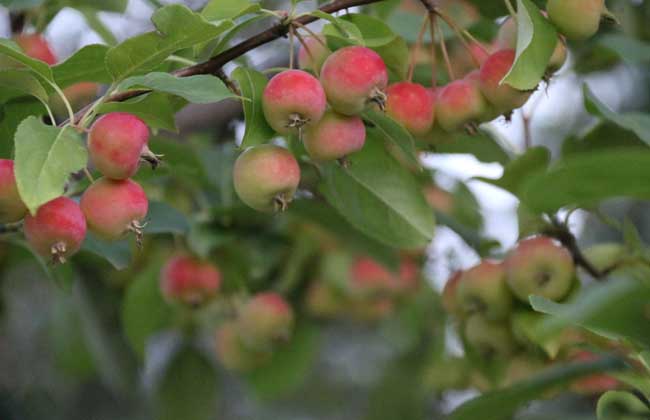
Malus robusta is a rare fruit with a long cultivation history in China, also known as Huailai crabapple, Haihong, etc. It is a deciduous tree in the Rosaceae family, genus Malus. The fruit is large with thin skin, and a single fruit weighs 8-14 grams. It is named for its flattened-round fruit with 6-8 distinct ridges. Due to various factors, the areas on Earth where crabapples are concentrated for cultivation are very small. Let us take a look at the cultivation techniques for Malus robusta!
Growth Habits of Malus robusta
The Malus robusta tree is robust and easy to manage, with advantages including a well-developed root system, numerous fibrous roots, cold resistance, drought resistance, waterlogging resistance, saline-alkali resistance, pest and disease resistance, barren tolerance, water-wetness tolerance, high survival rate of transplanted seedlings, rapid growth, and suitability for various soil types. It has wide adaptability and can be planted on flat land, hillsides, hilly areas, and sandy wastelands. Under normal management, its lifespan can reach over 180 years.
Propagation Techniques for Malus robusta
1. Grafting: Rootstock is generally seedling stock, and both branch grafting and bud grafting can be used. Branch grafting is carried out before spring germination, using cut grafting or cleft grafting. Select well-developed 1-year-old branches as scions, take the middle section, and after grafting, mound fine soil to cover the scion. Bud grafting is carried out in autumn from July to September, mostly using the "T" shaped method. About 10 days after grafting, if the bud is fresh and the petiole falls off at a touch, it indicates successful grafting. After a few days, the binding can be cut off.
2. Division: Mostly carried out in early spring before germination or after leaf fall in autumn and winter. Dig out suckers sprouting from the root crown, divide them into several individual plants, or take 2-3 rooted suckers as a cluster for transplanting. When dividing, care should be taken to retain the fibrous roots of the suckers to ensure survival after planting. After division and planting, water thoroughly once immediately, pay attention to moisture conservation, and provide shade if necessary.
3. Layering: Layering is carried out in spring. For small plants, branches can be bent to the ground and pressed into the soil. For large plants, the high-pressure method is used. The part where soil is pressed should be cut with a sharp knife, keeping the soil moist. After roots develop, separate from the mother plant and plant separately.
4. Root Cuttings: Root cutting propagation is mainly carried out when transplanting and digging seedlings. Cut thicker main roots into 10-15 cm segments, shallowly bury them in soil, and cover with grass to retain moisture. Survival is easy.
Cultivation Techniques for Malus robusta
1. Soil: Malus robusta is generally planted in the ground, but can also be potted for bonsai. Plant in spring. Because it dislikes waterlogging, it should be planted in a slightly elevated, well-drained, sunny location. The soil should be neutral to slightly alkaline, with a pH value not lower than 7. The soil should be loose, but not overly fertile, as excessive fertility can cause excessive vegetative growth and reduced flowering. The planting hole should be determined according to the size of the root system, not too deep or too large, and preferably able to spread out the root system. The planting depth should be 10 cm from the ground surface. It is best to plant with a soil ball, and water thoroughly after planting.
2. Light: Malus robusta is suitable for growing in an environment with sufficient light, and grows poorly in shaded environments. If potted as a crabapple tree, it should be placed in a well-lit location during the growing season. In winter, it will not suffer cold damage even at -15°C and can overwinter outdoors in the open. However, in exceptionally cold winters, cold protection measures are needed.
3. Fertilizer and Water: Watering for Malus robusta is done in conjunction with fertilization. After leaf fall each autumn, apply 1 heavy fertilization to replenish nutrients consumed by flowers and fruits, preferably with decomposed organic fertilizer. At the same time, combine with winter irrigation. Before spring buds sprout, apply 1 application of organic fertilizer and water thoroughly once. The fertilization method in autumn and winter varies with tree age. For young trees, apply fertilizer in a ring trench, with the ring within 100 cm from the tree base. For mature trees, dig radial trenches for fertilization. For old trees, combine with intertillage and weeding, and broadcast organic fertilizer under the canopy. After application, turn the fertilizer into the ground 30 cm deep. After flowers fade, apply 2 additional applications of phosphorus and potassium fertilizer to ensure a certain fruit-setting rate. At the same time, pay attention to watering.
4. Pruning: Malus robusta flower buds are mostly formed by differentiation of terminal buds, and medium and short fruit branches are the main flowering branches, so medium and short fruit branches should be retained. Long branches should be shortened, and at the same time, overly dense branches, dead branches, and pest- and disease-infected branches should be pruned. Then prune according to the desired tree shape. If you want the crabapple canopy to be full and rounded, thin out dense areas and leave sparse ones, cutting away overly dense branches, while for areas with sparse branches, prune downward to encourage more lateral branches and fill in the gaps.