Detailed Explanation of Key Technical Points for Organic Rice Cultivation
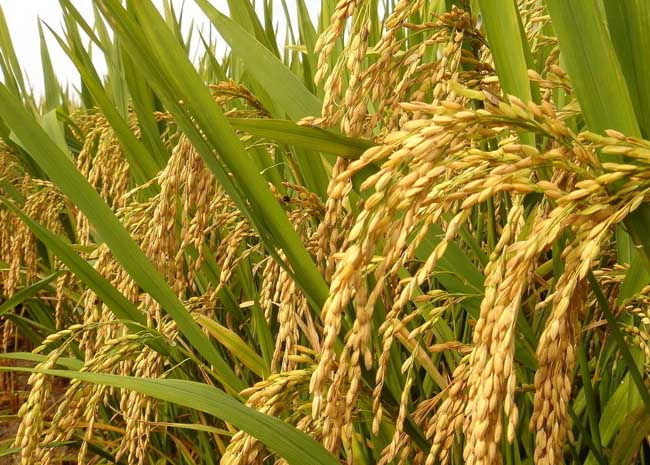
Organic rice refers to rice grown without the use of chemically synthesized pesticides, chemical fertilizers, growth regulators and other such substances; instead, it follows natural laws and ecological principles and adopts a series of sustainable agricultural techniques to maintain a continuous and stable agricultural growth process. Growing organic rice delivers significant ecological, economic and social benefits. It can reduce soil erosion, reduce environmental pollution from pesticides and chemical fertilizers, protect the agricultural environment and raise producers' incomes. It supplies society with natural, pollution-free and hazard-free rice. It meets people's needs and improves human health.
Conditions for Organic Rice Cultivation
1. Soil management
Through measures such as returning straw to the field, adding organic fertilizer and biological bacterial fertilizer to the field, and deep and shallow plowing and turning, the soil plow layer is activated, creating a favorable growing environment for organic rice.
2. Nutrient management
Fertilization is arranged according to the nutrient requirements of rice. Organic fertilizer and biological bacterial fertilizer can be used as base fertilizer, while attention should also be paid to applying seed fertilizer and carrying out foliar top dressing, so as to supplement nutrients in good time during the growth period when nutrient demand arises.
3. Plant protection
Before sowing rice, seeds can be soaked in organic biological preparations to prevent and control seedling-stage diseases. When diseases occur during the growing period, biological pesticides should be chosen for control; at the same time, foliar bacterial fertilizer can be added to improve the rice's resistance and prevent further spread of diseases and pests.
Weeds in the paddy field can be controlled by manual weeding, and the use of chemical agents is completely prohibited.
Organic Rice Cultivation Techniques
1. Plot selection
In the process of organic rice cultivation, plot selection is very critical. The soil environment of the selected plot must meet the national GB15618—1995 Grade I standard, the air conditions must meet the national Grade I quality standard, and the water quality must meet the Grade III standard of the Environmental Quality Standard for Surface Water GB5084—92.
Organic rice cultivation plots are generally selected from plots with good fertility, convenient irrigation and drainage, and natural isolation from other plots. Plots with pollution sources nearby are prohibited for organic rice cultivation.
2. Variety selection
In the process of organic rice cultivation, variety selection is very important. For organic rice production, varieties with medium maturity, strong resistance, wide adaptability and high and stable yield should be chosen. The seeds must be screened: plump grains, uniform grain shape, free of weed seeds, and free of diseases and pests.
3. Seedling raising techniques
Before sowing rice, the seeds must first be sun-dried and selected with salt water, then soaked in 1% quicklime to avoid seed-borne bacteria. The surface of the seedling bed should be plowed to a depth of more than 10cm to ensure the bed soil is level and finely crumbled; the bed width is generally 1.8-2.2m.
The base fertilizer for the seedling bed is generally high-quality organic fertilizer applied at 7.5-10kg/m2 to enrich the soil, mixed with the seedling bed soil. Sowing and seedling raising begin when the temperature is 5degC.
The sowing rate varies with the sowing method. The seed rate for conventional seedling raising is generally 1759 grains/m2. For plastic film perforated seedling raising it is 2509 grains/m2. For nutritional pot seedling raising it is 709 grains/tray.
4. Transplanting work
Before transplanting rice, preparatory work must be done well. First, the main field should be prepared in advance. It is best to irrigate the main field ahead of time to promote the germination and growth of weed seeds, then carry out mechanical harrowing to remove weeds that have already grown. After the main field is prepared, transplanting can begin once the temperature is steadily above 12degC.
Field planting of rice requires a reasonable density to ensure the quality of the seedlings. Transplanting should be shallow, straight, uniform, stable and sufficient.
5. Seedling field management
The focus of rice seedling field management is regulating temperature and controlling water. To make the seedlings grow slowly and vigorously, it is necessary to grasp the critical temperatures for seedling growth: 12degC for rice roots and 15degC for rice leaves; below these temperatures growth stops.
The optimum temperature for seedling growth is generally 22-25degC, at which assimilation is vigorous. Within the optimum temperature range, at a lower temperature, especially with the stem growth point at a lower temperature, the seedlings grow vigorously, with high dry matter weight and high plumpness (dry weight/plant height ratio). If the temperature during the seedling stage is too high, often around 30degC, the seedlings will grow excessively tall and spindly, with low dry weight, low plumpness and poor root development. If the temperature during the seedling stage is too low, often below 10degC, albino seedlings and bacterial wilt are prone to occur.
Rice seedlings grow fastest between 0:00 and 7:00, so the seedling bed temperature (15-28degC) must be maintained to promote seedling growth. Pay attention to the day-night temperature difference: it should not be too high during the day and should be appropriately lowered at night, which helps the seedlings grow slowly and vigorously. For dry seedling raising, moisture must be well controlled; with little soil moisture, dry-grown roots develop well and aboveground growth is slow, producing age-appropriate vigorous seedlings with dry-grown roots, wide stem bases, early overweight, standard plant height and non-drooping leaves.
Field Management of Organic Rice
1. Soil fertilization
The soil can be enriched through the technique of returning straw to the field, that is, during mechanical harvesting in autumn, the straw and rice stalks are fully chopped and evenly scattered in the main field, then deep-plowed to mix the straw and rice stalks evenly with the soil. Before rotary tillage, fully decomposed farmyard manure is applied as a base fertilizer.
2. Weeding in the main field
Soaking the main field can be done by flood irrigation, which can float away weed seeds in the soil. Generally, about 15d before transplanting, the main field is plowed and flooded with a large amount of water to kill the old grass in the field; 2-3d before transplanting, the main field is plowed again to kill newly germinated weeds. If germinating weeds are found during rice growth, they should be pulled out by hand in good time.
3. Water management
From young panicle differentiation to before heading, adopt the shallow-wet-dry intermittent irrigation technique; after heading, use shallow water moist irrigation to promote root growth. In well-irrigation areas, adopt the warming irrigation technique and avoid letting well water enter the field directly. The weeds on the field ridges should be cut clean and the barnyard grass ears in the field removed completely, which can both prevent and control diseases and pests and ensure direct sunlight on the water surface, raising the water temperature.
At the same time, water should be cut off early at the right time to promote maturity. Generally, water can be stopped at the yellow-ripening stage (30d after heading); drain early in low-lying land and drain appropriately later in leaky land.
4. Disease control
Common rice diseases include bakanae disease, rice blast, sheath blight and rice false smut. By cultivating vigorous seedlings, maintaining reasonable dense planting, scientifically regulating fertilizer and water, draining the field at the right time, and controlling the peak seedling number and other methods, the resistance of the plants can be enhanced and the occurrence of diseases fundamentally controlled.