How to prevent and control rice damping-off? These techniques must be mastered
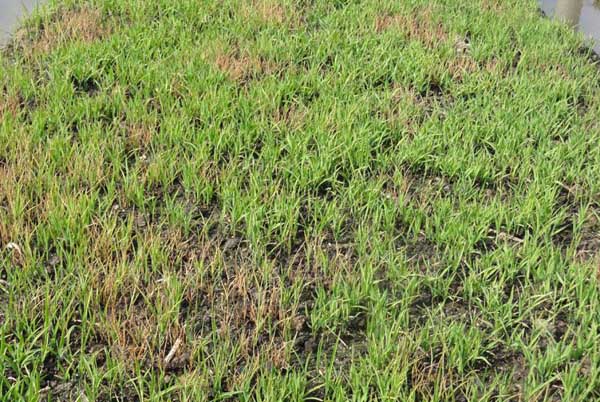
Rice damping-off is one of the most important diseases in dry-raised rice seedlings. Its main causes are excessively low temperature, overly large temperature differences, alkaline soil, insufficient light leading to thin and weak seedlings, and excessive seeding rate. The field symptoms are mainly withering of seedlings after emergence, easy breaking when pulled, rotting at the stem base, a rotten pear smell, and entire patches dying in severe cases. Diseased plants often have red mold-like growth at the base.
The occurrence period of rice damping-off
When seedlings are at the 2-3 leaf stage, the endosperm is nearly exhausted, and cold resistance is at its weakest. If the daily average temperature is below 12-15~C, growth is inhibited, disease resistance is significantly weakened, and pathogens easily invade. At this time, if low temperature and continuous rain occur, damping-off is most likely to develop. Therefore, the 2-3 leaf stage of dry-raised seedlings is the main period for damping-off epidemics.
The damaging symptoms of rice damping-off
1. Bud rot, occurring before emergence or just as seedlings emerge. The young buds or young roots of seedlings turn brown, and diseased buds twist, rot, and die. Mold layers form on the seeds or at the base of the buds.
2. Needle rot, mostly occurring from the needle stage to the 2-leaf stage. The central leaves of diseased seedlings turn yellow and withered, the leaves do not unfold, the base turns brown, sometimes brown spots appear on the leaf sheaths, and diseased roots gradually turn yellow-brown. Mold layers form at the junction between the seed and the seedling base, the stem base is weak and easily broken, and seedlings in the seedbed often occur and die in clusters and patches.
3. Yellow wilt and green wilt, mostly occurring around the 2.5-leaf stage of seedlings. The leaf tips of diseased seedlings do not exude water, the leaves turn yellow and withered and wilt, spreading rapidly outward in patches, and the seedling base and roots break very easily when pulled, with leaves curling. When the weather suddenly clears, seedlings rapidly show green wilt, and the central leaves and upper leaves "curl." The seedling leaves remain green, and finally the whole plant wilts. After transplanting, patches of green withered death appear in the main field.
The causes of rice damping-off
1. Climatic conditions. Low temperature, continuous rain, and insufficient light are important conditions that induce damping-off, among which low temperature has the greatest impact. Under low-temperature conditions, the disease resistance of seedlings decreases, which favors disease occurrence. Excessively low temperature has little effect on pathogen development and infection, but it is unfavorable for seedling growth, causes poor root development, and reduces nutrient uptake capacity, further promoting disease development. If the weather remains low-temperature or turns suddenly clear after continuous rain, soil moisture is insufficient, seedling physiology is disturbed, and disease occurrence worsens.
2. Infection cycle. Rice damping-off is a soilborne disease. It is caused by infection by multiple pathogens, mainly including Fusarium oxysporum, Fusarium graminearum, Fusarium equiseti, Fusarium solani, Fu moniliforme in the genus Fusarium, order Tuberculariales, subdivision Deuteromycotina, as well as Rhizoctonia solani in the genus Rhizoctonia, order Mycelia Sterilia, and also fungi such as Pythium spp. in the genus Pythium, order Peronosporales, subdivision Mastigomycotina. Fusarium generally overwinters as mycelium and chlamydospores in the diseased residues of various hosts and in soil. When environmental conditions are suitable, it produces conidia that spread through airflow and cause infection and damage. Rhizoctonia overwinters as mycelium and sclerotia in host diseased residues and in soil, and spreads among seedlings by mycelial growth to cause infection and damage.
3. Seedling quality. Rice damping-off pathogens such as Rhizoctonia and Fusarium are widely present in soil and are all weak parasites, generally able to live saprophytically in water or soil. These pathogens are not highly pathogenic and generally do not easily infect robust seedlings. Only when adverse weather and improper management cause weak seedling growth and reduced resistance can various weak parasites take advantage and spread. Therefore, poor seedling quality, weak growth, and poor disease and stress resistance are the direct causes of damping-off.
Integrated control of rice damping-off
Damping-off control should focus on prevention, combining prevention and control.
1. At the 1-2 leaf stage of rice seedlings, use 50 ml of Aolike (Qingku Liker) + 15 ml of garlic oil, dilute with 15 kg of water and spray, once every 5-7 days, for 2 consecutive sprays. To enhance plant disease resistance, it is recommended to add 25 ml of foliar fertilizer (Wofengsu) per 15 kg of water when spraying. In the middle and late stages of disease occurrence: use 100 ml of Aolike Qingku Liker + 15 ml of garlic oil for spraying, once every 3 days, for 2 to 3 consecutive sprays.
2. Carefully select seeds and sun them. Improve sprouting techniques, prevent seed injury, and improve seed vitality and disease resistance.
3. Sow at the appropriate time, and do not sow too densely. Sowing should be done when the temperature steadily passes 6°C, and do not blindly rush early sowing. Theoretically, the sowing density should be 300 g/m2. However, in actual production, farmers often increase the sowing rate to save production costs such as agricultural film, as well as considering emergence rate and the use of transplanting machines. Even so, the sowing rate absolutely must not exceed 500 g/m .
4. Seedbed management. Do a good job in cold prevention, heat preservation, ventilation, and seedling hardening, improve seedling disease resistance, and prevent and reduce the occurrence of damping-off and bakanae disease.
5. Strengthen field management. Do a good job in cold prevention, heat preservation, ventilation, and seedling hardening, achieving early protection (heat preservation before emergence), mid-stage control (temperature control from emergence to the 3-leaf stage), and later hardening (temperature adjustment from the 3-leaf stage to before transplanting). Advocate sparse transplanting and early seedling raising, and control temperature and humidity to prevent excessive growth. At the 1-leaf-1-heart stage, maintain a temperature of 25-30~C and water as little as possible. After the 2-leaf stage, it must gradually adapt to cold conditions. At the 3-leaf-1-heart stage, the temperature should not exceed 25°C, and soil moisture should be sufficient but not excessively wet. After the 3-leaf stage, the film should be uncovered during the day for ventilation and hardening. At night, if there is no frost, it is best to also uncover the film so the seedlings are exposed to low temperatures. In this way, strong seedlings with high cold resistance can be cultivated.