What are the control measures for wheat blossom midge?
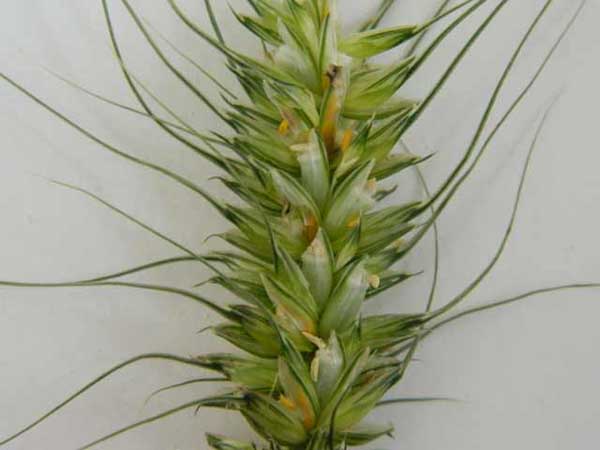
The wheat blossom midge is a worldwide pest, widely distributed in the major wheat-growing countries of Asia, Europe and the Americas. In China, wheat blossom midge is also widely distributed in the major wheat-producing regions. There are mainly two species of wheat blossom midge in China, namely the red blossom midge and the yellow blossom midge. The red wheat blossom midge occurs mainly on both banks of the Yellow River in the plains, while the yellow wheat blossom midge occurs mainly in plateau regions and high mountain areas.
Morphological characteristics
The female adult of the red wheat blossom midge is 2-2.5 mm long, with a wingspan of about 5 mm, and the body is orange-red. The forewings are transparent, with 4 well-developed veins, and the hindwings are reduced to halteres. The antennae are slender, with 14 segments; in the male, the middle of each segment is constricted so that each segment is gourd-shaped, and the swollen parts each bear a ring of long whorled hairs. In the female, the antennae are bead-like, bearing a ring of short whorled hairs. The male is about 2 mm long. The egg is 0.09 mm long, oblong, and light red. The larva is about 3-3.5 mm long, oval, orange-yellow, with a small head, legless, maggot-shaped, and has a “Y-shaped” sternal spatula on the ventral surface of the prothorax, with a forked front end and a deep concavity. The pupa is 2 mm long, an obtect pupa, orange-brown, with 2 short white hairs and a pair of long respiratory tubes in front of the head.
The yellow wheat blossom midge female is about 2 mm long and bright yellow. The egg is 0.29 mm long and banana-shaped. The larva is 2-2.5 mm long, yellow-green or ginger-yellow, with a smooth body surface and a sternal spatula on the ventral surface of the prothorax; the front end of the sternal spatula is shallowly curved and split, and the posterior end of the abdomen bears 2 protuberances. The pupa is bright yellow, with a pair of relatively long hairs at the head end.
Damage symptoms
The larvae lurk inside the glumes and suck the sap of the wheat grains that are filling, causing shriveled grains and empty husks. The wheat blossom midge damages floral organs, kernels and/or wheat grains as larvae, and is a destructive pest.
Damage characteristics
Both species of blossom midge have one generation per year, and under adverse environmental conditions the larvae have the habit of diapause for many years, so there are also cases of one generation every several years. The mature larvae overwinter and aestivate as round cocoons in the soil. In the Huang-Huai River basin, in early to mid-March the overwintering larvae break the cocoons and rise to the soil surface, in mid-to-late April a large number pupate, and the peak emergence of pupae is from late April to early May. After the adults appear, it is exactly the wheat heading and flowering stage, and then they lay eggs in large numbers (the yellow blossom midge is slightly earlier than the red wheat blossom midge). The yellow blossom midge mostly lays eggs inside the inner and outer glumes and on their side lobes of newly headed wheat plants, 5-6 eggs per site, with an egg period of 7-9 days. The red blossom midge mostly lays eggs between the glumes and spikelets of wheat ears that have headed but not yet flowered, 3-5 eggs per site, with an egg period of 3-5 days. After the larvae hatch, they immediately enter the glumes and attach to the ovary or the just-filling wheat grains to suck sap and cause damage. After the mature larvae finish feeding, they crawl onto the glumes and awns, and with raindrops, dew or by their own springing they fall to the soil surface, burrow into the soil to a depth of 10-20 cm, and make round cocoons to aestivate and overwinter.
Influencing factors
1. Temperature. The larvae tolerate low temperatures but not high temperatures, and the overwintering mortality rate is lower than the aestivation mortality rate. Overwintering larvae break the cocoon and become active when the soil temperature at 10 cm is 7°C, pupate at 12°C-15°C, and emerge as adults at 20°C-23°C; when the temperature rises above 30°C, the larvae resume diapause.
2. Humidity. During the period when overwintering larvae break the cocoon, become active and rise to pupate, more rain (or irrigation) leads to a higher emergence rate. When humidity is high, not only is the egg hatching rate higher, but the newly hatched larvae are also more active and more likely to invade and damage. More rain, high humidity and suitable temperature before and after wheat flowering often cause outbreaks of blossom midge. Dry weather and low soil moisture are unfavorable to its occurrence.
3. Soil. Loam soil with loose texture and strong water-holding capacity is favorable for its occurrence. Clay soil is unfavorable to its life, and sandy soil is even less suitable. Red blossom midge larvae prefer alkaline soil, while yellow blossom midge larvae prefer more acidic soil.
4. When the peak occurrence period of adults coincides with the wheat heading and flowering stage, the occurrence is severe; when the two periods are mismatched, the occurrence is light.
Control experience
For wheat fields with severe blossom midge occurrence, it is best to rotate with other crops such as cotton and rapeseed to avoid the source of the pest. Chemical control can adopt the method of “one spreading plus one spraying”: from wheat jointing to before booting, use 0.5-1 kg of 50% phoxim per mu mixed with 15-20 kg of fine sand and spread evenly (water after spreading the pesticide) to kill newly emerged adults, larvae and pupae; from after wheat heading to before flowering, then use a mixed solution of 4.5% cypermethrin and other pyrethroid pesticides plus 40.7% chlorpyrifos at 800 times (20 mL of each per sprayer), or “Hanke 140” at 1500 times (10 mL of “Dandayi” per sprayer), which can effectively kill the adults and eggs of blossom midge, and can also simultaneously control wheat aphids and red spiders, achieving multiple control with one spray and with remarkable control effects.