Which regions are the main potato-producing areas?
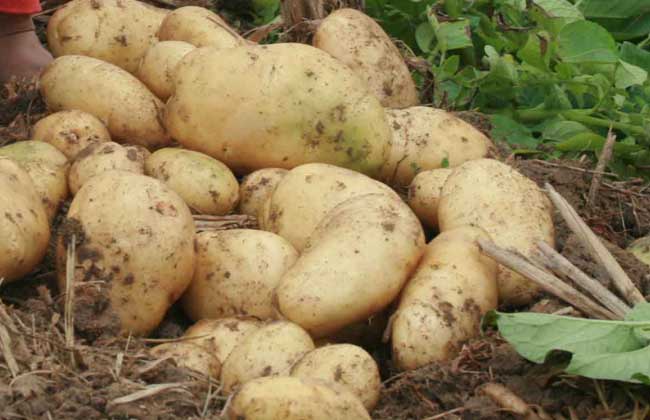
The potato is also known as tudou, yangyu, didan and so on. It originated in the Andes region of South America, and its history of artificial cultivation can be traced back as early as 8000 to 5000 BC in southern Peru. The Lake Titicaca area of the Andes at an altitude above 3800 m may be the place where the potato was first cultivated. It is still difficult to determine exactly when and from where it was introduced to China. Let us take a look below at where potatoes are grown!
Where are potatoes grown?
The main potato-producing areas in China are Dingxi City in Gansu, Guyuan City in Ningxia, the southwest, Inner Mongolia and the northeast. Dingxi City in Gansu Province, with its exceptional geographical environment and natural conditions, has become one of the best potato-growing areas in China and even the world. It has become one of the three major potato-producing areas in the country, the largest virus-free seed potato breeding base in the country, and an important national production base for commercial potatoes and potato product processing. It is known as the “Home of Potatoes in China” and supplies large quantities of potatoes to provinces and cities across the country every year.
Growing conditions for potatoes
The potato has high yield, is rich in nutrients, and has strong adaptability to the environment. It is now found all over the world, and tropical and subtropical countries can even cultivate it in winter or in cool seasons and still obtain relatively high yields. It prefers cool conditions, and the formation and growth of its underground tubers require a loose, airy, cool and moist soil environment. The suitable temperature for tuber growth is 16 to 18°C. When the soil temperature is higher than 25°C, the tubers stop growing. The suitable temperature for stem and leaf growth is 15 to 25°C, and growth stops above 39°C.
Growth cycle of the potato
1. Dormancy period: After the potato is harvested, if it is placed in an environment suitable for sprouting but cannot sprout for a long time, this is physiological natural dormancy. Tuber dormancy begins at the moment when the tip of the stolon stops polar growth and the tuber begins to swell. The length of this period is related to the storability of the tuber, to whether it can emerge in time after planting, and therefore to the level of yield.
2. Sprouting period: From bud initiation to emergence is the sprouting period, during which the first section of the main stem grows. The center of growth during the sprouting period is bud elongation, root formation and stolon formation. Nutrients and water mainly depend on the seed potato and are supplied in the order of stems and leaves and roots. The speed and quality of growth are constrained by the seed potato and the environmental conditions required for sprouting.
3. Seedling period: From emergence until the sixth or eighth leaf unfolds flat, that is, the completion of the growth of one leaf order, is called “tuanke”. “Tuanke” is the growth of the second section of the main stem, and this is the seedling period of the potato. The seedling period lasts a relatively short time, only a short half month whether in spring cropping or autumn cropping.
4. Vigorous growth period: From tuanke to the unfolding of the twelfth or sixteenth leaf is the vigorous growth period of the potato. At this time the main stem begins to shoot up rapidly, the main stem leaves have all formed, and branches and branch leaves expand. The root system continues to expand, and the tubers swell to the size of a pigeon egg. The vigorous growth period has a turning stage in the center of growth.
5. Tuber formation period: After the vigorous growth period is completed, the potato enters the tuber formation period, which is dominated by tuber growth. During this period, stem and leaf growth gradually decreases, basal leaves begin to turn yellow and wither, organic nutrients from all parts of the plant are continuously transported to the tubers, and the tubers then expand more rapidly, especially fastest in the 10 days after the flowering period. The length of the tuber formation period is constrained by climatic conditions, diseases and the maturity of the variety, and is generally 30 to 50 days.