Which potato varieties are good? A guide to selecting high-quality varieties
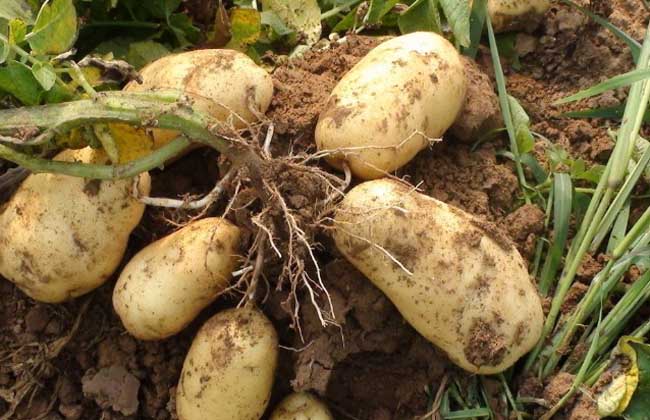
The potato is a perennial herbaceous plant in the Solanaceae family, genus Solanum, and the world's fourth most important food crop, after wheat, rice and maize, and together with wheat, rice, maize and sorghum it forms the world's five major crops. It originated in the Andean region of South America, and artificial cultivation can be traced back as early as about 8000 to 5000 BC in southern Peru. Let's take a look below at which potato varieties are good!
Zaodabai
[Characteristics] The "Zaodabai" potato is an extremely early-maturing variety with a growing period of 60-65 days. The tubers are oval, with white skin and white flesh, smooth skin and attractive tubers. Tuber set is concentrated, and the rate of large and medium tubers (marketable rate) is as high as over 90%. Good quality and good palatability.
[Yield] The "Zaodabai" potato has wide adaptability and can be cultivated in both northern and southern China. It is suitable for high-water and high-fertilizer cultivation. The average yield is 1500 kg per mu, and with high yields it can reach over 4000 kg.
[Cultivation] The "Zaodabai" potato uses virus-free seed potatoes; before sowing, the seed potatoes should be sunned to promote sprouting, and the planting density is preferably about 4500 plants/mu. Because tuber set is concentrated, the tubers are large and the yield is high, the planting technique should follow the principle of "deep planting, shallow covering, and multiple hillings," and during the growing period attention should be paid to the control of potato late blight.
Chaobai
[Characteristics] The "Chaobai" potato is an extremely early-maturing table variety, bred by the Dalian Agricultural Science Research Institute of Liaoning Province. The plants grow vigorously with strong growth, and the plant height is about 40 cm. The stems are green and sturdy, the leaves are thick, flat and spreading, and the leaf color is dark green. The flowers are white. Tuber set is concentrated, and the tubers are round. White skin and white flesh, large and uniform, with a rate of large and medium tubers of 71-84%, smooth skin and relatively good quality, and a starch content of 12.5-13.4%.
[Yield] The "Chaobai" potato is suitable for planting in the double-cropping areas and suburban areas of Liaoning, Hebei, Jiangsu and Anpan, with an average yield of about 1500 kg per mu (1 mu).
[Cultivation] The suitable planting density for the "Chaobai" potato is about 5000 plants per mu. Management should be strengthened during cultivation, with timely irrigation and heavy application of high-quality decomposed base fertilizer.
Zhongshu No. 2
[Characteristics] "Zhongshu No. 2" was bred by the Institute of Vegetables and Flowers of the Chinese Academy of Agricultural Sciences through hybridization using LT-2 as the female parent and DTO-33 as the male parent. The plant is of the spreading type, with a plant height of 50-70 cm, thick main stems, generally 3-4 stems when whole tubers are planted, and stems of a light purplish-brown color. The leaf color is dark green. The corolla is purplish-red, the anthers are orange-yellow, there is abundant pollen, and the ability to set fruit naturally is strong, with many flowers, large berries and many seeds. The tubers are flat-round, the skin and flesh are light yellow, the skin is smooth, and the eyes are relatively shallow.
[Yield] The "Zhongshu No. 2" tubers are of good quality, with a starch content of 14-17%, vitamin C 80 ml per 100 g of fresh tubers, and a reducing sugar content below 0.2%, making it suitable for eating and processing. The growing period from emergence to maturity is about 50-60 days. Field growth and development are vigorous. Tuber set is concentrated, the tubers are large and uniform, with 4-6 tubers per plant, and the dormancy period is short, passing dormancy in 40 days; eating quality is excellent and it stores well. The average yield is generally 1500-2500 kg/mu.
[Cultivation] "Zhongshu No. 2" is suitable for winter cultivation in our region and can be planted appropriately densely, preferably at 4000-4500 plants/mu. Cultivation requires soil with medium to above-medium fertility, and sufficient fertilizer and water are needed during the growing period; it is not suitable for dryland cultivation and can be used for intercropping and relay intercropping with other crops. Cultivation management should follow a continuous promotion approach, growing it as an early-maturing vegetable.
Zhongshu No. 4
[Characteristics] "Zhongshu No. 4" was bred in 1995 by the Institute of Vegetables and Flowers of the Chinese Academy of Agricultural Sciences and is an extremely early-maturing type variety. It takes about 60 days from emergence to maturity. The growth vigor is relatively strong. The plant type is upright, with a plant height of about 50 cm, few branches, green stems and a light purple base. The leaves are dark green, the compound leaves are upright, of medium size, with flat leaf margins, the corolla is light purple, and it can set fruit naturally.
[Yield] The "Zhongshu No. 4" tubers are oblong, with light yellow skin and light yellow flesh, smooth skin, large and uniform, with few and shallow eyes, and concentrated tuber set. The tuber dormancy period is about 60 days, it tolerates poor soil, has excellent steaming quality, and generally yields about 1500 kg per mu.
[Cultivation] "Zhongshu No. 4" is planted at 4500-5000 plants per mu. Promote sprouting before sowing, apply base fertilizer, strengthen early-stage management, and timely earth up and cultivate to promote early plant development and early tuber set; during the tuber-setting stage and tuber-bulking stage, irrigate in time, and one week before harvest irrigate evenly to facilitate harvest and storage. It is suitable for intercropping and relay intercropping with crops such as cotton and maize.
Kexin No. 4
[Characteristics] "Kexin No. 4" was bred in 1963 by the Potato Research Institute of the Heilongjiang Academy of Agricultural Sciences through hybridization using "Baitouweng" as the female parent and "Katading" as the male parent. The plant type is spreading, with few branches, and a plant height of about 60 cm; the stems are green, the growth vigor is medium, the leaves are light green, and the pubescence is medium to abundant. The compound leaves are medium in size, with flat leaf margins and 4 pairs of lateral leaflets arranged at medium density; the inflorescence peduncle is medium in size and uniform. The corolla is white, the anthers are yellow-green, there is little pollen, and generally there are no berries.