What are the control methods for corn seedling blight?
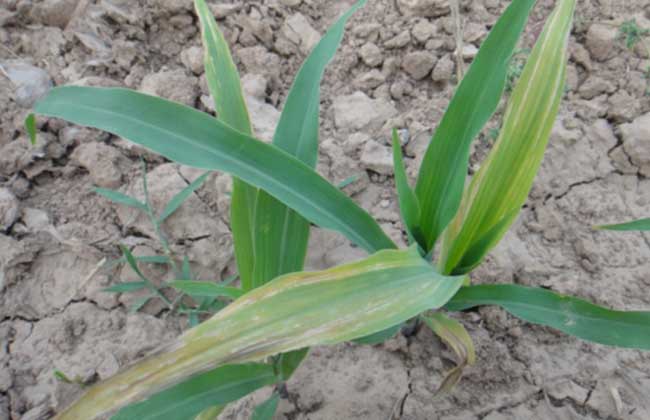
Corn seedling blight is a fungal disease that occurs during the corn seedling stage. In the early stages of the disease, it often causes the heart leaves of corn seedlings to curl and wilt, and in severe cases causes seedling death. In recent years, the occurrence of corn seedling blight has shown a worsening trend, becoming one of the major diseases on corn seedlings and having a relatively large impact on corn yield. Let us take a look together at the control methods for corn seedling blight!
Damage characteristics
After corn becomes diseased, the root tips first turn brown, and after spreading this leads to poor root development or reduced root hairs, few or no secondary roots, aging of primary roots, necrosis of the cortex, and the root system turning blackish-brown. Necrotic spots also form at the first internode of the stem, causing water-soaked rot in the stem that breaks easily, and the leaf sheath also turns brown and cracks. The leaves turn yellow, the leaf margins scorch, and the heart leaves curl and break easily. In severe cases, death occurs, and a small number of secondary roots form weak seedlings. In mildly affected seedlings, the aboveground part shows no obvious symptoms. Generally, from the 2- to 3-leaf stage, the tips of the 1st to 2nd leaves begin to turn yellow and gradually spread toward the middle of the leaf; in severe cases, the heart leaves gradually become green and wilt.
Occurrence pattern
Corn seedling blight generally occurs from after sowing to early July. Under long-term drought conditions, from after corn sowing to the rooting period, a sudden moderate to heavy rain causes soil compaction, creating an environment with low soil temperature and high humidity, making infection with this disease likely. Fields that are low-lying, poor in soil fertility, clay soil, saline-alkali soil, and where corn herbicides have been applied have more severe disease occurrence. In addition, poor seed quality and sowing too deep also make the disease more likely. In fields where wheat-corn is the main rotation pattern, because wheat root disease has occurred severely in recent years, pathogens such as Fusarium moniliforme, Fusarium graminearum, and Rhizoctonia have accumulated, and the occurrence of summer corn seedling blight is also relatively severe.
Control measures
1. Select high-quality, disease-resistant varieties, and choose corn seeds that are large, plump, and strong in germination vigor.
2. Promote formula fertilization and increase the application of farmyard manure to cultivate strong seedlings, with special attention to supplementing phosphorus and potassium fertilizers. Promote root growth, make the plants grow vigorously, and improve disease resistance.
3. Strengthen intertillage management, reduce the use of herbicides, and hoe in a timely manner to enhance soil permeability.
4. For prevention, drench the roots with 1000-fold carbendazim plus 2-3 jin of potassium chloride.
5. Use 70% thiophanate-methyl 800-fold solution, or 20% triadimefon 1000-fold, 75% chlorothalonil 1000-fold, and other pesticides and spray 2 times consecutively (with an interval of about 7 days between each application).