What are the control methods for corn thrips?
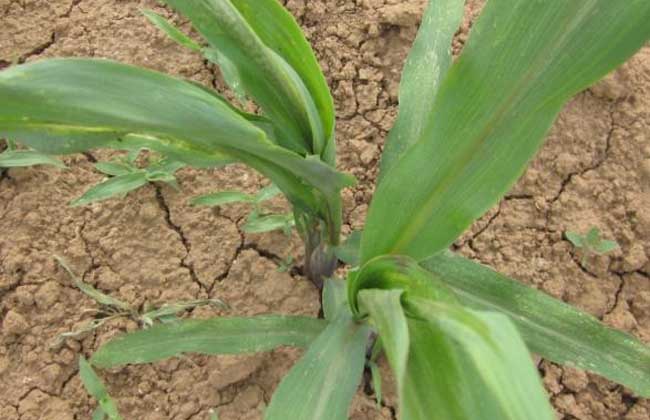
Thrips is a general term for insects of the order Thysanoptera. The thrips that harm corn in China mainly include corn yellow dull thrips, grass thrips, and rice tube thrips, all three of which belong to Thysanoptera. The first two belong to the family Thripidae, and the rice tube thrips belongs to the family Phlaeothripidae. They occur in 2 generations on corn and reproduce by parthenogenesis, mainly causing damage through adult feeding on corn. Let us take a look at the control methods for corn thrips below.
Damage characteristics
Thrips mainly cause damage inside the corn whorl and also release a sticky substance, causing the whorl leaves to fail to unfold. As the corn grows, the corn whorl forms a “whip-like” shape. If measures are not taken in time, it will cause reduced yield or even total crop failure. Adults move slowly and mostly cause damage on the underside of leaves, creating discontinuous silvery-white feeding marks accompanied by insect frass spots, while the corresponding part on the upper side of the leaf shows yellow streaks. Adults lay eggs in the leaf mesophyll at feeding sites, and tiny white specks the size of a needle tip can be seen when held against the light. Damage is mostly concentrated on the second to fourth or second to sixth leaves from the bottom upward, and even after new leaves grow out, they rarely move to the new whorl to cause damage.
Occurrence pattern
In spring, yellow thrips first reproduce and cause damage on crops such as wheat, and then some gradually move to spring corn. Because the wheat area is relatively large, the insect source for spring corn and middle-season corn mainly comes from wheat. Generally, from late May to early June, there is a nymph peak on wheat and spring corn; in mid-June, there is another adult peak on wheat, spring corn, and middle-season corn; in late June, there is another nymph peak; and in early July, another adult peak appears on spring corn, middle-season corn, and summer corn. Therefore, for the appearance of these peaks, measures should be taken promptly according to the insect situation during control.
Occurrence characteristics
Thrips prefer drier conditions and occur more in low-lying, wind-sheltered, and dry corn fields. Relay-cropped corn in fields with short and sparse wheat plants often suffers more severe damage. Rainfall from May to July in a year has a relatively large impact on the degree of thrips occurrence, and drought with little rain is favorable for occurrence. Generally speaking, the occurrence quantity on corn is in the order spring corn > middle-season corn > summer corn. Although the number of insects per plant on relay-cropped middle-season corn is lower than on spring corn, the damage is more severe, and the damage is even more severe under conditions of water and fertilizer deficiency.
Control methods
1. When thinning and setting seedlings of corn, pay attention to pulling out insect-infested seedlings and carrying them out of the field for composting, which can reduce the spread and damage of grass thrips. Manually remove the hardened part of the leaf tip so that new leaves can resume growth. Irrigate and fertilize at the appropriate time and strengthen management to promote early and rapid growth of corn seedlings, which can effectively reduce thrips damage.
2. In the early stage of corn thrips occurrence, spray 10% imidacloprid wettable powder at 1500 times dilution, or 20% imidacloprid soluble liquid at 3000-4000 times dilution, or 26% beta-cyfluthrin · acetamiprid water-dispersible granules at 5000 times dilution, or 3% acetamiprid at 1500 times dilution, or 10% cypermethrin emulsifiable concentrate at 2500 times dilution, or 2.5% Baode emulsifiable concentrate at 2000-3000 times dilution, or 20% imidacloprid soluble concentrate at 3000-4000 times dilution.