What are the control methods for tobacco mosaic virus disease?
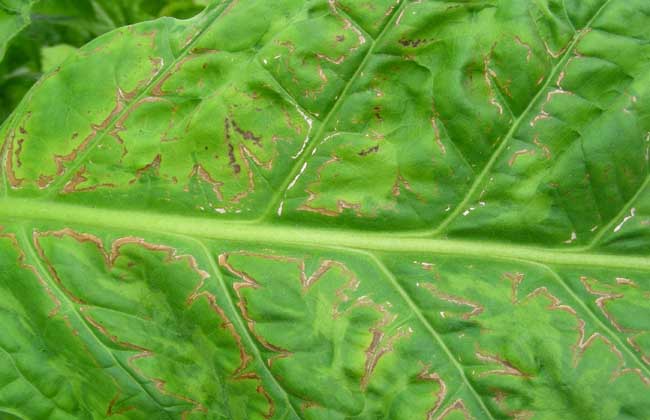
Tobacco mosaic virus disease occurs commonly in tobacco-growing regions around the world, and it occurs in both northern and southern tobacco-growing regions of China, with southern tobacco-growing regions suffering more severe damage. It can develop from the seedling stage through the harvest stage. The field incidence rate is generally 5-20%, and in individual fields it can reach as high as 90-100%. Losses from early infection can reach 50-70%, or even total crop failure. Let's take a look together at the control methods for tobacco mosaic virus disease below!
Damage symptoms
After a tobacco plant is infected, the lateral veins and branch vein tissues of young leaves become semi-transparent, and the mesophyll tissue on both sides of the veins gradually turns pale green. The virus proliferates massively within the leaf tissue, causing some mesophyll cells to enlarge or increase in number, resulting in uneven leaf thickness, alternating yellow and green colors, and a mosaic pattern. Later, the mosaic mottling intensifies and large dark brown necrotic spots appear, especially on the middle and lower old leaves. Severely affected leaves shrivel, become deformed, and twist. Plants infected early have shortened internodes, severe dwarfing, and slow growth, and cannot flower and set seed normally, with the flowers and seeds easily dropping off. Capsules that do develop are small and shriveled, and the seeds are few and small, mostly unable to germinate.
Conditions for occurrence
Tobacco common mosaic virus disease mainly occurs from the seedbed stage to the bud stage in the field. Temperature and light greatly affect the speed of disease spread and epidemic development. High temperature and strong light can shorten the incubation period. Continuous cropping or intercropping with Solanaceae crops increases the sources of the virus, and the incidence rate and severity of the disease increase markedly. Unsanitary cultivation practices are an important cause of epidemics. Touching back and forth between diseased and healthy plants, applying undecomposed organic fertilizer, and cultivating soil carrying the virus can all aggravate virus transmission. Fields with compacted soil, drought conditions, and severe nematode damage have more severe disease occurrence.
Control methods
1. Select disease-tolerant varieties with strong growth vigor, fast development, and adaptation to local conditions, such as Liao 44, 6315, Guanghuang 54, 176, Nc89, G80, 8611, etc., and pay attention to breeding highly resistant varieties. Practice crop rotation, do not intercrop or relay-crop with Solanaceae plants, and it is advisable to rotate with gramineous crops for 2-3 years. When mosaic disease appears, promptly apply quick-acting fertilizer, earth up and water, and promote stem elongation and leaf spreading to reduce disease damage.
2. For the seedbed, choose a plot that has not grown tobacco or Solanaceae plants for more than 2 years and is far from vegetable fields. Use seeds collected from disease-free plants in disease-free fields, or soak seeds in 0.1% silver nitrate or 0.1-0.2% zinc sulfate or 0.1% trisodium phosphate solution for 10 minutes to remove virus from the seed surface, and rinse repeatedly after soaking. Before thinning and final singling of seedlings, wash hands thoroughly with soap. During operations, manage the healthy seedlings first, and promptly pull out diseased plants when found.
3. Strengthen field management. It is strictly forbidden to transplant already diseased tobacco seedlings into the field. Manage healthy plants first and diseased plants afterward in sequence. During operations, it is not advisable to smoke, and it is not advisable to repeatedly walk around and touch plants in the tobacco field. Apply sufficient nitrogen, phosphorus, and potassium fertilizer, and promptly spray various trace element fertilizers to improve plant disease resistance. After transplanting, carry out appropriate hardening of seedlings, and at the end of the rosette stage irrigate at the critical water level to promote plant growth.
4. In the early stage of disease occurrence, spray with 2% amino-oligosaccharin 6000-fold solution, or Gaoke 32% moroxydine hydrochloride-ribavirin 800-fold solution, or 1.5% Zhibingling emulsifiable concentrate 1000-fold solution, or 10% Bingduwang wettable powder 600-fold solution, or 20% Huayening wettable powder 300-500-fold solution, which can prevent and alleviate virus damage.
5. Aphids play a decisive role in the spread of tobacco common mosaic virus disease. On tobacco, they generally reproduce for 15-17 generations by parthenogenesis and viviparity. Therefore, for aphid control, concentrated spraying should be carried out in March to April each year on surrounding peach orchards, vegetables, weeds, and so on, to kill tobacco aphids that have already hatched or are hatching and reviving, thereby achieving the purpose of prevention.