Cotton Bollworm Control Techniques and Pesticide Application Methods Explained in Detail
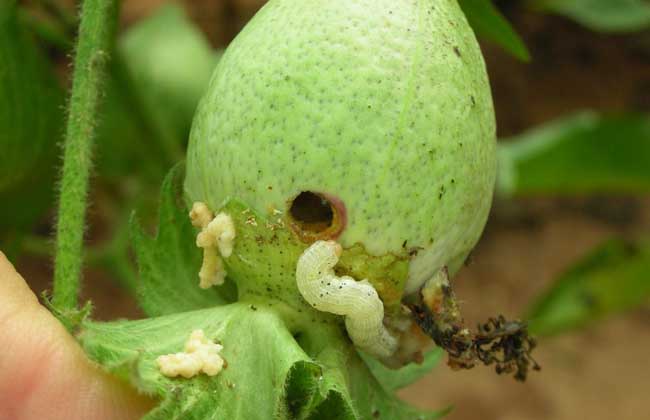
The cotton bollworm is a major pest during the cotton bud and boll stage. It is a species of insect in the genus Helicoverpa, family Noctuidae, order Lepidoptera, and is widely distributed across China and around the world. It occurs in cotton regions and vegetable-growing areas throughout China, with the Yellow River basin cotton region and the Yangtze River basin cotton region suffering the most severe damage. In recent years it has also occurred from time to time in the ** cotton region. Let us take a look together at the control techniques for the cotton bollworm!
Damage Characteristics
The cotton bollworm is an important boring pest during the cotton bud and boll stage, mainly boring into and feeding on buds, flowers and bolls, and also feeding on tender leaves. Adults hide during the day on the undersides of leaves and other places, become active at dusk, feed on nectar, and are phototactic. Eggs are laid singly on the upper part of the cotton plant. Larvae have 5 to 6 instars. First-instar larvae feed on tender leaves, after which they damage buds, flowers and bolls, mostly boring into buds and bolls from the base, feeding inside, and being able to move to cause damage elsewhere. Damaged young buds have their bracts opened and drop off, and bored green bolls are easily contaminated and rot. Larvae have the habit of moving between plants to cause damage, mostly at night and in the early morning; applying pesticide at this time makes it easy to contact the insect body, giving the best control effect.
Occurrence Patterns
The cotton bollworm occurs 3 to 4 generations per year in the Yellow River basin cotton region and 4 to 5 generations per year in the Yangtze River basin cotton region, overwintering as diapausing pupae in the soil. The first generation mainly causes damage in wheat fields, the second-generation larvae mainly damage the growing tips of cotton, and the third and fourth-generation larvae mainly damage cotton buds, flowers and bolls, causing large numbers of damaged buds, flowers and bolls to drop off, greatly affecting cotton yield. Besides damaging cotton, the fourth and fifth-generation larvae sometimes become major pests on crops such as corn, peanuts, beans, vegetables and fruit trees.
Reproductive Habits
The cotton bollworm occurs 6 generations per year in South China, overwintering as pupae in the soil near the roots of host plants, then emerging and laying eggs successively the following spring. The first generation mostly causes damage on crops such as tomatoes and peas. From the second generation onward, there is generation overlap in the field. Adults rest during the day on the undersides of leaves or in shaded places, become active at dusk, and feed on plant nectar as supplemental nutrition. They are strong fliers, are phototactic, and have a strong tendency to seek tender growth when laying eggs. Eggs are laid singly on tender leaves, fruit stalks and other parts of the host. Each female generally lays more than 900 eggs, with a maximum of more than 5,000 eggs. Newly hatched larvae rest on the underside of leaves on the same day without eating or moving, move to the growing point on the second day but cause no obvious damage yet, become second-instar on the third day and begin boring into and feeding on flowers, tender shoots, tender buds and fruits, and can move between plants to cause damage, with each larva able to bore into 3 to 5 fruits. From the fourth instar onward is the stage of heavy feeding. Mature larvae enter the soil to a depth of 5 to 15 cm and build earthen cells in which to pupate.
Control Techniques
1. Autumn plowing and winter irrigation: Autumn plowing and winter irrigation can reduce the overwintering pest population base. For cotton, corn, tomato and other farmlands where cotton bollworm damage is severe in autumn, carrying out autumn plowing and winter irrigation and breaking down field ridges destroys overwintering sites, raises the overwintering mortality rate, and reduces the occurrence of the first generation.
2. Manual collection of insects: By taking advantage of the habit of cotton bollworm adults preferring to rest and lay eggs in the funnel-shaped leaf whorls of corn, specialized personnel can beat the heart leaves every morning to kill adults and reduce the pest source. This can reduce the use of chemical pesticides, protect natural enemies, and help improve the ecology of cotton fields.
3. Strengthen management: Appropriately controlling late-stage irrigation and the amount of nitrogen fertilizer applied to prevent excessive vegetative growth of cotton can reduce cotton bollworm damage. Spraying a 2% superphosphate extract on the leaves during the cotton bollworm adult egg-laying period not only has the effect of foliar fertilization but can also reduce the number of eggs laid by cotton bollworms in cotton fields. Topping and pruning at the right time, and carrying the branches and leaves out of the field for destruction, can kill cotton bollworm eggs and larvae and reduce the occurrence of cotton bollworms in cotton fields.
4. Poplar branch trapping: By taking advantage of the taxis of cotton bollworm adults toward volatile substances from poplar leaves and their habit of hiding in poplar branch bundles during the day, placing poplar branch bundles in cotton fields to trap moths during adult emergence and egg-laying is an effective method. Place 6 to 8 bundles per mu and catch and crush the moths before sunrise. Using high-pressure mercury lamps and frequency-vibration insect-killing lamps to trap moths has the characteristics of trapping and killing large numbers of cotton bollworms while causing little harm to natural enemies, and is suitable for use in areas where cotton bollworms occur heavily and during peak emergence periods.
5. Pesticide control: Cotton bollworm control should mainly use biological pesticides or pesticides that cause little harm to natural enemies. For controlling the second-generation cotton bollworm, use 20% methomyl emulsifiable concentrate at 1500 times dilution. For the third and fourth generations, use 50 to 60 ml of 48% chlorpyrifos emulsifiable concentrate per mu, mixed with 50 to 60 kg of water for spraying. During the control period for the third and fourth-generation cotton bollworms, the cotton plants are tall and eggs are scattered, so spraying should be timed from the peak hatching stage of eggs to the young larval stage, and the front and back of cotton leaves, growing tips, flowers, buds and bolls must be evenly covered with the pesticide to ensure efficacy. At the same time, pay attention to alternating and rotating pesticides, and if it rains after application, respray in a timely manner.