What are the control methods for potato leaf blight?
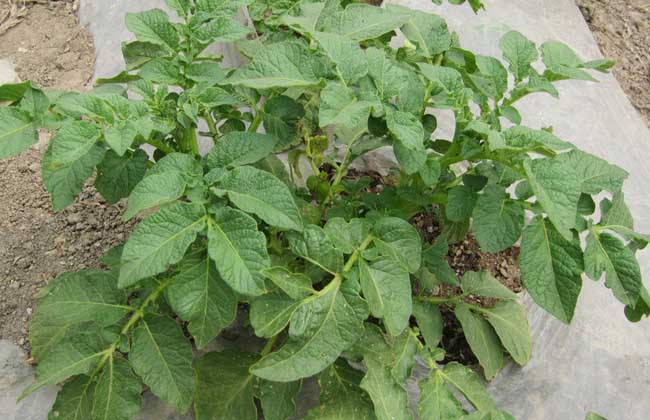
Potato leaf blight mainly damages the leaves. In most cases, the disease first appears on the senescent leaves at the lower part of the plant during the mid-to-late growth stage of the potato. At the beginning, the leaves show greenish-brown necrotic spots. Sometimes it infects the stems and vines, forming irregular grayish-brown necrotic spots. In the late stage of the disease, small brown granules are produced on the diseased parts. Let us take a look at the control methods for potato leaf blight together!
Damage symptoms
When potato leaves are infected, the disease starts near the leaf margin or leaf tip, initially forming greenish-brown necrotic spots, which then gradually develop into nearly round to V-shaped grayish-brown to reddish-brown large necrotic lesions with indistinct concentric rings. The outer edge of the lesion often becomes chlorotic and yellow, and finally the diseased leaves become necrotic and scorched. Sometimes a few dark brown small dots (that is, the pathogen's pycnidia) can be produced on the lesions. When stems and vines are infected, irregular grayish-brown necrotic spots are formed, and later brown small granules can be produced on the diseased parts.
Occurrence characteristics
Potato leaf blight is caused by infection by the fungus Macrophoma, a deuteromycete. The pathogen overwinters in the soil as sclerotia or as mycelium with diseased residual tissues, and can also overwinter on the residues of other hosts. When conditions are suitable the following year, rain splashes the pathogen from the ground onto the leaves or stems and vines, causing primary infection. After the disease occurs, the diseased parts produce sclerotia or pycnidia, which spread through rain and cause repeated infections, leading to the expansion and spread of the disease. Warm and highly humid conditions favor the occurrence and epidemic of this disease.
Control methods
1. Agricultural control: choose relatively fertile plots for planting and maintain reasonable close planting.
2. Strengthen management: apply more organic fertilizer and appropriately combine it with phosphorus and potassium fertilizers. Water and topdress timely in the late growth stage to prevent premature senescence of the plants.
3. Chemical control: spray for control at the early stage of the disease. The agents can be 70% thiophanate-methyl wettable powder at 600 times dilution, or 70% mancozeb wettable powder at 600 times dilution, or 50% iprodione suspension concentrate at 1200 times dilution, etc.