What are the control methods for corn stalk rot?
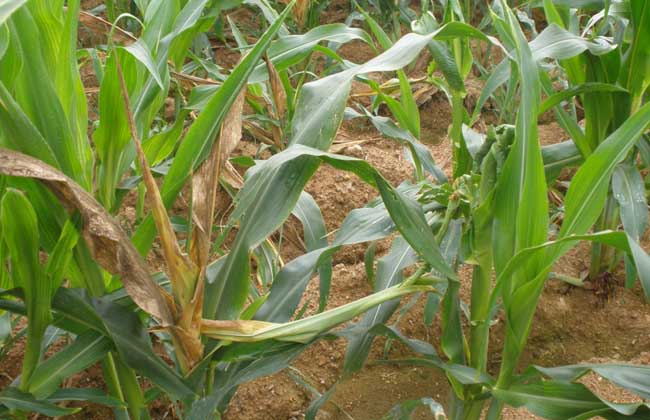
There are many causes of stalk rot in corn production, and the most important category is fungal stalk rot. Fungal stalk and basal rot is a type of disease caused by single or complex infection by multiple pathogens, resulting in rot of the root system and stem base, mainly caused by infection with Pythium, Colletotrichum, and Fusarium. The symptoms shown on corn plants differ, so let us take a look below at the control methods for corn stalk rot!
Symptoms of the bacterial wilt type of stalk rot
Root symptoms begin during the grain-filling stage of corn, and the peak incidence period is from the late milk stage to the dough stage. From the first appearance of bacterial wilt leaves to the wilting of the whole plant generally takes 5-7 days; in fast-developing cases it takes only 1-3 days, while in long cases it can last more than 15 days. In the late milk stage, plants often suddenly wilt and die in patches. Because the dead plants remain bluish green, it is called bacterial wilt. The roots are affected first. Initially the pathogen produces water-soaked light brown lesions on the fibrous roots, which gradually expand to the secondary roots until the entire root system turns brown and rots, and finally the thick and thin roots become hollow. The root cortex is easily peeled off and loosened, the fibrous roots and root hairs decrease, and the entire root system is easily pulled out. It gradually spreads to the stem base. Water-soaked spindle-shaped or long oval lesions begin to appear at the 1st to 2nd nodes of the stem base, then quickly become soft and sunken, with the interior hollow and loose, collapsing at a pinch with an obvious feel. The internodes turn light brown, the husk leaves of the ear turn dry and green, the ear stalk is tough, the ear droops and is difficult to snap off, the cob is soft, the kernels are shriveled, and threshing is difficult.
Symptoms of the bacterial type of stalk rot
The bacterial type of stalk rot mainly damages the middle leaf stems and leaf sheaths. When corn has 10 leaves, water-soaked rot appears on the leaf tips, the diseased tissue begins to soften, and a foul odor is released. The lesions on the leaf sheaths are irregular in shape, with light reddish brown edges, and the water-soaked area at the junction of diseased and healthy tissue is especially obvious. When humidity is high, the lesions spread rapidly upward and downward. In severe cases, plants often break and fall above the diseased part 3-4 days after onset, exuding a yellow-brown foul-smelling bacterial fluid. The pathogen survives in the soil on diseased residues and invades through the plant's stomata or wounds. The disease is severe under high temperature and high humidity, and when insect pests cause wounds.
Transmission routes of corn stalk rot
The pathogen may overwinter in the soil on diseased residues, and invade through the plant's stomata or wounds the following year. When corn is 60 cm tall, the tissue is tender and susceptible to the disease, and wounds caused by insect pests facilitate pathogen invasion. In addition, insect pests carry the pathogen and at the same time play a role in transmission and inoculation. For example, when the population of pests such as the Asian corn borer and cotton bollworm is large, the disease is severe. High temperature and high humidity favor the disease. It can occur at an average temperature of about 30°C and a relative humidity above 70%, and spreads rapidly at an average temperature of 34°C and a relative humidity of 80%. Low-lying areas or poor drainage, excessive density, poor ventilation, excessive application of nitrogen fertilizer, and many wounds lead to severe disease. Rotation, high-ridge cultivation, good drainage, and plots with an appropriate ratio of nitrogen, phosphorus, and potassium fertilizer produce robust plants with a low disease incidence.
Control methods for corn stalk rot
1. Select disease-resistant varieties: Planting disease-resistant varieties is the most economical and effective control measure, such as selecting varieties like Zhengdan 958, Nongda 108, Ludan 50, and Ludan 981.
2. Implement crop rotation: Planting corn continuously in the same plot for years can cause a large accumulation of pathogens in the soil, and the disease will worsen year by year. If rotated with non-host crops such as soybean and peanut, the occurrence of the disease can be significantly reduced.
3. Strengthen field sanitation: After the corn harvest, promptly remove diseased plants and fallen leaves from the field and treat them centrally, which can greatly reduce the accumulation of pathogenic bacteria and reduce sources of infection. Deep plowing of the soil during autumn plowing can also reduce and control sources of infection.
4. Use coated seeds: High-quality seed coatings contain fungicides, insecticides, and trace elements. They can both resist pathogen infection and promote seedling growth, enhancing disease resistance.
5. Strengthen cultivation management: Promptly carry out intertillage, hilling, and weeding to enhance the root system's absorption capacity; in low-lying areas, attention should be paid to drainage to reduce field humidity and strengthen soil aeration, which helps reduce the occurrence of the disease.
6. Use chemical control: When scattered diseased plants are found, metalaxyl 400-fold solution or carbendazim 500-fold solution can be used to spray the roots and stems or drench the roots, spraying once every 7-10 days for 2-3 consecutive treatments, with good therapeutic effect.