What are the control methods for the rice water weevil?
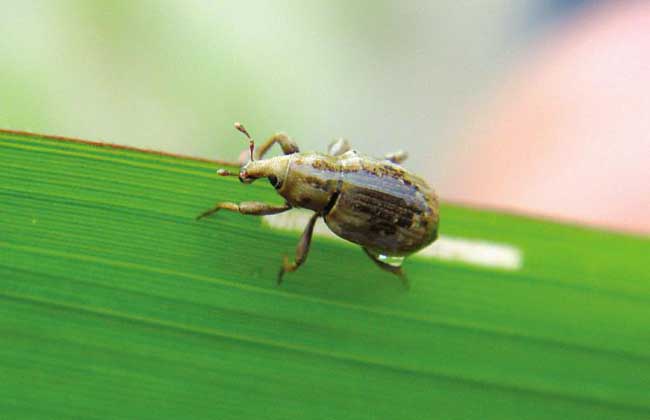
The rice water weevil is one of the more damaging invasive alien species in China, but it has not been included in China's first list of invasive alien species. Also known as the rice water weevil and rice root weevil, it is a nationwide class II quarantine pest. It originated in North America and was first discovered in China in 1988 in Tanghai County, Tangshan City. It has now occurred successively in 11 provinces and cities across the country. Let's take a look below at how to control the rice water weevil!
Morphological characteristics of the rice water weevil
The adult rice water weevil is 2.6-3.8 mm long. The rostrum is almost as long as the pronotum, slightly curved, and flat-cylindrical. The pronotum is wide. The lateral margins of the elytra are parallel and wider than the pronotum, the shoulders are slanted, and there are tubercles on the intervals of the apical half of the elytra. The female has an anterior sharp process and a sharp process on the hind tibia, and the sharp process is long and pointed, while the male has only a short, thick forked sharp process. The pupa is about 3 mm long and white. The larva is white with a yellowish-brown head. The egg is cylindrical with rounded ends.
Damage characteristics of the rice water weevil
The rice water weevil is a semi-aquatic insect. Adults overwinter on dead grass on the ground, mate and lay eggs in late March, and the eggs are mostly laid in submerged leaf sheaths. Newly hatched larvae feed only inside the leaf sheath, then enter the roots to feed. Newly emerged adults crawl out of the pupal chamber attached above the roots and feed on rice leaves or weed leaves. The average lifespan of adults is 76 days, and females live longer, up to 156 days. When causing damage, the insect population density can reach more than 200 per sq m.
Control methods for the rice water weevil
Spray with 4.5% beta-cypermethrin emulsifiable concentrate at 3000 times dilution per mu, or spray with 48% chlorpyrifos emulsifiable concentrate at 1000 times dilution. Per mu, use 150 ml of 48% chlorpyrifos mixed with 15 kg of poisoned soil and broadcast it, keeping water in the field and letting it dry naturally. When spraying, add rice high-yield agent or other foliar fertilizers and regulators to supplement nutrients and reduce losses. In high-temperature seasons, pay attention to safe pesticide use, do a good job of personal protection for applicators, and spraying is best done after 5 p.m.
Control methods for the rice water weevil
1. Autumn plowing and stubble removal in rice fields can greatly reduce the survival rate of overwintering adults in the field. Combined with compost accumulation and field management, clear weeds to eliminate overwintering adults.
2. After rice harvest, plow the land promptly, which can reduce its overwintering survival rate and protect natural enemies such as frogs, toads, spiders, ants, and fish.
3. Applying Beauveria bassiana and nematodes is effective for controlling adults, and it is advisable to choose pyrethroid pesticides as the pesticide variety.
4. It is strictly prohibited to transfer items that can carry and spread this insect from epidemic areas. Vehicles and packaging filler materials from epidemic areas should be strictly inspected, and disinsection treatment should be carried out when necessary.