In which regions are oat producing areas mainly distributed?
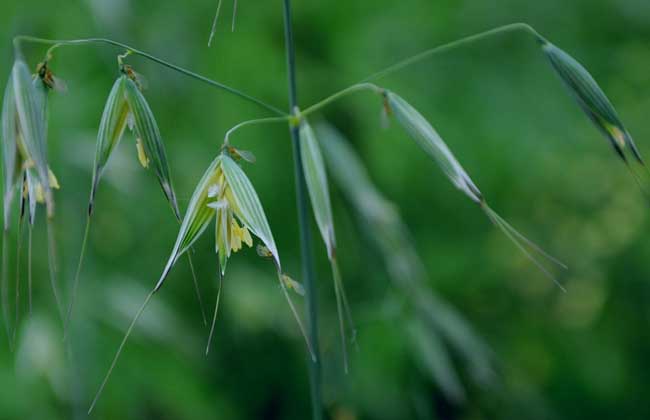
Oats are an annual herbaceous plant of the genus Avena in the grass family. The grain is used for milling into flour for food or as feed, and its nutritional value is very high. Among the 9 food grains commonly eaten by Chinese people, such as wheat, rice, and corn, oats have the highest economic value, mainly reflected in nutrition, medical health care, and feed value. Let us take a look below at where oat producing areas are!
Where are oat producing areas?
Oats are a globally cultivated crop, distributed across 42 countries on five continents, but the concentrated production areas are in the temperate regions of the Northern Hemisphere. In China, they are mostly cultivated in the Northeast, North China, Northwest, Southwest, and Guangdong, Guangxi, and Central China, and other provinces and regions. They are mainly planted in Inner Mongolia, Hebei, Henan, Shanxi, Gansu, Shaanxi, Yunnan, Sichuan, Ningxia, Guizhou, Qinghai, and other places, among which the planting area of the first 4 provinces and regions accounts for about 90% of the national total.
The producing environment of oats
1. Temperature: Oats like cool conditions but are not cold-tolerant. The northern temperate zone is most suitable for planting. Seeds can germinate at 2-4°C, and seedlings can endure low-temperature environments of -2 to -4°C, making oats the most cold-tolerant among cereal crops. In northern and northwestern China, where winters are cold, oats can only be sown in spring. In more southern areas, autumn sowing is possible, but they must mature before the arrival of high summer temperatures.
2. Water: Oats grow in cold, high-altitude desert regions, but when the seeds germinate they require about water equivalent to 65% of their own weight. Their transpiration coefficient is higher than that of barley and wheat, and they consume relatively more water. If water is insufficient during the growth period, the grains often fail to fill out and yields decrease. Therefore, the roots and stems of oats often reach about one meter in length so that they can absorb more water.
3. Soil: Under good cultivation conditions, oats can achieve good harvests in soils of various textures, but moist soil rich in humus is best. Their adaptability to acidic soil is stronger than that of other cereal crops, but they are not suitable for cultivation in saline-alkali soil.
Variety classification of oats
1. Avena clauda: Avena clauda is an annual grass plant. Its fibrous roots are slender and weak, the culms are erect, occasionally clustered, the leaf sheaths are loose, the ligule is membranous with a blunt tip, the leaf blades are flat, rough on the upper surface, and sparsely pubescent on the lower surface. The panicle is sparse and open, the spikelets are lanceolate and contain 2-3 florets, the glumes are membranous, the lemma is hard, and the palea is shorter than the lemma, smooth and hairless, with 2 keels. It has been introduced and cultivated in China, and is distributed in Europe and central Asia.
2. Avena abyssinica: Avena abyssinica is an annual plant of the genus Avena in the grass family. Its culms are stout, erect, smooth and hairless, 30-100 cm tall, the ligule is membranous, 1-2 mm long, and the leaf blades are flat, up to 5 mm wide, hairless, and rough on the upper surface. It is mainly introduced and cultivated in Nanjing Zhongshan Botanical Garden in China, and is distributed in southern Soviet Union in Europe, northwestern India, and southern Africa.
3. Avena longiglumis: Avena longiglumis is an annual plant of the genus Avena in the grass family. Its culms are erect, smooth and hairless, 50-100 cm tall, 3-5 mm in diameter. The leaf sheaths are loose, smooth and hairless, or the lower ones are pubescent, often longer than the internodes, the ligule is membranous, and the leaf blades are flat, smooth or rough on the lower surface, and sparsely pubescent on the upper surface. The panicle is large, and the spikelets contain 2-3 florets, with those in the lower part of the inflorescence often having 2 florets. It has been introduced and cultivated in Yunnan, China, and is distributed in Europe, central Asia to northwestern India.
4. Avena meridionalis: Avena meridionalis is an annual plant of the genus Avena in the grass family. Its fibrous roots are stout and tough, sometimes with sand sheaths, the culms are erect or slightly curved at the nodes, hairless or rarely hairy at the nodes, the leaf sheaths are loose, smooth or rough, the ligule is membranous, the panicle is loose and open, and the branches are slender. The ovary is densely pubescent, and the flowering and fruiting period is June-September. It is produced in **(Bogda Mountain), and distributed in central Asia, Afghanistan, and eastern Africa all the way to the Americas.
5. Naked oat: Naked oat, also known as oil oat, is an annual plant of the genus Avena in the grass family and an oat variety native to China. Its culms are clustered, the basal leaf sheaths are longer than the internodes and often slightly hairy, the leaf blades are soft, the panicle is open, and the branches are slender and rough with prickles. The spikelets have a tough rachilla, hairless and curved, the glumes are nearly equal, the lemma is leathery and relatively soft, the callus is hairless, erect or recurved, and the apex is mucronate and separate from the lemma body. The flowering and fruiting period is June-August. It is cultivated in China's Northwest, Southwest, North China, and Hubei and other provinces and regions.
6. Wild oat: Wild oat is widely distributed in all provinces of northern and southern China, growing in waste fields or as a field weed. It is also distributed in the temperate and cold zones of Europe, Asia, and Africa, and has also been introduced to North America, where Indigenous peoples used its seeds for food. In addition to being a substitute for grain and green fodder for cattle and horses, wild oat is often a weed in wheat fields. It consumes more than 1 times as much water as wheat, and at the same time a large number of its seeds mix into wheat grains, reducing wheat quality. It is also a raw material for papermaking and a host of wheat yellow dwarf disease.
7. Avena fatua var. glabrata: Avena fatua var. glabrata has a smooth, hairless lemma. Its spikelets are relatively large, 18-25 mm long, and the rachilla internodes are densely covered with light brown or white bristles. Its flowering and fruiting period and uses are similar to those of the original variety. It is produced in all provinces of northern and southern China, growing on hillside grasslands, roadsides, and farmland (at elevations up to 4000 m), and is distributed in Europe, warm Asia, and North Africa.
8. Avena fatua var. glabrata (smooth rachilla): This smooth-rachilla wild oat is produced in Shaanxi, Hubei, Hunan, Anhui, Sichuan, Jiangsu, Guangdong, and other provinces, growing in farmland or by roadsides. The lemma is smooth and hairless, and the rachilla internodes are smooth and hairless or slightly covered with appressed pubescence. The spikelets are often relatively small, about 17 mm long, and the rachilla internodes are smooth and hairless or slightly covered with appressed pubescence.