When is the planting time for oats?
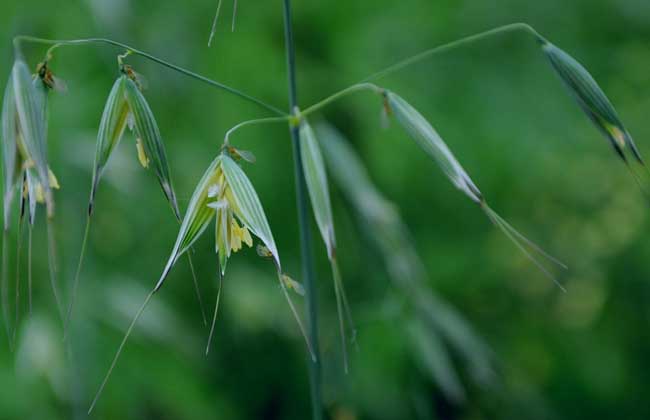
Oats are a grain-and-forage crop with very high nutritional value, divided into two types: hulled (covered) oats and naked oats. Not only is their protein content higher than that of other cereal crops, but they are also an irreplaceable excellent forage in arid and semi-arid regions, with a feeding value higher than that of other crops and extremely high cultivation value. Let's take a look below at the planting time for oats!
Oat planting time
The planting time for oats varies by region. In China, North China, Northwest China and Northeast China are spring-sowing regions, with a growth period of 80-115 days. The Southwest is a winter-sowing region, with a growth period of 230-245 days. Oats need a lot of water, and China's main producing areas are dryland farming regions, so it is extremely important to store water and preserve soil moisture through early autumn plowing, harrowing, smoothing and compaction.
Oat growing environment
1. Temperature: Oats like cool conditions but are not cold-tolerant. The northern temperate zone is most suitable for growing them. The seeds can germinate at 2-4°C, and the seedlings can endure low temperatures of -2 to -4°C, making oats the most cold-tolerant of the cereal crops. In northern and northwestern China, where winters are cold, oats can only be sown in spring; in more southern areas they can be sown in autumn, but must mature before the high summer temperatures arrive.
2. Water: Oats grow in cold, high-altitude desert regions, but the seeds need about 65% of their own weight in water to germinate. Their transpiration coefficient is higher than that of barley and wheat, and they consume relatively more water. If water is insufficient during the growing period, the grains often fail to fill out and yields drop. Therefore, oat roots and stems often reach about one meter long so they can draw up more water.
3. Soil: Under good cultivation conditions, oats can achieve good harvests on soils of various textures, but moist soil rich in humus is best. Their tolerance of acidic soil is stronger than that of other cereal crops, but they are not suitable for cultivation on saline-alkali soil.
Oat sowing methods
1. Seed treatment: Before sowing oats, choose clear, windless weather. Spread the seeds in a thin layer 2-3 cm thick and sun them for 3-5 days. Sunning the seeds can promote early germination, increase the germination rate and bring about earlier emergence, and the ultraviolet light in sunlight kills pathogens on the seed coat, which can reduce disease. Treat the seeds with 0.2% of the seed amount of seed-dressing bis or carbendazim to prevent oat loose smut, rust and other diseases. In areas with severe soil pests, phoxim or carbofuran can also be used for seed dressing.
2. Sowing time: Sowing can begin in early spring when the soil has thawed to about 10 cm. The suitable sowing period for oats is from March 25 to April 15, with the best sowing period around Qingming and no later than Guyu. According to rainfall conditions, sowing to catch soil moisture is especially critical; securing a full stand of seedlings is a major measure for high yields of dryland oats.
3. Sowing method: Oats are best sown with machinery or by hand in opened furrows in rows, not by broadcasting. The row spacing for drilling is 15-20 cm, and the depth should preferably be 3-5 cm. Prevent double sowing and missed sowing; the seeding depth must be uniform and the sowing even. After sowing, smooth the soil so that the soil and seeds are in close contact, preventing air leaks that cause the sprouts to dry out. The sowing rate is 10-15 kg per mu; this can be reduced appropriately when growing for grain.
Field management of oats
1. Reasonable loosening of the soil: If rain or snow occurs before oat emergence, harrow lightly in good time to break up surface crusting.
2. Timely weeding: Weed 2-3 times throughout the growth period. At the three-leaf stage, cultivate and loosen the soil to weed; weed early and shallowly to raise soil temperature, reduce water evaporation and promote early, rapid rooting and a full stand of seedlings. Weed twice before jointing, and remove weeds promptly in the mid-to-late stages. If the planting area is small, manual weeding can be used. If the planting area is large, chemical herbicides can be used: at the three-leaf stage, use 60 ml per mu of 72% butyl ester emulsifiable concentrate, or 1-2 g per mu of 75% Juxing dry suspension, and spray evenly on a sunny, windless day with no dew.
3. Fertilization management: At the tillering and jointing stage, apply 25 kg of ammonium sulfate per mu as a top dressing together with irrigation; on dryland, apply fertilizer after rain. At the flowering and grain-filling stage of oats, use a 0.2-0.3% potassium dihydrogen phosphate aqueous solution mixed with a 20% urea solution for foliar top dressing, spraying 70 kg of solution per mu, then spray once more after 7 days to promote grain filling. Apply foliar fertilizer in good time to increase grain weight.
4. Timely irrigation: Where irrigation conditions exist, if spring drought occurs, irrigate once from the three-leaf stage to the tillering stage, and irrigate once at the grain-filling stage.
5. Pest and disease control: Common oat pests and diseases include covered smut, rust, red leaf disease, wireworms, white grubs, mole crickets, aphids, armyworms and grasshoppers. Pest and disease control should adhere to the plant protection policy of "prevention first, integrated control." Based on the basic principles of integrated pest management, use disease-resistant (tolerant) varieties as the main approach, with cultivation-based control as the focus and an integrated control strategy combining physical and chemical control.