Detailed Explanation of Oat Cultivation Techniques and Key Points of Planting Management
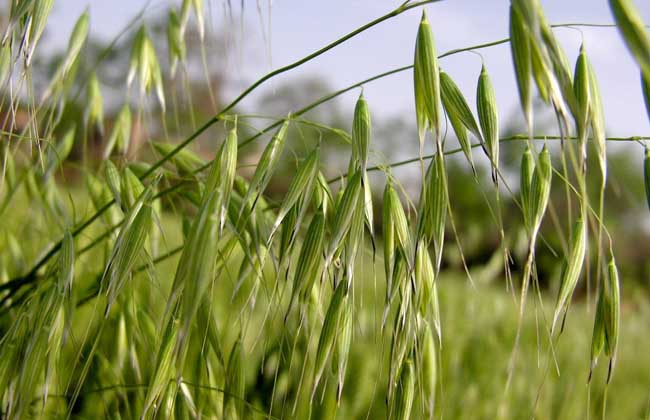
Oats are an annual plant of the genus Avena in the grass family, called quemark and wild wheat in the "Compendium of Materia Medica", and belong to the minor coarse grains. The grain is used for grinding into flour for food or as feed, and has very high nutritional value. It has been recognized by the US FDA as a functional food, with the effects of lowering cholesterol and stabilizing blood sugar, and has high cultivation value. Let us take a look at oat cultivation techniques together below!
Oat Cultivation Environment
1. Temperature: Oats prefer cool conditions but are not cold-tolerant. The northern temperate zone is most suitable for planting. Seeds can germinate at 2-4°C, and seedlings can endure low-temperature environments of -2 to -4°C, making them the most cold-tolerant among wheat crops. In northern and northwestern China, winters are cold, so sowing can only be done in spring. In more southern areas, autumn sowing is possible, but the crop must mature before the arrival of high summer temperatures.
2. Moisture: Oats grow in cold high-altitude desert regions, but when the seeds germinate they require about 65% of their own weight in water. The transpiration coefficient is higher than that of barley and wheat, and water consumption is also relatively greater. If water is insufficient during the growing period, the grains often fail to fill out and yields decrease. Therefore, oat roots and stems often reach about one meter in length so as to absorb more water.
3. Soil: Under good cultivation conditions, oats can achieve good harvests on soils of various textures, but moist soil rich in humus is best. Their adaptability to acidic soil is stronger than that of other wheat crops, but they are not suitable for cultivation in saline-alkali soil.
Oat Sowing Techniques
1. Seed treatment: Before sowing oats, choose clear and windless weather. Spread the seeds thinly to a thickness of 2-3 cm and sun-dry them for 3-5 days. Sun-drying can promote early seed germination, increase the germination rate, and bring about earlier emergence. In addition, ultraviolet rays in sunlight kill pathogens on the seed coat, which can reduce disease. Treat seeds with 0.2% of the seed amount using seed-dressing Shuang or carbendazim to prevent oat loose smut, rust, and other diseases. In areas with severe underground pests, phoxim or carbofuran can also be used for seed dressing.
2. Sowing time: Sowing can begin when the soil thaws to about 10 cm in early spring. The suitable sowing period for oats is from March 25 to April 15, with the best sowing period around Qingming, and no later than Guyu. According to precipitation conditions, sowing at the right moisture is especially critical. Securing seedlings is a major measure for high yields of dryland oats.
3. Sowing method: Oats are best sown mechanically or by artificial furrow drilling in rows, and broadcast sowing is not advisable. Row spacing for drilling is 15-20 cm, and the depth should preferably be 3-5 cm, preventing repeated sowing and missed sowing. The sowing depth should be uniform, and sowing should be even. After sowing, harrow the soil so that the soil and seeds are closely combined, preventing air leakage that causes bud loss. The sowing rate is 10-15 kg per mu, and can be reduced appropriately when harvesting grain.
Field Management of Oats
1. Loosening soil and weeding: If rain or snow occurs before oat emergence, light harrowing should be done in time to break up crusting. Weed 2-3 times throughout the growth period. During the three-leaf stage, carry out intertillage, loosening the soil, and weeding. Weed early and shallowly to raise soil temperature, reduce water evaporation, promote early rooting and rapid rooting, and preserve the full stand. Carry out weeding twice before jointing, and remove weeds promptly in the middle and later stages. If the planting area is not large, manual weeding can be used. When the planting area is relatively large, chemical herbicides can be used. At the three-leaf stage, use 72% 2,4-D butyl ester emulsifiable concentrate at 60 ml/mu, or 75% Jubilee dry suspension at 1—2 g/mu, and spray evenly on a sunny, windless day with no dew.
2. Fertilization and irrigation: During the tillering and jointing stage of oats, apply 25 kg of ammonium sulfate per mu as topdressing together with irrigation. In dryland, topdress according to rainfall. During the flowering and grain-filling stage of oats, a 0.2-0.3% potassium dihydrogen phosphate aqueous solution can be mixed with a 20% urea solution for foliar topdressing, spraying 70 kg of liquid per mu, and spraying once again after 7 days to promote grain filling. Apply foliar fertilizer at the appropriate time to increase grain weight. In places with irrigation conditions, if spring drought occurs, irrigate once from the three-leaf stage to the tillering stage of oats, and irrigate once during the grain-filling stage.
3. Harvesting and storage: Oats can be cut twice from jointing to flowering for green fodder. The first cutting is when plant height is 50-60 cm, leaving stubble 5—6 cm, and the second cutting is after 30-40 days, without leaving stubble. Oat silage can be harvested from heading to dough stage. If whole-plant silage with mature seeds is needed, it can be harvested at the early full-ripening stage. Oat grain is harvested at the dough stage.
Seedling Stage Management of Oats
1. Intertillage and weeding: According to the biological characteristics of oats at the seedling stage, proceed from shallow to deep. From the seedling stage to the jointing stage, carry out 2-3 hoeings depending on seedling conditions. Before winter, earth up the soil to conserve moisture and promote rooting and tillering.
2. Skillful application of seedling fertilizer: From the four-leaf stage to before winter, apply seedling fertilizer early as appropriate, with 1-2 applications of tillering fertilizer, to promote early and vigorous tillering. Topdressing at the seedling stage is mainly nitrogen fertilizer. Combined with intertillage and weeding, apply 5-7.5 kg of urea per mu, or apply 10-12 kg/mu of nitrogen-phosphorus compound fertilizer.
Management During the Jointing and Booting Stage
1. Intertillage and earthing up: In view of the relatively severe spring drought in oat fields in China's mountainous areas, after oat jointing and before row closure, carry out one intertillage to a depth of 3-6 cm, supplemented by appropriate earthing up, so as to reduce surface water evaporation and control excessive growth of basal stem nodes.