Detailed Explanation of Key Cotton Seedling Stage Management Techniques
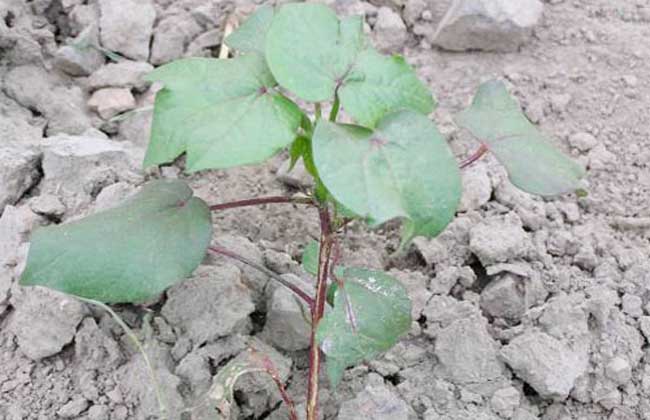
Cotton is one of the most important crops in the world. To achieve high yields in cotton cultivation, good planting is the foundation and good management is the key. Management should focus on preserving full stands, preventing diseased seedlings, promoting strong seedlings, and strengthening field management to lay a solid foundation for early and abundant squaring. The cotton seedling stage refers to the period from emergence to squaring, during which vegetative growth predominates, namely the growth of roots, stems, and leaves. The main goal is to ensure a full stand, achieve strong seedlings with early development, and lay the foundation for high yield.
Ensuring a Full Stand
Where seedlings are missing, measures should be taken as early as possible by transplanting reserve seedlings sown at the same time into the gaps. The earlier the transplanting, the shorter the recovery period, the faster normal growth resumes, and the better the gaps can be narrowed between these and other seedlings. When no reserve seedlings are available, excess seedlings from between rows should be transplanted as early as possible. If no reserve seedlings were planted and there are no excess seedlings between rows, and many gaps exist, replanting should be done as early as possible. Transplanting or replanting into gaps should be appropriately sparse, following the principle of filling 1 gap where 2 are missing, filling 2 where 3 are missing, and filling 3 where 4 are missing.
Intertillage and Soil Loosening
Early intertillage and soil loosening in open-field rows can promptly eliminate compaction caused by machinery traffic and foot traffic during sowing, reduce soil moisture to lessen seedling-stage diseases, and raise soil temperature to promote early cotton seedling development. After each rainfall, timely intertillage and soil loosening should be carried out to keep the loosened soil layer loose, so that soil temperature, air, moisture, and nutrients are better regulated, promoting fast root growth, deep penetration, and wide distribution to form a well-developed root system, enhancing the ability to absorb water and nutrients and resist adverse external conditions, achieving strong seedlings with early development. The intertillage depth for open-field rows should be 8-10 cm. Intertillage should not be done too frequently; it is sufficient to keep the ground free of weeds, non-compacted, and the surface soil relatively loose.
Early Disease Prevention
Diseases that occur in cotton before squaring are collectively called seedling-stage diseases. During this period, the nutritional area is small and the root system is not yet well developed. When encountering low-temperature and rainy weather, pathogens can easily infect the plants. In mild cases, cotton seedlings grow weak and small; in severe cases, large-scale seedling death occurs. Based on disease incidence, damping-off, anthracnose, and red rot are the most prominent. These diseases occur early, spread quickly, and cause severe damage, so they must be prevented with great attention. In preventing seedling diseases, emphasis should be placed on "early" and "prevention." Being early means applying sprays before disease occurs. Putting "prevention" first means preventing disease without seeing it; only with preventive awareness can initiative be demonstrated in being "early." If treatment is delayed until disease appears, it will increase control costs, require more labor, produce more weak seedlings, lead to premature aging, and affect final yield. Before three true leaves, spraying should be done no fewer than two times. The first is at full emergence, spraying 80% ethylicin diluted to a 2000-fold solution. The second is during the 1-2 true leaf period, spraying 70% hymexazol at a 3500-fold solution. When temperature changes greatly, pesticides that nourish and strengthen seedlings should be sprayed, such as Tianfengsu, Shuofeng 481, Fengshousu, Tianda 2116 Zhuangmiaoling, Fushenzhuang, etc.
Early Pest Control
Pest damage during the cotton seedling stage is relatively serious. Different damage timings and modes bring significant impacts on cotton seedling growth and also create difficulties for field control. Some pests transmit viruses, some affect cotton growth and delay development, and others cause loss of growing points resulting in "male cotton" (blind plants) or broken stems causing headless plants. For cotton aphids, small thrips, mirid bugs, and red spider mites, spray 50% pirimicarb wettable powder at 1000-fold solution or 10% imidacloprid at 2000-fold solution. For young cutworm larvae, spray 20% fenvalerate at 1500-2000-fold solution or 50% phoxim at 1500-fold solution. For older cutworm larvae, use the toxic bait method: mix 5 kg of roasted wheat bran or cottonseed meal with 50 mL of 50% phoxim added to 1 kg of water, spray and mix evenly, and scatter between rows in the evening.
Eliminating Size Differences Among Seedlings
As the saying goes, large seedlings bully small seedlings, and small seedlings bear no bolls. This means that large seedlings have a larger physical size and a stronger advantage in competing for light and nutrients, while weak seedlings are at a disadvantage and become increasingly passive, widening the gap between the two. Such a population structure will not achieve ideal yields. Therefore, in cotton field management, action should be taken early to apply supplementary fertilizer to small seedlings, using a 0.5-1.0% urea aqueous solution for root irrigation (use lower concentration when seedlings are smaller). The method is to pour the solution into a sprayer, remove the nozzle, and let it flow along the base of each plant, with 150-200 mL of solution per plant.