What are the conditions for growing cotton? A detailed explanation
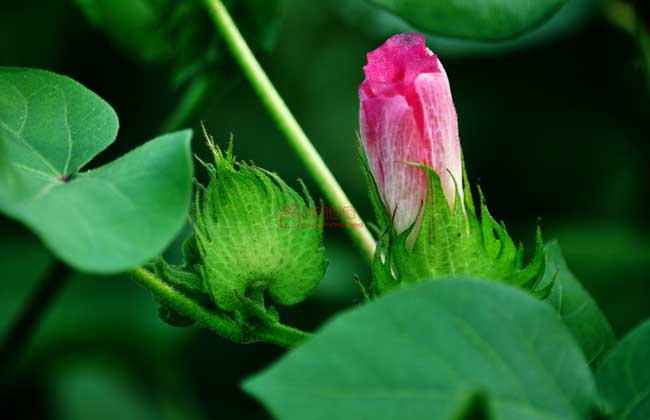
Cotton is the seed fiber of plants in the Gossypium genus of the Malvaceae family. It originated in the subtropics. The flowers the plant produces are milky white or pink. What people usually call cotton is the fiber inside the fruit that grows after flowering, which splits open and pushes the fiber out when ripe. It likes heat, loves light, tolerates drought, and dislikes waterlogging, and is suitable for growing in loose, deep soil. Let's take a look below at the conditions for growing cotton!
Light conditions
Cotton is a light-loving crop and is suitable for growing under relatively abundant light conditions. Both its light compensation point and light saturation point are high. According to measurements, the light compensation point of a single cotton leaf is 750-1000 lux, and the light saturation point is 70,000-80,000 lux. Under normal circumstances, the suitable range of light intensity for cotton leaves is 8000-70000 lux, and within this range the photosynthetic intensity increases as light intensity increases.
Water conditions
Cotton growth requires absorbing water from the soil, and the physiological water requirements differ at each growth stage. From sowing to emergence, the water content of the 0-20 cm soil layer should preferably account for 70-80% of field capacity; at the seedling stage, the water content of the 0-40 cm soil layer should preferably account for 60-70% of field capacity; at the early bud stage, the water content of the 0-60 cm soil layer should preferably account for 65-75% of field capacity; after the full bud stage, the water content of the 0-80 cm soil layer should preferably account for 70-80% of field capacity and must not fall below 60-65%; at the boll-opening stage, the relative soil water content should preferably remain at 55-70%. According to relevant research, about 2/3 of the water in a cotton field during the entire growth period is consumed by transpiration, and 1/3 is consumed by soil evaporation.
Soil conditions
Cotton growth and development require water and nutrients, which are mainly obtained from the soil through the root system. The needed temperature and air are partly taken from the soil, and at the same time the mechanical support of the soil is needed for growth. The physical, chemical, and biological properties of cotton field soil largely restrict the yield and quality of cotton. Soil moisture, nutrients, temperature, air, salinity and alkalinity content, texture, and so on all have a great influence on cotton growth.
Heat conditions
The two stages of early and late cotton growth are the most sensitive to heat conditions. From sowing to emergence mostly takes 7-20 days and requires an active accumulated temperature of 160-320°C. When the air temperature remains above 20°C after cotton is sown, emergence can occur in 7-8 days. If the air temperature is unstable after sowing, although the average is 15-17°C, it takes about 20 days to emerge. The lower the daily average temperature, the more accumulated temperature is needed from sowing to emergence. The heat conditions from flowering to boll opening not only affect cotton yield but also seriously affect cotton quality. In years when the interval from flowering to boll opening is markedly prolonged in the same region and for the same variety, the accumulated temperature in this stage is higher, and cotton yield and quality decline markedly.