Key Points of Cotton Cultivation Techniques and Detailed Field Management Methods
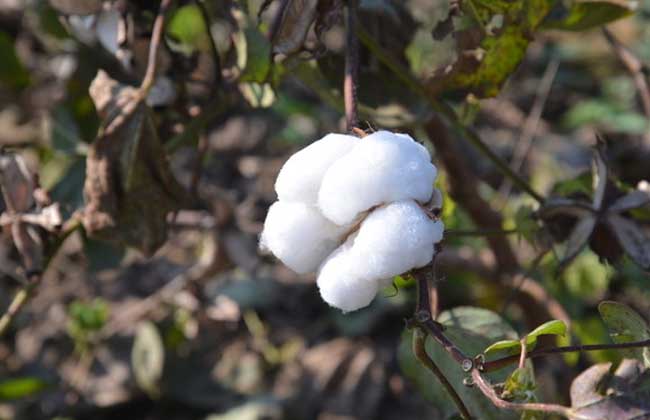
Cotton is one of the world's most important crops. Its high yield and low production cost make cotton products relatively inexpensive, and it can be made into fabrics of many specifications, from light and transparent voile to thick canvas and velveteen, suitable for making all kinds of clothing, furnishing fabrics and industrial fabrics. It is also an important nectar source plant. Let's take a look at cotton cultivation techniques together below!
Growing Conditions
Cotton is a light-loving crop, suitable for growing under relatively sufficient light conditions, with both a high light compensation point and a high light saturation point. The physiological water requirements differ at each growth stage. From sowing to emergence, a water content of 70-80% of field capacity in the 0-20 cm soil layer is suitable; at the seedling stage, a water content of 60-70% of field capacity in the 0-40 cm soil layer is suitable; at the early bud stage, a water content of 65-75% of field capacity in the 0-60 cm soil layer is suitable; after the full bud stage, a water content of 70-80% of field capacity in the 0-80 cm soil layer is suitable; at the boll-opening stage, maintaining a soil relative water content of 55-70% is suitable. Cotton growth and development require water and nutrients, which are mainly obtained from the soil through the root system. The needed temperature and air are partly drawn from the soil, and at the same time mechanical support from the soil is needed for growth.
Applying Sufficient Base Fertilizer
Cotton has a long growth period, and its root system is deep and extensive. It requires not only abundant mineral nutrients in the surface soil, but also relatively high fertility in the deeper plow layer that can slowly release nutrients. Base fertilizer is applied into the soil by plowing before cotton sowing and can meet this requirement. Base fertilizer is mainly farmyard manure, which can be applied to the soil in autumn and winter combined with deep plowing and deep turning, or applied during land preparation in spring. Generally, apply 3000-4000 kg of high-quality farmyard manure per mu and 30-50 kg of Stanley compound fertilizer, and at the same time apply 1-2 kg each of zinc and boron fertilizer per mu as basal application.
Sowing at the Right Time
1. Time: In production, the suitable sowing period is generally when the 5 cm soil temperature is stable above 12-14°C, or when the air temperature is stable above 16°C. Sowing at the right time can make cotton plants grow steadily, promote earlier budding and flowering, extend the boll-setting period, and help achieve early maturity, high yield and good quality. Sowing too early with low soil temperature easily causes seed rot and missing seedlings. Sowing too late delays each growth stage, leading to late maturity, reduced yield and lower fiber quality.
2. Seed quantity: The sowing rate should be determined according to the sowing method, seed quality, retained seedling density, soil and climate conditions, etc. Too little makes it difficult to ensure the proper number of plants and affects yield. Too much wastes cotton seed and also causes crowded cotton seedlings, easily forming leggy seedlings and increasing the labor for thinning, etc. When the seed germination rate is low, soil moisture is poor, the soil is clayey or saline-alkaline, or underground pests are severe, the sowing rate should be increased as appropriate.
3. Depth: Cotton cotyledons are thick and large, with poor soil-penetrating ability. Sowing depth is closely related to emergence time, seedling completeness, and seedling vigor. If sown too deep, the temperature is low, it is difficult for seedlings to penetrate the soil, emergence is slow, more nutrients are consumed, seedlings are weak, and it may even cause seed rot and bud rot leading to missing seedlings. If sown too shallow, it is easy for the soil to dry out, causing missing seedlings and broken rows. Sowing depth should be determined according to soil texture and moisture conditions. In principle, the sowing depth should be controlled at 3-4 cm. For soil with good moisture and a relatively clayey texture, sowing should be shallower; for soil with poor moisture and a relatively sandy texture, sowing should be appropriately deeper.
Pruning and Topping
1. Removing leaf branches: After the first fruiting branch appears, promptly remove the leaf branches below the first fruiting branch, while retaining the main stem leaves to provide organic nutrients to the root system. This is called removing leaf branches or wiping oil branches. Removing leaf branches is one of the means of controlling excessive cotton growth and achieving high yield. For weak seedlings and cotton plants at missing-seedling spots, leaf branches may be left, and after they elongate, the tips are then removed. Removing leaf branches is carried out in the early bud stage. Generally, mid-maturing varieties with a loose plant type need leaf branch removal, while early-maturing varieties with a compact plant type may not need this work.
2. Topping the terminal bud: Topping can eliminate apical dominance, regulate the balanced distribution of photosynthetic products among organs, increase the proportion of nutrients allocated to the lower fruiting organs, strengthen the transport of assimilates to the root system, enhance root activity and nutrient absorption capacity, and thereby increase the boll-setting rate.
3. Removing branch tips: Removing branch tips means removing the tips of fruiting branches. This can control the lateral growth of fruiting branches, improve field ventilation and light conditions, help increase the boll-setting rate, increase boll weight, and promote early maturity. In production, for cotton fields with sufficient fertilizer and water, vigorous growth and relatively high density, in the middle and late stages of field management, remove the group tips several times from bottom to top. Combined with the boll-setting situation, retain 2-3 fruiting nodes on the lower part and 3-4 fruiting nodes on the middle part; for the upper part, remove tips according to the timing of the local first frost.
Rational Topdressing
1. Light application of seedling fertilizer: Topdressing seedling fertilizer can promote root development and cultivate strong seedlings. Seedling fertilizer is generally mainly nitrogen fertilizer and can be determined according to seedling condition, soil fertility, base fertilizer, etc. For cotton fields with poor soil fertility, insufficient base fertilizer and weak growth, apply 5-10 kg of urea or high-nitrogen compound fertilizer per mu, applied in furrows, and cover with soil after application. For cotton fields with high fertility and sufficient base fertilizer, seedling fertilizer may not be applied.