Detailed Explanation of Key Points of Cotton Seed Seedling Cultivation Techniques
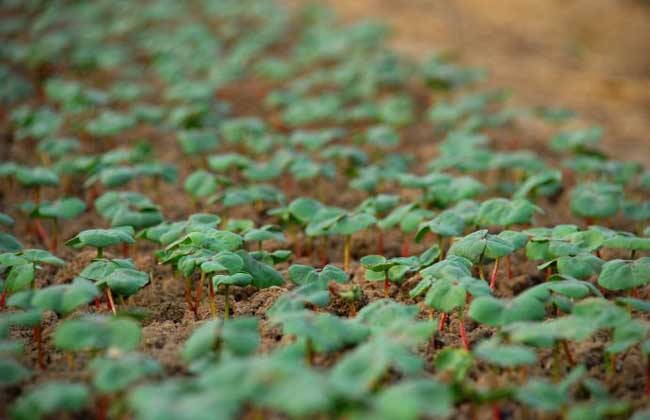
Cotton is an annual herbaceous plant of the genus Gossypium in the Malvaceae family, native to Mexico in the Americas. It is usually propagated by seed. The seed has a hard, thick seed coat and a well-developed embryo. A longitudinal groove on the ventral side of the seed is the hilum, and the pointed tip of the seed is the protrusion of the hilum. To increase cotton yield, seeds usually need to be sun-dried, soaked and dressed before sowing. Let us now take a look at cotton seed seedling cultivation techniques.
Sun-drying seeds
Generally, seeds are sun-dried 15 days before sowing. This can break the dormancy of cotton seeds, effectively kill pathogens on the seed coat, reduce seedling-stage diseases, promote after-ripening of seeds, enhance the water absorption capacity of seeds and the air permeability of the seed coat, increase the germination rate and germination vigor of seeds, and promote seed sprouting and seedling emergence. Fuzzy seeds should be exposed to strong sunlight for 3-5 days, 5-6 hours per day, with a spreading thickness generally not exceeding 10 cm, and turned 3-4 times per day to ensure even and thorough sun-drying. Delinted coated seeds should be air-dried for about 1 day under weak-light weather conditions. When sun-drying seeds, take special care not to dry them on stone slabs, cement floors or plastic film, so as to avoid high temperatures scorching the cotton seeds and affecting the seed germination rate.
Soaking seeds
Warm-water seed soaking is a traditional fuzzy-seed treatment that has been used in China to this day. Its main function is to promote seed sprouting and seedling emergence, especially under conditions of poor soil moisture, and it helps achieve full stands in one sowing. Delinted coated seeds cannot be soaked. Warm-water seed soaking generally does not have the effect of reducing seedling-stage diseases. On the contrary, if the soaking time is too long, too many nutrients flow out of the seeds, which may aggravate the occurrence of seedling-stage diseases. Therefore, the key to soaking seeds is to control the water absorption so that it is not excessive, generally reaching 60-70% of the air-dried weight of the seeds themselves, with the seed coat becoming soft and the cotyledons separating. The soaking time depends on water temperature; at 18-20°C, soak for 12-16 hours, then remove and drain before chemical seed dressing. There is no need to emphasize warm-water soaking, and sprouting is not recommended.
Seed dressing
Chemical seed dressing can kill pathogens carried by the seeds and pathogens in the surrounding soil after sowing, thereby increasing the emergence rate and preventing seedling-stage diseases. When used together with insecticides for seed dressing, it can also reduce the harm of seedling-stage insect pests. Seed dressing chemicals contain a certain amount of fungicides, insecticides and an appropriate amount of plant growth regulators. A commonly used chemical and treatment method is to dress 20 jin of dry cotton seed with 50 g of 50% carbendazim wettable powder plus 30 g of 50% thiram wettable powder plus New High-Lipid Film, or with 125 g of 40% seed-dressing dual wettable powder plus New High-Lipid Film.
Raising seedlings
1. Plastic-film frame seedling raising: Most ecological cotton regions across the country use the plastic-film frame seedling raising method. The main practice is that after sowing and covering with soil, arches are set up and film is laid over them, with all sides sealed tightly, and ventilation and cooling begin after full emergence.
2. Nutrient block seedling raising: Nutrient block seedling raising is also called square seedling raising or block seedling raising. Different places have different names because of different measures adopted. For example, when river mud, pond mud and the like are used as bed soil for square seedling raising, it is called river-mud square seedling raising.
3. Flat-laid plastic-film seedling raising: Flat-laid plastic-film seedling raising saves labor and cost, simplifies management procedures and has simple operational techniques, making it easy for people to master. The film is laid directly on the seedbed, and when the cotton sprouts push through the soil, the film is broken to release the seedlings. The thickness of the plastic film used is only 18% of the thickness of commonly used agricultural film. In areas with much rainy weather during the seedling stage, seedling raising by this method results in relatively severe diseased seedlings and dead seedlings, so the seedling raising period should be appropriately delayed in production, and it can be applied in cotton fields transplanted from late stubble.
4. Double-film seedling raising: Double-film seedling raising is a seedling raising method in which, after sowing and covering with soil, a layer of plastic film is first laid flat, and then an arched shed is added. It solves the problem of stiff seedlings and diseased seedlings easily caused by rainy and low-temperature weather after early spring sowing, and the cotton seedlings raised are of good quality and enter the squaring stage earlier.
5. Ventilated mesh-film seedling raising: Ventilated mesh-film seedling raising is to cut conventional plastic film along the center line, sew a 10-15 cm wide nylon window screen in the middle, and cover it on the frame. Temperature and humidity are naturally regulated through the open part of the ventilated mesh, with no need to uncover it by day and cover it at night.