What are the high-yield cotton varieties? Choose the right variety for higher yield
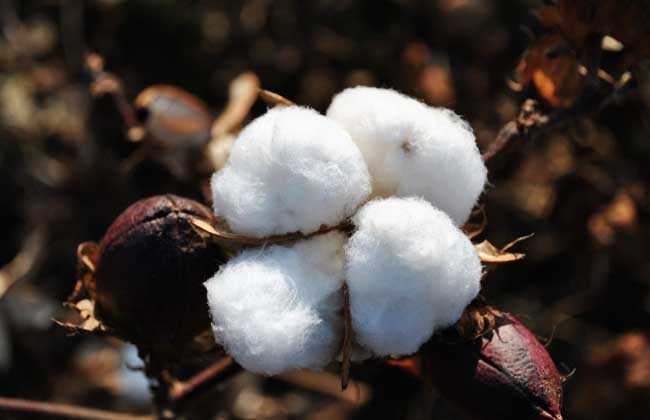
Cotton is a plant of the genus Gossypium in the mallow family, native to the subtropics and now widely cultivated in all cotton-producing regions of China. Existing cultivated varieties include Stoneville cotton, Deltapine cotton, and Coker cotton, among others. The main commercial cotton bases are the Jianghuai Plain, Jianghan Plain, South Xinjiang cotton region, central-south Hebei, northwest Shandong, the northern Henan Plain, and the coastal and riverside plains of the lower Yangtze. Let us now take a look at what the high-yield cotton varieties are!
Xiangzamian No. 7
[Planting region] Xiangzamian No. 7 is a first-generation medium-maturing hybrid cotton variety with a transferred insect-resistance gene. It has obtained the safety certificate for the production and application of agricultural genetically modified organisms, with the GMO name Xiangzamian No. 7. It meets the national cotton variety approval standards and has passed approval. It is suitable for spring sowing in Jiangsu, the area south of the Huaihe River in Anhui, northern Jiangxi, Hubei, northern Hunan, eastern Sichuan, southern Henan, and the coastal areas of Zhejiang.
[Plant characteristics] In the spring-sown growing period in the Yangtze River basin cotton region, it is 123 days. Emergence is good, growth vigor is strong, and uniformity is good. Plant height is 115 cm, the plant type is compact, fruit branches are relatively long and spreading, the stem is thick and sturdy, pubescence is abundant, leaves are relatively large and dark green, the first fruit branch node is at 6.4 nodes, bolls per plant are 28, bolls are oval, boll opening is smooth, single boll weight is 6.1 g, lint percentage is 42.1%, seed index is 9.9 g, pre-frost flower rate is 94.3%, and the rate of immature bolls is 7.4%.
[High-yield performance] From 2006 to 2007, it participated in the regional trial of the medium-maturing group in the Yangtze River basin cotton region. The two-year average yields per mu of seed cotton, lint cotton, and pre-frost lint cotton were 262.7 kg, 110.4 kg, and 104.4 kg respectively, increasing yield by 4.3%, 12.0%, and 12.5% respectively compared with the control Xiangzamian No. 8. In the 2008 production trial, the yields per mu of seed cotton, lint cotton, and pre-frost lint cotton were 225.4 kg, 95.4 kg, and 88.1 kg respectively, increasing yield by 1.4%, 7.7%, and 8.6% respectively compared with the control Xiangzamian No. 8.
[Resistance identification] Tolerant to fusarium wilt, tolerant to verticillium wilt, moderately resistant to cotton bollworm, resistant to pink bollworm.
CRI 63
[Planting region] CRI 63 is a bivalent transgenic insect-resistant cotton hybrid developed by the Cotton Research Institute of the Chinese Academy of Agricultural Sciences and the Biotechnology Research Institute, using the conventional upland cotton new line "9053" as the female parent and the selection line P4 from the improved line sK9708 of a domestic bivalent transgenic insect-resistant cotton new variety as the male parent. It is suitable for planting in the Yangtze River basin cotton region.
[Plant characteristics] Emergence is relatively good, the plant is tower-shaped, plant height is medium, fruit branches are compact, stem pubescence is sparse, leaves are medium-sized, leaf color is relatively dark, bolls are oval, and boll opening is smooth. The growing period is 125 days, plant height is 109.50-121.0 cm, fruit branches are 17.81, bolls set per plant are 25.57-29.5, boll weight is 5.71-6.6 g, lint percentage is 40.9-41.52%, seed index is 9.81-10.3 g, pre-frost flower rate is 88.57-93%, and the rate of immature bolls is 4.4-12.24%.
[High-yield performance] The average seed cotton yield of CRI 63 is 3567.30 kg/hectare, an increase of 10.1% over the control variety (Xiangzamian No. 2 F1); the average lint cotton yield is 1478.55 kg/hectare, an increase of 10.0% over the control variety, ranking first, with an extremely significant yield increase. The pre-frost lint cotton yield is 1310.40 kg/hectare, an increase of 10.2% over the control. According to the 2006 production trial results at 10 sites in the Yangtze River basin cotton region, the yields of seed cotton and lint cotton were 3876.00 kg/hectare and 1585.50 kg/hectare respectively, increases of 0.4% and 2.3% respectively over the control variety (Xiangzamian No. 8 F1).
[Resistance identification] Tolerant to fusarium wilt, tolerant to verticillium wilt, highly resistant to cotton bollworm, highly resistant to pink bollworm.
Tongzamian 411
[Planting region] Tongzamian 411 is a first-generation medium-maturing hybrid variety with a transferred insect-resistance gene. It has obtained the safety certificate for the production and application of agricultural genetically modified organisms and meets the national cotton variety approval standards. It is suitable for spring sowing in Jiangsu and the area south of the Huaihe River in Anhui, northern Jiangxi, Hubei, northern Hunan, eastern Sichuan, southern Henan, and the coastal areas of Zhejiang.
[Plant characteristics] The spring-sown growing period in the Yangtze River basin cotton region is 124 days. Emergence is relatively good, growth vigor is strong, and uniformity is good. Plant height is 114.7 cm, the plant type is relatively compact, fruit branches are relatively long and spreading, the stem is thick and sturdy, pubescence is relatively sparse, leaves are medium-sized and dark green, the first fruit branch node is at 6.7 nodes, bolls per plant are 29.5, bolls are oval, boll opening is smooth, single boll weight is 6 g, lint percentage is 43.2%, seed index is 10.4 g, pre-frost flower rate is 93.3%, and the rate of immature bolls is 11.8%.
[High-yield performance] From 2007 to 2008, it participated in the regional trial of the medium-maturing group in the Yangtze River basin cotton region. The two-year average yields per mu of seed cotton, lint cotton, and pre-frost lint cotton were 249.8 kg, 108 kg, and 100.9 kg respectively, increasing yield by 6.3%, 16.0%, and 16.8% respectively compared with the control Xiangzamian No. 8. In the 2008 production trial, the yields per mu of seed cotton, lint cotton, and pre-frost lint cotton were 248.9 kg, 107.9 kg, and 100.5 kg respectively, increasing yield by 6.9%, 16.2%, and 17.0% respectively compared with the control Xiangzamian No. 8.
[Resistance identification] Tolerant to fusarium wilt, tolerant to verticillium wilt, resistant to cotton bollworm.
Ezamian 29
[Planting region] A first-generation medium-maturing hybrid variety with a transferred insect-resistance gene, bred by the Jingzhou Academy of Agricultural Sciences and the Biotechnology Research Institute of the Chinese Academy of Agricultural Sciences. It has obtained the safety certificate for the production and application of agricultural genetically modified organisms and meets the national cotton variety approval standards. It is suitable for spring sowing in Jiangsu and the area south of the Huaihe River in Anhui (except Anqing and Yancheng), the coastal areas of Zhejiang, northern Jiangxi, the Jianghan Plain of Hubei, and Hunan.