Which regions are the main cotton-producing areas?
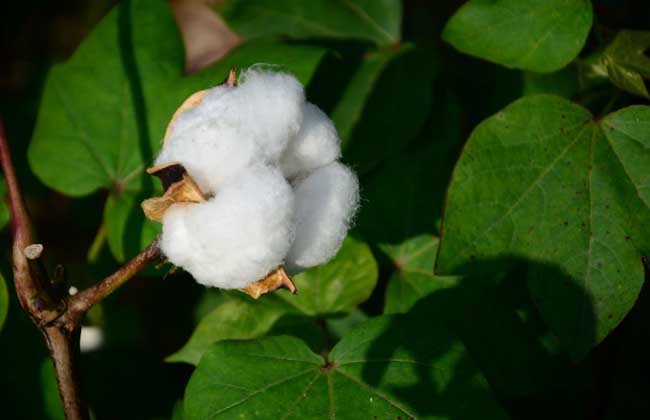
Cotton is one of the most important crops in the world. It is an annual herbaceous plant of the genus Gossypium in the mallow family (Malvaceae), with a shrub-like growth habit. Grown in tropical regions, it can reach 6 m in height, but it is generally 1 to 2 m. The countries with the highest yields are China, the United States, India, Brazil, Mexico, Egypt, Pakistan, Turkey, Argentina and Sudan. Let us take a look at the distribution of cotton production regions below!
Cotton production regions in China
Cotton originated in India and Arabia. Before cotton was introduced to China, the country had only kapok, which could be used to stuff pillows and bedding, and no cotton that could be woven into cloth. China's five major commercial cotton bases are the Jianghuai Plain, the Jianghan Plain, the South Xinjiang cotton region, the plains of central-southern Hebei, northwestern Shandong and northern Henan, and the coastal plain along the lower reaches of the Yangtze River. Cultivated varieties include Stoneville cotton, Delfos cotton, Deltapine cotton and Coker cotton, and among the recently bred high-yielding varieties in the north is Lumian No. 1.
World cotton production regions
Besides China, the countries with the highest cotton yields in the world are the United States, India, Brazil, Mexico, Egypt, Pakistan, Turkey, Argentina, Sudan and Uzbekistan. Cotton cultivation first appeared in the Indus Valley Civilization in the 5th to 4th millennium BC. Before the Common Era, the use of cotton textiles spread to the Mediterranean region. In the 1st century AD, Arab merchants brought fine cotton cloth to Italy and Spain. Around the 9th century, the Moors introduced cotton cultivation methods to Spain. In the 15th century, cotton was introduced to England and then to England's North American colonies.
Environment of cotton cultivation regions
1. Light: Cotton is a light-loving crop and grows best under relatively ample light conditions. Both its light compensation point and light saturation point are high. According to measurements, the light compensation point of a single cotton leaf is 750 to 1000 lux, and the light saturation point is 70,000 to 80,000 lux. Under normal conditions, the suitable range of light intensity for cotton leaves is 8,000 to 70,000 lux, and within this range the photosynthetic rate increases as light intensity rises.
2. Water: Cotton growth requires absorbing water from the soil, and the physiological water requirements differ at each growth stage. From sowing to emergence, the water content of the 0 to 20 cm soil layer should preferably be 70 to 80% of field capacity; at the seedling stage, the water content of the 0 to 40 cm soil layer should preferably be 60 to 70% of field capacity; at the early bud stage, the water content of the 0 to 60 cm soil layer should preferably be 65 to 75% of field capacity; after the full bud stage, the water content of the 0 to 80 cm soil layer should preferably be 70 to 80% of field capacity and must not fall below 60 to 65%; during the boll-opening stage, the relative soil water content should preferably remain at 55 to 70%. According to relevant research, about 2/3 of the water consumed by a cotton field throughout the growth period is lost through transpiration, and 1/3 is lost through soil evaporation.
3. Soil: Cotton growth and development require water and nutrients, which are mainly obtained from the soil through the root system. The required temperature and air are partly taken from the soil, and soil provides the mechanical support needed for growth. The physical, chemical and biological properties of cotton field soil largely restrict the yield and quality of cotton. Soil moisture, nutrients, temperature, air, salt and alkali content, and texture all have a great influence on cotton growth.