Where are sweet potatoes grown? A look at the main producing regions nationwide
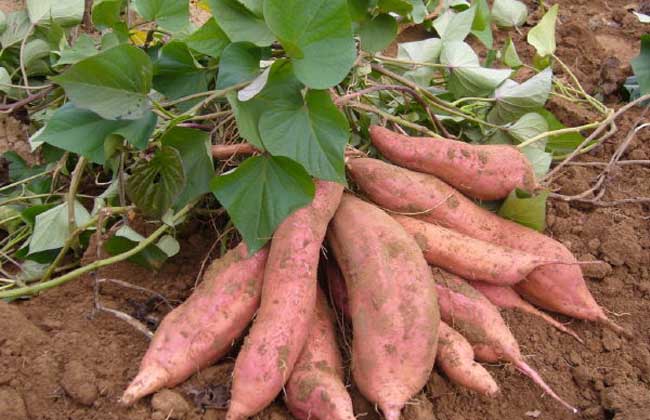
The sweet potato is an annual herbaceous vine of the genus Ipomoea in the morning glory family (Convolvulaceae). Historical records show that the sweet potato was introduced to Fujian and Guangdong in China from the South Seas at the end of the 16th century, and then spread to the Yangtze River and Yellow River basins and to Taiwan, China, and other places. Today, China's sweet potato planting area and total output both rank first in the world. Let's take a look at the geographic distribution of sweet potatoes below!
The global distribution of sweet potatoes
Worldwide, the sweet potato is distributed in South America, the Greater Antilles, and the Lesser Antilles, and in tropical and subtropical regions around the globe (mainly grown south of 40°N).
The distribution of sweet potatoes in China
Sweet potatoes are mainly distributed in Beijing, Shanxi, Shandong, Henan, Tianjin, Hebei, the three northeastern provinces, Inner Mongolia, Yunnan, Sichuan, Hubei, Gansu, Anhui, Fujian, Shaanxi, Hunan, Guangdong, Jiangsu, Jiangxi, and other places in China. The main producing regions nationwide are Sixian in Anhui (China's home of sweet potatoes), Lulong in Hebei, Liancheng in Fujian, Kaifeng, Dengzhou, and Tongzhaipu in Tanghe in Henan, Sishui in Shandong, Nanchong in Sichuan, and other areas.
The growing environment of sweet potatoes
1. Temperature: Sweet potatoes like warmth and fear cold. At a soil temperature of around 10°C they do not form roots; at 15°C they need 5 days to form roots; at 17-18°C they form roots normally; at 20°C they form roots in 3 days; at 27-30°C they can form roots in just one day. When the air temperature is 25-28°C the stems and leaves grow quickly, and above 30°C the stems and leaves grow even faster, but the tubers swell slowly. Above 38°C respiration consumes a lot, and stem and leaf growth slows; below 20°C stem and leaf growth is also fast; at 15°C growth stops; if temperatures below 10°C last too long or frost occurs, the stems and leaves wither and die.
2. Light: Sweet potatoes like light. With sufficient light, the leaves are darker in color, the leaf lifespan is longer, the stems and vines are thick and strong, the conductive tissue of the stems is well developed, and the yield is relatively high. If light is insufficient, the leaves turn yellow, there is a lot of leaf drop, the leaf lifespan is short, the stems and vines are thin and long, the conductive tissue is poorly developed, less of the organic nutrients formed by assimilation are transported to the tubers, and the yield is low.
3. Water: The sweet potato is a drought-tolerant crop, but too much or too little water is unfavorable for increasing yield. Sweet potatoes are prone to waterlogging, especially if waterlogged after tuber formation, which greatly affects yield. When the soil is alternately dry and wet, the inner and outer growth rates of the tubers become uneven, often causing skin cracking. In short, sweet potatoes fear both waterlogging and drought. As the saying goes: "Dry soil grows woody roots, wet soil grows fibrous roots, and neither dry nor wet soil grows tubers." To obtain a high sweet potato yield, irrigation should be timely and moderate according to specific conditions, drainage should be thorough and timely, and in dry land, cultivation and soil moisture conservation should be strengthened.
4. Nutrients: Sweet potatoes have a strong ability to absorb nutrients and tolerate poor soil, but to achieve high yields, sufficient fertilizer must be applied. In addition to nitrogen, phosphorus, and potassium, sulfur, iron, magnesium, calcium, and others also play important roles. Among the three major elements, sweet potatoes require the most potassium, followed by nitrogen, and the least phosphorus. According to analysis, every 1000 jin of sweet potatoes contains 3.5 jin of nitrogen, 1.75 jin of phosphorus, and 5.6 jin of potassium. Therefore, increasing potassium fertilizer and applying nitrogen and phosphorus fertilizer timely and in appropriate amounts has a significant effect on increasing yield.
5. Soil: Sandy loam and sandy soil with deep, organic-rich, loose, well-aerated, and well-drained layers are best. When the soil is heavy and clayey, the tuber skin color is poor and rough, the tuber shape is irregular, the yield is low, and storage life is poor. However, sandy loam and sandy soil generally have low fertility and poor water retention, so fertility should be gradually improved through measures such as fertilization before high yields can be obtained. Sweet potatoes are relatively tolerant of acidity and alkalinity, adapting to a pH range of about 4.5-8.5, but 5.2-6.7 is preferable. When the soil salt content exceeds 0.2%, sweet potatoes should not be planted.