What is the best time to plant purple sweet potatoes?
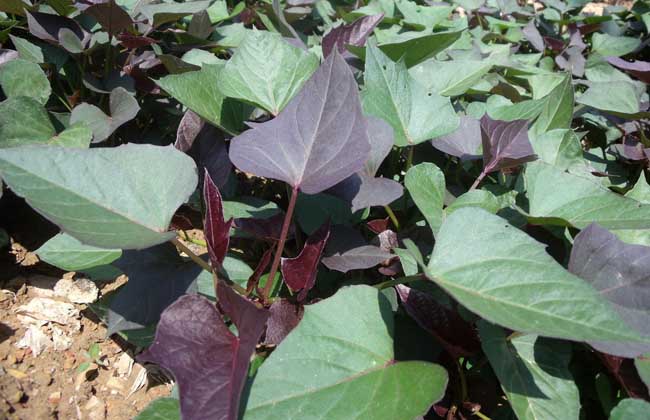
Purple sweet potato is also known as black potato, shao potato, etc. Its flesh ranges from purple to deep purple. It is grown in Guangdong, Guangxi, Hunan, Hubei, Fujian, Sichuan, Yunnan, Guizhou, Shandong, Jiangxi, Shaanxi and other places in China. It has high edible value and is one of the main raw materials for anthocyanins. Let's take a look at the planting time of purple sweet potato below!
Purple Sweet Potato Planting Time
The planting time of purple sweet potato is generally mid-February. When the temperature reaches around 15 degrees in mid-February, the tubers can be taken out of the cellar for sprouting. First prepare the seedbed, place the seed tubers horizontally in rows on the seedbed with a row spacing of about 5 cm, cover with fine soil, moisten the soil with a sprayer, cover with plastic film and then with a top film to retain moisture and warmth. When the sprouts grow to more than 20 cm, they can be cut and transplanted into the field. For seed production, purple sweet potatoes should be harvested in mid to late October, and for fresh-eating types it can be delayed until early November, but harvesting must be completed before frost. Before storage, clean the potato cellar, remove the surface soil and disinfect it. Before entering the cellar, sun-dry the purple sweet potatoes for 1 to 2 days to heal the wounds. During storage, pay attention to ventilation and dehumidification in the early stage, and to heat preservation and moisture retention in the later stage.
Purple Sweet Potato Growing Environment
Purple sweet potato prefers a warm climate. The suitable growing temperature for stems and leaves is 18 to 25 °C, and growth stops when the temperature is below 15 °C. The optimum soil temperature for root tuber growth is 22 to 24 °C, and enlargement stops when the soil temperature is below 20 °C. It is a short-day crop and needs sufficient light of high intensity. During the growing period, the suitable soil moisture is 60% to 80% of the maximum field water-holding capacity.
Purple Sweet Potato Variety Classification
1. Jizishu No. 1: Jizishu No. 1 was bred by the Crop Research Institute of the Shandong Academy of Agricultural Sciences and passed provincial approval in Shandong in July 2012. Its outstanding feature is the “three highs”: first, high anthocyanin content, with an average content of 76.38 mg/100 g fresh tuber; second, high dry matter and starch content, with dry matter content of 36% to 40% and starch content of 25%-27%; third, high yield potential. Through measures such as plastic film mulching, formula fertilization, full-period chemical control during the growing season, and effective prevention and control of pests and diseases, standardized and large-scale planting can fully realize the yield potential of this variety.
2. Jishu No. 18: Jishu No. 18 was bred by the Crop Research Institute of the Shandong Academy of Agricultural Sciences, with a yield of more than 3000 kg per mu.
3. Guangshu 135: Guangshu 135 was bred by the Guangdong Academy of Agricultural Sciences, with a yield of 2000 to 2500 kg per mu.
4. Ningzi No. 4: Ningzi No. 4 was bred by the Grain and Oil Crop Research Institute of the Jiangsu Academy of Agricultural Sciences, with a yield of about 500 kg per mu.
5. Jingshu No. 6: Jingshu No. 6 was produced by crossing Brazilian sweet potato with Chinese sweet potato. It has long vines, purple skin and flesh, high sweetness and good quality, with a yield of 1500 to 2000 kg per mu and a high dry matter rate. It is mainly used for deep processing and pigment extraction.
6. Purple Sweet Potato King: Purple Sweet Potato King has high yield and outstanding quality, with purple-black skin and purple flesh. It is rich in selenium, sweet and glutinous in taste, and fine in texture. It is an excellent sweet potato variety for fresh eating and health care, especially suitable for making potato paste, sweet potato puree, fried potato chips, etc. It is the preferred variety for making a series of purple sweet potato leisure and health foods.
7. Japanese Lingzi: Japanese Lingzi is a new black potato variety introduced from Japan in recent years. Its leaves are purple-green, the top three leaves are purplish red, and the veins and petioles are all green. The leaves are heart-shaped with shallow single lobing. The vines are about 1.5 m long with few branches at the base. The tubers are long spindle-shaped, with bright purplish-red skin and purple-black flesh that turns nearly black when cooked. They are sweet, fragrant, mealy and sandy, rich in anti-cancer elements such as selenium and iodine, and their nutritional components are several times higher than other sweet potatoes. It is currently the darkest variety in the black potato series and a good variety for fresh eating, health care and deep processing such as pigment extraction. It has strong disease resistance and storage tolerance, is drought-tolerant and barren-tolerant, and has strong adaptability. General yield per mu: 3000 kg for spring potatoes and 2000 kg for summer potatoes.
8. Qunzi No. 1: Developed by the Henan Academy of Agricultural Sciences, it has short vines, many branches and high vegetable yield. It also has high yield. Spring sweet potatoes yield more than 3000 kg per mu, and summer sweet potatoes about 2000 kg.
9. Yuzi 263: Bred by the Zhejiang Academy of Agricultural Sciences, with a yield of about 2000 kg, fine flesh, few fibers, high sugar content and good taste. It is a good variety for eating.
10. Xuzishu No. 1: It entered the Jiangsu Province sweet potato variety production trial in 2003. After five years of trial planting and identification at more than 20 sites, “Xuzishu No. 1” is a new high-yield, purple-fleshed variety. Its fresh tuber yield is stable at more than 2000 kg per mu, 3 to 5 times higher than the Japanese purple-fleshed varieties “Shanchuanzi” and Ayamurasiky. This variety has red skin and purple flesh; when cooked, the flesh is bright purple and tastes good. The suitable density is about 3300 plants per mu. It is relatively tolerant of late planting, and waterlogging has a great impact on yield. It is suitable for planting in most areas of northern China and the middle and lower reaches of the Yangtze River.
11. Nanzishu 008: Nanzishu 008 is a new variety bred by the Nanchong Academy of Agricultural Sciences in Sichuan Province. This variety has purplish-red top leaves and green mature leaves of medium size. The tubers are long spindle-shaped with purple skin, purple flesh, smooth skin and attractive shape, and excellent quality when cooked. Spring cultivation generally produces about 19500 kg of fresh tubers per hectare and about 31500 kg of vines and leaves per hectare. Autumn cultivation produces 9750 kg of fresh tubers per hectare and 12750 kg of vines and leaves per hectare. Cultivating this variety as an autumn potato can not only increase fresh tuber yield, but also provide fresh green fodder for the breeding industry in autumn and winter.
12. Zhezishu No. 1: From the Institute of Crops and Nuclear Technology Utilization of the Zhejiang Academy of Agricultural Sciences. In the 2007 provincial sweet potato variety comparison trial, the average fresh tuber yield per mu was 2148.7 kg, an increase of 49.7% over the control 1, Yuzi 263, reaching an extremely significant level. This variety has good sprouting ability, vigorous growth at the seedling stage, long stems and vines, and heart-shaped serrated leaves that are green in color. Tuber formation is concentrated and the number is relatively large, with an average of 5.1 tubers per plant, an average single tuber weight of 106.1 g, and a proportion of medium tubers of 50 to 250 g of 58.7%. The tubers are spindle-shaped or long spindle-shaped, with purple skin and purple flesh and a smooth surface. The dry matter rate of the tubers is 35.3%, and the steamed fresh tubers taste relatively sweet and mealy. According to resistance identification by the Xuzhou National Sweet Potato Research Center, it is highly resistant to stem nematode disease, resistant to root rot and vine cutting disease, moderately resistant to black spot disease, and has good storage tolerance.