Key Points of Rice Seedling Cultivation Techniques and Detailed Management Methods
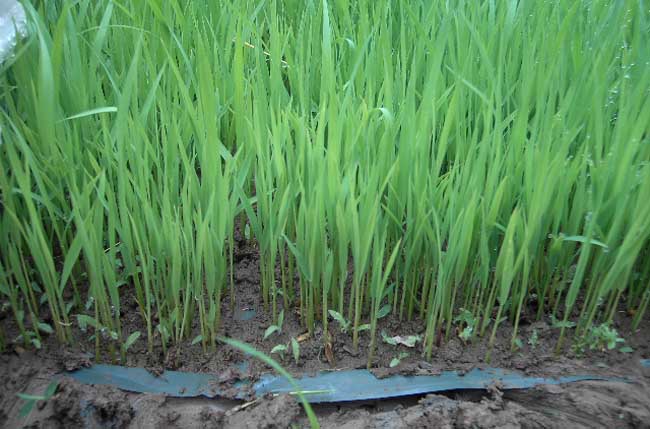
To do a good job in rice seedling cultivation, it is necessary to carefully select good seed, carry out the treatment steps of seed selection and sunning, chemical seed soaking, and sprouting at suitable temperatures, strengthen seedbed management, and adopt the "four controls and one prevention" technical measures of controlling sowing time, controlling sowing rate, controlling water, controlling excessive growth, and preventing pests and diseases, so as to achieve uniform and complete seedlings. Let us take a look at rice seedling cultivation techniques together below!
Selection of Rice Varieties
Selecting the right and suitable varieties is the foundation of high-quality and high-yield rice. For the cultivation of special-quality rice, varieties resistant to stripe leaf blight and rice blast such as Huangjinqing, H301, Baixiangjing, and Jinshiji with strong blast resistance should be selected. For the cultivation of high-quality rice, superior lines of Yujing No. 6, such as 30, 36, 38, 33, etc., as well as varieties such as Xindao 11, Hongguangjing, black rice, and purple rice should be selected to ensure that the rice is both high-yielding and high-quality. Promoting hybrid rice is the current development trend in rice variety selection. Indica hybrid varieties have already been popularized and applied, and japonica rice has also developed rapidly, with yields greatly increased. Guoshendao 2003076, namely the hybrid japonica Jinyou 2003, can be selected, with a single-yield potential of 750 kg.
Rice Seedling Cultivation Techniques
Mastering seedling cultivation techniques well is the guarantee of raising good seedlings. The standard for strong seedlings is: rice seedlings should reach a seedling age of 35-45 days, with 5-7 leaves on the main stem, leaves straight and not drooping, and leaf color green with a tinge of yellow. Plant height 15-20 cm, with 1-2 tillers, stem base flat and thick with elasticity, many white roots, many root primordia, no black roots and no pests or diseases.
1. Seedbed Selection
The seedbed requires fertile soil, convenient drainage and irrigation, and no salinity or alkalinity. The habit of using ditch edges, riverbanks, roadsides, and places with poor fertility as seedbeds must be resolutely overcome.
2. Seedbed Fertilization
The level of seedbed fertility is the key to cultivating strong seedlings. The seedbed field should be applied with 5-7 cubic meters of farmyard manure per mu, and 50 kg of decomposed cake fertilizer plowed in. 3-5 days before sowing, apply per mu to the clean seedling bed 15-20 kg of monoammonium phosphate or diammonium phosphate, 30-40 kg of ammonium sulfate, 15-20 kg of potassium sulfate, and 2 kg of zinc sulfate. Alternatively, 30-40 kg per mu of Wojing brand, Woli brand, or Qiangwang brand rice seedling formula fertilizer can be spread on the clods, then finely harrowed so that soil and fertilizer are mixed evenly, and after leveling, it is ready for sowing.
3. Seed Soaking and Disinfection
To improve the germination rate of seeds, sun the seeds for 2-3 days before sowing, then carry out wind selection or muddy water selection to achieve plump seeds and strong germination vigor. In order to eliminate the pathogens carried by the seeds, seed disinfection should be carried out after seed selection. You can use 5 g of Edi added to 5 jin of water to soak 3 kg of seeds for 3-4 days, or use a 4000-fold solution of 25% prochloraz, or a 2000-3000-fold solution of 80% 402 fungicide, or a 4000-fold solution of 10% Jinzhongling to soak the seeds for 3-5 days, killing pathogens such as bacterial leaf blight, rice blast, bakanae disease, and white-tip nematode disease. After removing them, sow directly, or remove them and sprout until the seed coat splits and the white shows, then sow. For the Baixiangjing variety, which is susceptible to bakanae disease, seed soaking must be done well to effectively prevent and control bakanae disease. Control in the main field is only a remedial measure, and the effect is not very ideal. In areas with rice stripe leaf blight, after soaking the seeds, mix 20 g per mu of 10% imidacloprid with a small amount of fine soil, then mix evenly with the seeds before sowing, which can control the rice planthopper, the vector of the virus.
4. Sowing Time and Sowing Rate
Sowing too early or too late is unfavorable for cultivating strong seedlings. If sown too early, the seedling age becomes old, tillering is absent, and after transplanting, tillering is slow and few. If sown too late, the seedlings are tender and weak, and after transplanting, they turn green slowly. According to the existing varieties in our county, sowing wheat-stubble rice from May 5 to 10 is better, with a seedling age of 35-40 days. The seedbed area is calculated at 45 square meters of clean seedling bed needed for each mu of main field transplanted, requiring 2.5 kg of high-quality rice seed. The sowing rate per mu of seedbed is about 35 kg; if the sowing time is slightly later, the sowing rate is slightly increased.
5. Sowing Method
1-2 days before sowing, release water to soak the bed surface thoroughly, and finely prepare the land to achieve muddy, level surface. Wait until the water in the seedling bed has seeped down and there is no mud slurry, then smooth it and carry out fine sowing. When sowing, achieve half-seed into the mud; do not scatter seeds without seeing them, in order to prevent uneven sowing depth and uneven emergence. After sowing, pat lightly with an iron shovel so that the seeds and mud surface are level. Wait until the covered manure soil is no longer moist, then cover with a 1:2 mixture of sieved decomposed manure soil, with a manure soil thickness of 0.7-1 cm. This point is very critical. It is strictly forbidden to sow under thin mud and cover manure soil on top of mud slurry. The manure soil covering the bed surface is dry and has good air permeability, which is very important for promoting seed rooting. If air permeability is poor, there will be few roots, weak seedlings, and fewer tillers. At the same time, it can also preserve moisture and increase temperature, control the rise of groundwater, suppress the rise of salinity and alkalinity, promote downward rooting, and achieve the goal of many roots and vigorous seedlings.
6. Watering and Topdressing
Before the three-leaf stage, mainly dry growth is used. After the three-leaf stage, if nutrition is insufficient, damping-off disease is easily induced. At the two-leaf-one-heart stage, apply weaning fertilizer, using 45% formula fertilizer or 3-5 kg of urea per mu, and water lightly once; at the three-leaf-one-heart stage, apply tillering-promoting fertilizer, applying 10 kg of urea or 12-15 kg of formula fertilizer per mu, and water lightly once to promote seedling tillering. After that, as long as the bed surface does not return to alkalinity or the seedling leaves do not curl, reduce the number of waterings as much as possible, so that the seedlings grow dry, promote root development, and improve seedling quality. For seedbeds that return to alkalinity, seedling growth will be seriously affected. Wash the bed with water and leach alkali with water: fill with enough water in the morning and drain it completely in the afternoon. After washing away the alkali, water and topdress. Usually pay attention to the weather forecast. When encountering strong winds and cooling weather, pay attention to irrigation to prevent low-temperature cold damage. At 35-40 days, the seedlings should stop water for hardening, so that the seedling tissues become firm and old, the leaves point upward, and resistance is improved.
8. Chemical Regulation and Foliar Fertilization
Chemical regulation can achieve the goals of strong seedlings, more tillers, and more roots. At the two-leaf-one-heart stage of rice, use 120 g per mu of 15% paclobutrazol mixed with water for spraying. Spray evenly, and do not miss or repeat spraying, so that the seedlings grow uniformly. One week before rice transplanting, 5 g of rooting agent mixed with 15 kg of water per mu can be sprayed on the leaves to promote the seedlings to grow root primordia, so that after transplanting they grow and elongate rapidly.