What are the key points to consider when choosing corn seed varieties?
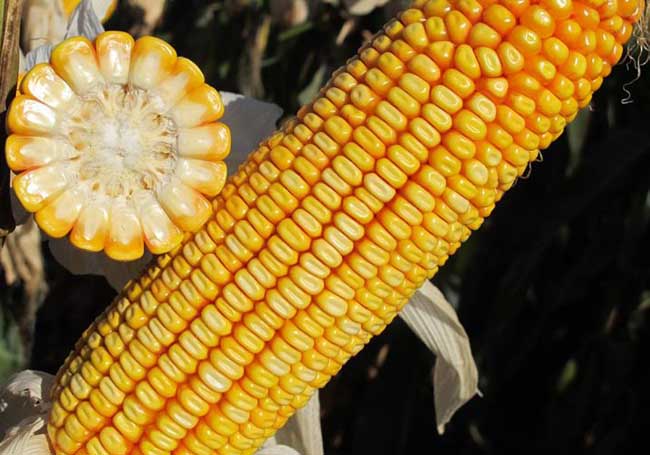
Good varieties and seeds are the foundation of a bumper harvest, and variety selection is the first step in corn production. Varieties differ greatly in growth period, yield level, disease resistance, drought tolerance, disease resistance, lodging resistance, and suitable regions. A variety that performs well in one area may perform poorly in another, and in production there are often cases where improper variety selection or poor-quality seeds lead to reduced yields or even total crop failure. How to choose the good varieties and seeds that suit one's needs is an important issue that corn producers must face. It is generally believed that the following points should be noted:
1. Choose varieties that have been tested and demonstrated locally for at least 3 years
After 3 years or more of local testing and demonstration, the local adaptability of a variety can basically be known. Choosing varieties that perform well over many years and many sites makes the possibility of various catastrophic losses in production relatively small.
2. Choose varieties that can mature normally in the local area
Choose early-to-mid-maturing and mid-to-late-maturing varieties that can mature normally in the local area, and use late-maturing varieties sparingly. Before the first heavy frost in autumn, grain corn must reach physiological maturity or show a black layer; otherwise the grain moisture content is relatively high, the test weight is relatively low, and commercial quality declines. As the climate changes, in some years the autumn frost comes later, and two or three consecutive years of late frost often make people less vigilant, leading them to plant varieties with longer growth periods and causing relatively large losses. This often happens in the Northeast spring corn region of China and the summer corn region of northern North China.
3. Choose varieties with high production potential and wide adaptability
Varieties with similar growth periods can differ greatly in yield potential. The production potential of a variety cannot be determined by special traits such as ear size, number of kernel rows, number of kernels per row, kernel depth, double-ear rate, and whether the leaves are erect (compact) or spreading; the production potential of a variety is reflected in its yield level. Therefore, varieties should be selected based on the yield results of variety comparison trials, and not merely because of traits such as ear size or double-ear rate. Because climate is unpredictable and variable, choose varieties that have relatively high yield levels across many sites, many regions, and many environments.
4. Choose varieties with high lodging resistance
Choosing lodging-resistant varieties is very important, especially in windy areas. Although lodging is closely related to the environment and cultivation measures, genetic differences among varieties are also an important cause of lodging. Lodging generally includes lodging during the growth period and lodging after maturity. Lodging during the growth period is more harmful and can cause total crop failure in severe cases; while lodging in the later growth period or after physiological maturity has a relatively small effect on yield, it often causes quality decline, grain rot, increased rodent losses, and greater harvest difficulty and harvest cost.
5. Choose disease-resistant or disease-tolerant varieties
Disease is an important disaster in corn production. In recent years, the main feature of variety improvement and renewal has been the continuous improvement of disease resistance. The types of major diseases and the degree of occurrence differ among regions. For example, head smut is a major disease in corn production in the Northeast spring corn region, while in the Huang-Huai corn region its damage is relatively light. For disease resistance of a variety, in addition to referring to the variety's characteristic description and the comparison trials of local seed companies or agricultural technology extension departments, one should also refer to the planting experience of other farmers.
6. Plant multiple maturity periods and multiple varieties in combination
Planting multiple maturity periods and multiple varieties in combination is one of the most effective measures for reducing pests and diseases and resisting adverse environmental conditions such as drought and low temperature. Strip-intercropping combinations of multiple maturity periods and multiple varieties, such as early-, medium-, and late-maturing varieties in a 25%-50%-25% combination, can reduce the yield loss of early-to-mid-maturing varieties caused by failure to meet in flowering time and poor pollination due to drought, while also allowing long-growth-period varieties to fully use light and heat resources and reducing the degree of damage from early autumn frost. In addition, planting varieties of multiple maturity periods in combination can increase the genetic diversity of corn and reduce losses caused by the loss of variety resistance.
7. Choose special-purpose varieties for special needs
For special needs, such as feeding or processing, choose special-purpose corn varieties, such as high-starch varieties, high-oil varieties, quality protein maize varieties, waxy corn, sweet corn, and so on.
8. Choose practical varieties
At present, most farmers are interested in new varieties, which reflects farmers' improved scientific and technological production level and their thirst for new technologies. However, it should be pointed out that new varieties are not necessarily suitable for one's needs; choose varieties that match production management level, soil fertility status, and so on.
In addition, under current management conditions, some new varieties have not been tested locally over many years and many sites, and whether they can adapt to the local environment is still not very clear, so the planting risk is relatively greater. Therefore, variety selection should start from practicality, and one should by no means seek only what is new. Choose high-quality seeds. Seed quality has a great impact on yield, and its impact sometimes exceeds the yield differences among varieties. Therefore, in production one should not only choose good varieties but also choose high-quality seeds.
At the present stage, the indicators by which China measures seed quality mainly include four items: variety purity, seed cleanliness, germination rate, and moisture. The state has made clear provisions for the four indicators of corn seed purity, cleanliness, germination rate, and moisture. For Grade I seeds, seed purity is not less than 98%, cleanliness is not less than 98%, germination rate is not less than 85%, and moisture content is not higher than 13%; for Grade II seeds, seed purity is not less than 96%, cleanliness is not less than 98%, germination rate is not less than 85%, and moisture content is not higher than 13%. China's inspection and supervision of corn hybrid seeds adopts the method of a "specified lower quality limit," that is, seeds that do not reach the specified Grade II seed indicators cannot in principle be sold as seeds.
That is the introduction to what issues should be noted when choosing corn seed varieties. For more knowledge about corn seeds, please continue to follow us!