Key Points and Methods of Corn Breeding Technology Explained in Detail
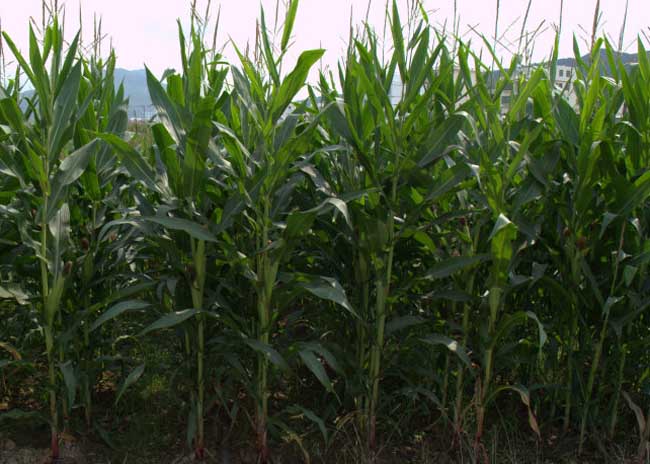
Seed is the most important means of production, and new varieties are the most core foundation of agricultural scientific and technological progress. Corn breeding and production practice show that 43%-60% of corn yield increases are achieved through superior varieties and their promotion. Therefore, breeding and promoting new corn varieties plays a decisive role in improving corn yield levels and comprehensive grain production capacity.
Characteristics of Corn Breeding
The most important characteristic of corn is natural cross-pollination. The field composition of naturally pollinated populations is in a highly heterogeneous state, and the genotypes of individuals are in a highly heterozygous state. This determines that in naturally pollinated corn populations, comparisons of phenotypes among plants are of little significance, and selection must be made correctly through a certain genotype selection process. At the same time, because individual genotypes are highly heterozygous, phenotypic selection is unreliable, and a large number of individuals must be testcrossed or progeny-tested to confirm whether phenotypes are truly inherited. For these reasons, in the corn breeding process, multiple generations of selection and comparison are generally required before new inbred lines or varieties can be developed.
The mainstream of modern corn breeding is heterosis breeding. The basic approach is to first breed homozygous parental inbred lines, then cross the parental inbred lines to breed hybrids with strong heterosis. What is used in production is the heterosis of the F1 generation. The breeding of inbred lines requires not only excellent traits in themselves but also high combining ability. Selection for agronomic traits and combining ability of inbred lines is equally important, and neither can be neglected. This greatly increases the difficulty of breeding and prolongs the breeding cycle. Moreover, although the traits of inbred lines are related to the traits of hybrids, there is still a gap. At the hybrid level, agronomic traits must still be selected and identified, and at the same time the level of heterosis for major target traits must be compared, ultimately producing excellent hybrid varieties.
Breeding of Corn Inbred Lines
1. Good agronomic traits
① Plant traits: mainly including plant architecture and lodging resistance. Plant traits are generally divided into compact type, semi-compact type, and flat type according to the posture of the leaves above the ear. According to plant height, they are divided into tall stalk, medium stalk, short stalk, semi-dwarf, etc.
② Ear traits: ear traits are generally composed of ear type, kernel type, number of kernel rows, etc. There are many ways to classify ear type, the most obvious being long-ear type, thick-ear type, cylindrical type, conical type, spindle type, etc. Kernel type is divided into dent type and flint type and various transitional types. In inbred line breeding, it is best to give consideration to both long-ear type and thick-ear type selection. The long-ear type has more kernels per row but fewer kernel rows. The thick-ear type has more kernel rows, but the number of kernels per row cannot be very large. The number of kernel rows in inbred lines is generally 10-20 rows. 12-14 rows is relatively moderate. The selection of kernel type should be determined according to the breeding objectives. Generally, hybrids assembled from inbred lines tending toward the flint type have good market quality, while hybrids easily assembled from those tending toward the dent type have relatively high yield and starch content. In addition, kernel size, kernel weight, and consistency of kernel color also need to be considered.
③ Stress resistance: there must be a certain degree of resistance or tolerance to major corn diseases and natural disaster conditions to ensure the stability of seed production and the stable expression of heterosis. Uniformity and consistency: agronomic traits are required to be uniform and consistent in appearance, which is reflected in the genotype as basically homozygous.
2. High combining ability
Combining ability refers to the potential ability of hybrid parents to play a role in the heterosis of their hybrid progeny. The level of combining ability of an inbred line determines the yield-increasing ability and utilization value of the hybrid varieties to be developed in the future, and therefore it is the most important trait of an inbred line. Combining ability is divided into general combining ability and specific combining ability. The genetic basis of the former is the additive effect of genes derived from the parents, while the latter is determined by the non-additive effect of parental genes. The two are relatively independent genetically. Therefore, in the breeding of inbred lines, neither can be neglected.
3. Strong seed production performance
Whether a hybrid with high yield, good quality, and good resistance can be promoted or become a main planted variety depends to a very important extent on having excellent seed production performance, including strong germination ability and germination vigor of parental seeds, good seedling growth, easy stand establishment, and coordinated male and female flowering. The male parent sheds pollen well, has a large amount of pollen, and has a relatively long flowering period. The female parent has a long tassel stalk, easy tasseling, fast and uniform silking, good seed setting, uniform kernels, and high yield. The parental lines have little response to light and temperature, flowering periods are easy to coordinate, and seed production is easy to succeed.
4. Basic materials for breeding inbred lines
Fundamentally speaking, the strong heterosis of corn hybrids comes from sufficiently large genetic differences between parents. Therefore, the basic materials for breeding inbred lines must come from diverse sources and have a broad genetic basis. The sources of breeding materials generally fall into 4 aspects: the first is local germplasm, including old local variety populations, or inbred lines derived from local varieties, etc. Under some special ecological conditions, there may be excellent resistance sources or excellent quality materials, and special attention should be paid to collecting them. The second is hybrids, mainly referring to hybrids used in production or introduced, and also including hybrids deliberately assembled from inbred lines for line breeding, among which the most widely used are single-cross hybrids.
It is generally believed that using hybrids widely used in local or off-site production for line breeding is a shortcut to developing excellent inbred lines. These breeding lines generally have good agronomic traits and relatively high combining ability. The third is synthetic varieties or recurrently improved populations. These populations generally have relatively high frequencies of superior genes and recombination rates of superior genotypes, but the degree of aggregation of favorable genes may not be as good as that of single-cross hybrids, and in the line breeding process the selection scale usually needs to be increased. The fourth is distant hybrid progeny. Corn has many wild relatives, which contain abundant excellent traits, but due to difficulties in interspecific hybridization, severe sterility or segregation in progeny, and slow stabilization, direct use for breeding inbred lines is difficult, and it is now rarely used.