A Detailed Guide to the Correct Use of Cornfield Herbicides
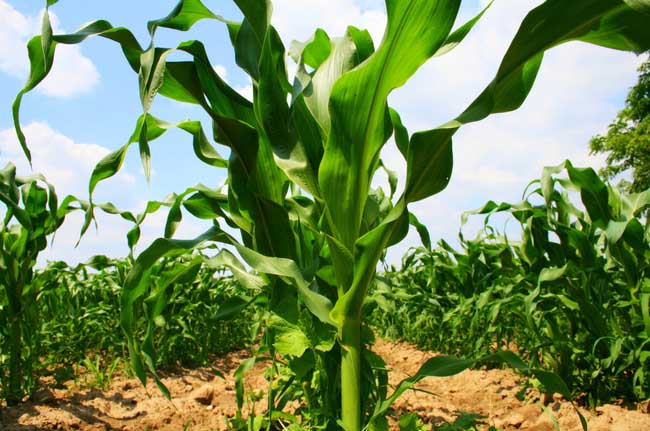
How to use herbicides in cornfields. The main weeds in cornfields include crabgrass, redroot pigweed, yellow foxtail, chloris, lovegrass, black nightshade, barnyardgrass, amaranth, small goosefoot, glaucous goosefoot, purslane, emarginate amaranth, Russian thistle, summer cypress, spiny amaranth, green foxtail, amaranth, edible amaranth, goosefoot, green amaranth, goosegrass, feather cockscomb, prickly goosefoot, copperleaf, velvetleaf, wild watermelon seedling, axillary-flowered amaranth and other weeds. Perennial weeds include bindweed, reed, and purple nutsedge. Now let us take a look together at how to use herbicides in cornfields!
Pre-emergence herbicides applied after sowing
1. 40% Acetochlor-Atrazine Aqueous Suspension Concentrate (Acetochlor-Atrazine Mixture)
40% Acetochlor-Atrazine Aqueous Suspension Concentrate is a special-effect herbicide dedicated to cornfields. It has excellent control effects on annual grass weeds in cornfields such as crabgrass, green foxtail, barnyardgrass, goosegrass, Chinese sprangletop, lovegrass, and bluegrass, as well as annual broadleaf weeds such as goosefoot, knotweed, amaranth, black nightshade, cocklebur, eclipta, purslane, copperleaf, chickweed, knotgrass, summer cypress, flying thistle, small fleabane, and dayflower. It also has a noticeable inhibitory effect on sedge weeds and others.
40% Acetochlor-Atrazine Aqueous Suspension Concentrate not only has a broad herbicidal spectrum, but also has high herbicidal activity and a long period of use. It is very safe for corn and subsequent crops such as wheat. From after corn sowing and before emergence to before the 3-leaf stage of weeds after corn emergence, use 40% Acetochlor-Atrazine Aqueous Suspension Emulsion per fen (0.1 hectare): 2250-3000 grams for summer corn in North China, 2250-3750 grams for spring corn in North China, and 4500-6000 grams for spring corn in Northeast China, add about 750 liters of water, and spray evenly. The field effective period is 50-60 days, and one application can ensure that corn is free from weed damage throughout the entire growth period.
The herbicidal effect of Acetochlor-Atrazine Aqueous Suspension Emulsion is closely related to soil moisture. When moisture is relatively high, the efficacy is good; when the soil is dry, the efficacy is low. Usually, before application, it is necessary to water once, either lightly or heavily, or there should be rainfall. The timing of application must be strictly controlled. It is best to apply before weeds emerge to ensure the efficacy is fully exerted. If applying after emergence, it is also best to do so before the 3-leaf stage of weeds. After the 4-leaf stage, if the weeds are too old before application, the efficacy will decrease because the weeds' resistance increases. When using this agent on sandy loam soil with low organic matter content, the application rate should be appropriately reduced.
2. Acetochlor-Bensulfuron Tank Mix
Acetochlor-Bensulfuron Tank Mix is a ready-to-mix tank mixture made from acetochlor and bensulfuron. It can be used in cornfields and fields where corn and soybean are intercropped to effectively control annual grass weeds and annual and some perennial broadleaf weeds. The field effective period is 30-60 days, and it is very safe for corn, soybean, and subsequent crops such as wheat. Apply before crop sowing or after sowing and before emergence. In spring cornfields in Northeast China, use 3000 milliliters of 50% acetochlor plus 26.7 grams of 75% bensulfuron per fen (0.1 hectare). In summer corn (or intercropped soybean) fields, use 1500 milliliters of 50% acetochlor plus 19.95 grams of 75% bensulfuron per fen (0.1 hectare), add 450-750 [units] of water, and spray evenly. When preparing the solution, first dissolve bensulfuron in a small cup with a small amount of warm water to make a mother solution, pour it into a mixing tank already containing half of the clear water, then add acetochlor, then add the other half of the clear water and stir evenly. Applying with a fan-shaped nozzle gives the best effect.
3. 50% Hebao Emulsifiable Concentrate
50% Hebao Emulsifiable Concentrate is a new type of herbicide with high efficiency, broad spectrum, and safety. It can effectively control many annual grass weeds and broadleaf weeds. It is most effective against crabgrass, barnyardgrass, goosegrass, green foxtail, large lovegrass, Chinese sprangletop, chloris, dock-leaved knotweed, small goosefoot, glaucous goosefoot, redroot pigweed, spiny amaranth, emarginate amaranth, purslane, copperleaf, eclipta, and black nightshade. It also has a noticeable inhibitory effect on some perennial weeds and sedge family weeds.
50% Hebao Emulsifiable Concentrate can be used both for pre-emergence soil sealing treatment after sowing and for stem treatment before the 3-leaf stage of weeds after corn emergence. Use 1.2-1.5 liters of 50% Hebao Emulsifiable Concentrate per fen (0.1 hectare), add 750 liters of water, and spray evenly, which can effectively control many kinds of weeds. Soil moisture is closely related to efficacy; when moisture is suitable and soil moisture conditions are good, efficacy is high. This agent is sensitive to weed buds, so applying after corn sowing and before emergence or in the early post-emergence stage gives the best effect.
4. 50% Du-A Mixture
After corn sowing and before emergence, use 2-35 kilograms of 50% Du-A Mixture per hectare, add 750 liters of water, and spray evenly on the soil surface. It has relatively good control effects on annual grass weeds and annual broadleaf weeds such as crabgrass, goosegrass, green foxtail, lovegrass, goosefoot, emarginate amaranth, redroot pigweed, knotgrass, eclipta, cocklebur, purslane, black nightshade, and ground cherry.
5. Atrazine
Atrazine is a triazine selective pre-emergence and post-emergence herbicide. It can be used to control annual monocotyledonous and dicotyledonous weeds such as crabgrass, green foxtail, lovegrass, goosegrass, shepherd's purse, eclipta, cocklebur, purslane, black nightshade, ground ivy, thistle, as well as annual monocotyledonous and dicotyledonous weeds in the Cruciferae and Leguminosae families. It also has a certain inhibitory effect on some deep-rooted weeds.
After corn sowing and before emergence, use 2.25-2.7 kilograms of 38% atrazine suspension per fen (0.1 hectare). During the corn seedling stage, before the 3-leaf stage of weeds, use 2-2.25 [kilograms] of 38% atrazine per fen (0.1 hectare), add 750 liters of water, and spray evenly.
Atrazine has good efficacy and good selectivity for corn, and is very safe, but its field residual period lasts as long as 120-160 days. If used improperly, it can easily cause phytotoxicity to subsequent crops. The application dosage must be strictly controlled, the amount must not be increased arbitrarily, and application should be even, avoiding repeated spraying and missed spraying. Atrazine can be mixed with acetochlor, metolachlor, alachlor, and cyanazine at reduced rates, which both broadens the herbicidal spectrum and reduces soil residues, making it safe for subsequent wheat.
6. Acetochlor
Acetochlor is an amide selective pre-emergence herbicide. It has a special effect on annual grass weeds such as goosegrass, crabgrass, barnyardgrass, green foxtail, lovegrass, Chinese sprangletop, bluegrass, and wild millet, and also has relatively good control effects on broadleaf weeds such as goosefoot, knotweed, amaranth, and purslane. After corn absorbs acetochlor, it can quickly degrade into non-toxic substances, so it is safe for corn. After corn sowing and before emergence, in Northeast China use 2.25-3.75 kilograms of 50% acetochlor emulsifiable concentrate per fen (0.1 hectare). In North China and areas to the south, use 1.2-2.5 kilograms of 50% acetochlor emulsifiable concentrate per hectare, add 750 liters of water, and spray evenly on the soil surface. For plastic-film mulched fields, reduce the amount by about 1/3.