How to control corn leaf aphids? Detailed explanation of occurrence patterns and control measures
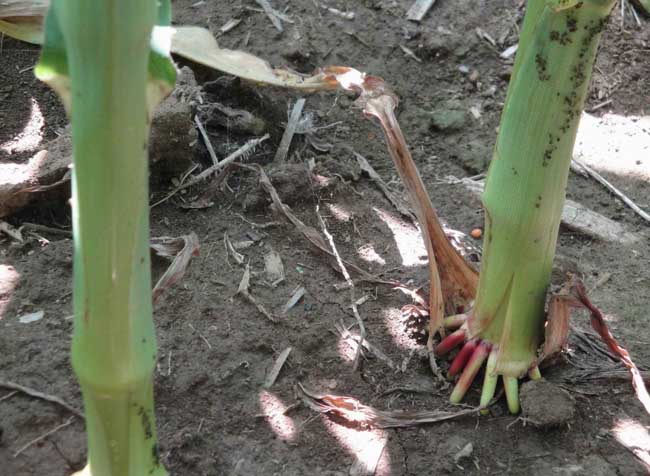
The corn leaf aphid (Rhopalosiphum maidis) is widely distributed in corn-producing areas and can damage corn, wheat, sorghum, rice and various grass weeds. During the seedling stage, adult and nymph aphids gather in the heart leaf to cause damage; after tasseling, they damage the ear, sucking sap, hindering growth, and can also transmit various cereal grass viruses. It belongs to the order Homoptera, family Aphididae. Common names: wheat aphid, greasy bug, ant bug. Distributed throughout the country.
[Damage characteristics] Adult and nymph aphids pierce and suck plant tissue sap, causing leaves to turn yellow or red, affecting growth and development, and in severe cases the plant dies. Corn leaf aphids mostly gather in the heart leaf, and when damaging leaves they secrete honeydew, producing black mold-like substances. Different from the sorghum aphid. On compact corn, they mainly damage the male flowers and the upper 1—5 leaves, while lower leaves are less affected; they pierce and suck corn sap, causing leaves to turn yellow and die, often causing the leaf surface to grow mold and turn black, affecting photosynthesis, reducing grain weight, and spreading viral diseases that cause yield loss. Hosts include corn, sorghum, wheat, foxtail grass, etc.
[Feature description] Winged viviparous female aphids are 1.5~2.5 mm long, with black head and thorax, gray-green abdomen, and dark lateral spots on each segment before the cornicles. Antennae have 6 segments; antennae, rostrum, legs, abdominal intersegments, cornicles and cauda are black. Wingless parthenogenetic aphids are long-oval, live insects are dark green, covered with a thin white powder, appendages black, compound eyes red-brown. Head and thorax black and shiny, abdomen yellow-red to dark green. Antennae with 6 segments, shorter than the body. Other features similar to the wingless type. Eggs are oval.
[Occurrence pattern] From north to south, 10~20 or more generations occur per year, generally overwintering as wingless viviparous female aphids in the heart leaves of wheat seedlings and grass weeds. In late April and early May they migrate to spring corn and sorghum. Before corn tasseling, they continuously gather in the heart leaf to reproduce and cause damage; after tasseling they spread to the tassel and ear to reproduce and cause damage. The flowering stage is the most favorable period for corn leaf aphid reproduction and damage, so the appropriate control period should be before corn tasseling. Suitable temperature and high humidity, that is, when the ten-day average temperature is around 23°C and relative humidity is above 85%, and corn is at the tasseling and flowering stage, it is most suitable for corn leaf aphid proliferation and damage, while storms have a greater controlling effect on corn leaf aphids. In fields with heavier weed occurrence, corn leaf aphids also occur more heavily.
[Control methods]
1. Remove weeds in the field and at the field edges in a timely manner to eliminate the breeding sites of corn leaf aphids.
2. When the rate of aphid-infested plants reaches 50% during the corn heart leaf stage and the number of aphids per 100 plants reaches more than 2000, you can use 50% pirimicarb 3000-fold solution, or 40% omethoate 1500-fold solution, or 50% dichlorvos 1000-fold solution, or 2.5% deltamethrin 3000-fold solution for uniform spraying; the above solutions can also be used to pour into the heart leaf, or 40% omethoate 50~100-fold solution can be used to coat the stem.