What to Do When Corn Gets Northern Corn Leaf Blight? Detailed Control Measures
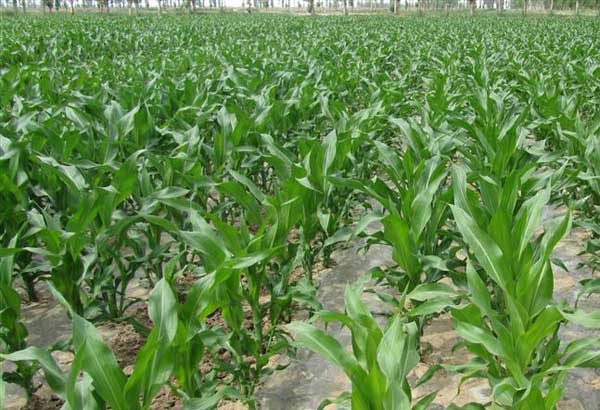
Northern corn leaf blight is one of the major diseases of corn, mainly infecting the leaves, and in severe cases also affecting the leaf sheaths and husk leaves. After a plant is infected, the disease starts from the bottom leaves and gradually spreads upward. On the same leaf, large and small spots can occur together, or multiple lesions can merge into one another. When the disease is severe, the leaves dry up, chlorophyll decreases, photosynthesis declines, and grain filling is affected. In ordinary plots, yields are reduced by 15—20%, and in severe cases by more than 50%, greatly affecting corn yield. Therefore, departments at all levels should attach great importance to large and small leaf spot diseases of corn, introduce corresponding control measures, and keep the disease under control at the initial stage.
Northern Corn Leaf Blight
Northern corn leaf blight, also known as corn leaf blight and corn stripe blight, is one of the important diseases of corn. It mainly attacks the leaves, leaf sheaths and husk leaves of corn, with the leaves suffering the most damage. In the field, the disease generally starts on the lower leaves and gradually spreads to the upper leaves. In the early stage of the disease, water-soaked grayish-green spots first appear on the leaves. They then gradually extend along the leaf veins toward both ends, forming large spindle-shaped spots with yellow-brown centers and brown edges; in the later stage, the lesions often show longitudinal cracking. After many lesions merge, the leaves turn yellow and die, and in severe cases the whole plant turns yellow and withers early. When the weather is humid, abundant gray-black mold layers grow on both sides of the lesions, and sometimes gray-black mold layers also grow on the silks or the glumes of the male flowers. The pathogen of northern corn leaf blight belongs to the class Deuteromycetes, order Moniliales, family Dematiaceae. Generally, temperatures of 20°C to 25°C and relative humidity above 90% favor the development of the disease. Control should be carried out before and after tasseling when the rate of diseased leaves reaches 20%.
The following methods are commonly used to control northern corn leaf blight:
1. Spray with 50% carbendazim wettable powder at 500 times dilution per mu.
2. Spray with 50% thiophanate-methyl wettable powder at 600 times dilution per mu.
3. Spray with 50% anilazine wettable powder at 500 times dilution per mu.
4. Spray with 75% chlorothalonil wettable powder at 800 times dilution per mu.
5. Spray with 25% benomyl emulsifiable concentrate at 800 times dilution per mu.
6. Spray with 90% mancozeb wettable powder at 500 times dilution per mu. Spray once every 7~10 days, for a total of 2~3 applications.
Southern Corn Leaf Blight
Southern corn leaf blight, also called corn spot disease, is one of the important diseases of corn. It mainly attacks the leaves, leaf sheaths, husk leaves and ears of corn, with the leaves suffering the most damage. The disease occurs over a long period, and plants can be affected from the seedling stage to near maturity. It is usually most severe around the tasseling stage and during the grain-filling stage. The leaf lesions are smaller, but there are more lesions than with northern corn leaf blight. After infection, diseased leaves tend to wilt and die. The pathogen of southern corn leaf blight is the same as that of northern corn leaf blight. Generally, temperatures of 20°C to 25°C and relative humidity above 90% favor the development of the disease. Control should be carried out before and after tasseling when the rate of diseased leaves reaches 20%. The control methods are roughly the same as those for northern corn leaf blight.