Detailed Explanation of Key Fertilization Techniques for Potato Cultivation
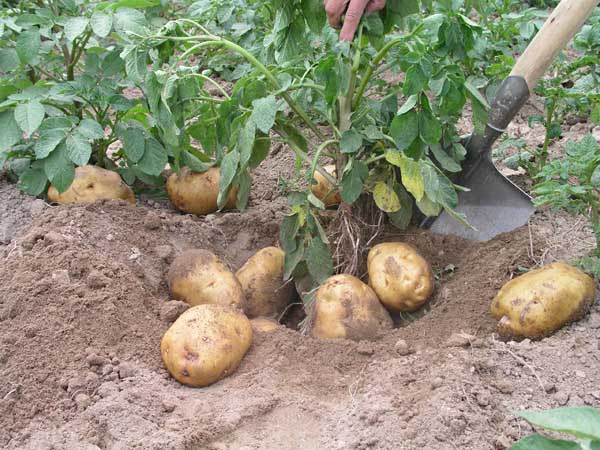
For potato fertilization, the general principle is "organic fertilizer as the mainstay, chemical fertilizer as a supplement, heavy application of base fertilizer, and early application of topdressing." This is because organic fertilizer contains abundant organic matter, which helps to build up and loosen the soil, improve soil fertility, and is even more beneficial for potato tuber expansion and root growth. The period during which potatoes need the most water and fertilizer is the flowering stage, and this is also the season when temperatures rise and rainfall increases, as well as the stage when organic fertilizer gradually matures and decomposes to release nutrients. At this time, the conversion benefits of the organic and inorganic fertilizers in the base fertilizer continuously expand, meeting the nutrient demands of potatoes during growth and promoting plant growth and development.
Fertilization Rate
Potatoes are grown in both southern and northern China, and soil fertility varies greatly. In the south, where soils are mostly deficient in potassium, potassium fertilizer should be increased; in the north, where soils are mostly deficient in phosphorus, phosphorus fertilizer should be increased, but since potatoes have a high demand for potassium, this should also be emphasized. Tests show that throughout the entire growth period, potatoes require different types and amounts of nutrients at different growth stages. Nutrient uptake is very low at the seedling stage, rises sharply at the branching stage, reaches its peak at the early tuber-setting stage, and then drops sharply again. Calculated as the percentage of the three elements nitrogen, phosphorus, and potassium in total nutrient uptake, from the sprouting stage to emergence, nitrogen, phosphorus, and potassium account for 6%, 8%, and 9% respectively; at the branching stage they are 33%, 34%, and 36% respectively; and at the tuber-setting stage they are 56%, 58%, and 55% respectively.
Fertilization Methods
The potato is a tuber crop that prefers loose, sandy soil and requires cool temperatures. When fertilizing, a relatively large amount of farmyard manure should be used together with chemical fertilizer as base fertilizer, as this can improve the physical properties of the soil and benefit growth and tuber formation.
1. Apply base fertilizer heavily. The potato is a tuber crop that prefers loose, sandy soil and requires a cool climate. The amount of base fertilizer generally accounts for more than 2/3 of the total fertilization amount. The base fertilizer should be mainly fully decomposed farmyard manure, with a certain amount of chemical fertilizer added, especially phosphorus and potassium chemical fertilizers as base fertilizer, as this can improve the physical properties of the soil and benefit growth and tuber formation. The nitrogen fertilizer in the base fertilizer accounts for about 50% of the total. The base fertilizer application method is furrow application or hole application before planting, at a depth of about 15 cm. The specific fertilization rates for a plot with a yield of about 1500 kg per mu are: 1500-2500 kg of organic fertilizer per mu, 20 kg of urea, 20-30 kg of ordinary calcium superphosphate, and 10-12 kg of potassium fertilizer, or 40-60 kg of a high-nitrogen, high-potassium compound fertilizer. In high-yield areas, the fertilization rate may be appropriately increased. Chemical fertilizer should be applied 2-3 cm away from the seed potatoes to avoid direct contact with them, and the soil should be covered after fertilization.
2. Apply topdressing early. Topdressing should be applied reasonably in accordance with the potato growth stages. At the seedling stage, nitrogen fertilizer should be applied as topdressing; together with intertillage and hilling, 5-8 kg of urea per mu can be dissolved in water and poured on, which helps preserve the seedlings. After potatoes flower, generally no fertilizer should be applied to the root zone, and in particular no nitrogen fertilizer should be applied as topdressing. After potatoes flower, the main approach is foliar spraying of phosphorus and potassium fertilizers: spray 50 kg per mu of a 0.3-0.5% monopotassium phosphate solution. If nitrogen is deficient, 100-150 g of urea can be added, sprayed once every 10-15 days for 2-3 consecutive sprays. Potatoes are relatively sensitive to boron and zinc. If the soil is deficient in boron or zinc, 0.1-0.3% borax or zinc sulfate can be sprayed on the foliage, generally once every 7 days for two consecutive sprays, using 50-70 kg of solution per mu. Farmers should be especially reminded that potatoes are a potassium-loving crop, and in balanced fertilization, special attention should be paid to the application of potassium fertilizer. At the same time, excessive application of chlorine-containing fertilizers such as potassium chloride should be avoided; potassium sulfate should be chosen instead, otherwise the quality of potatoes will be affected.