Detailed Explanation of Key Points for High-Yield Wheat Cultivation Techniques
Wheat is the collective name for plants of the genus Triticum, a grass-family plant widely cultivated around the world. It originated in the Fertile Crescent (Levant) region of the Middle East and is one of the earliest crops cultivated by humans. The caryopsis of wheat is one of the staple foods of humankind; once milled into flour, it can be used to make foods such as bread, steamed buns, biscuits, and noodles; after fermentation, it can be made into beer, alcohol, vodka, or biofuel. Wheat is rich in starch, protein, fat, minerals, calcium, iron, thiamine, riboflavin, niacin, vitamin A, and vitamin C, among others.
Wheat is one of the three major cereals, and almost all of its production is used for food, with only about one-sixth used as feed. In 2010, wheat was the grain crop with the second-highest total production in the world (651 million tons), second only to corn (844 million tons).
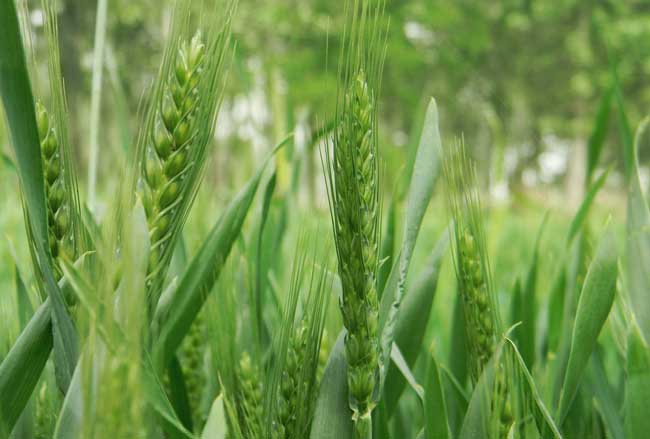
Fertilizer Requirements of Wheat
1. Nitrogen is a component of cell protoplasm, chlorophyll, and so on. Sufficient nitrogen can promote the growth of roots, stems, and leaves, increasing leaf area and the accumulation of organic matter. Applying nitrogen at the stage of female and male flower differentiation of the young spike can reduce sterile florets and increase grain number.
2. Phosphorus is an important component of the cell nucleus and participates in cellular synthesis reactions and the normal metabolism of sugars and nitrogen. Wheat is sensitive to phosphorus; phosphorus deficiency inhibits root development, reduces tillering, causes leaves to turn dark green and purplish, delays maturity, and ultimately reduces grain weight and results in poor quality.
3. Potassium can improve photosynthetic efficiency, promote the absorption of nitrogen and phosphorus, increase the content of cellulose and lignin in the plant, and make the stems tough and resistant to lodging. Ensuring an adequate supply of potassium fertilizer can also increase leaf water potential and leaf water-holding capacity, significantly enhancing drought resistance.
Cultivation Techniques
1. Selecting Improved Varieties
This year's improved seed subsidy project promoted 3 winter wheat varieties with high quality, high yield, and strong stress resistance: Jimai 22, Tainong 18, and Liaomai 18. Farmers may choose among them as needed.
2. Applying Sufficient Base Fertilizer
The principle is, on the basis of increasing the application of organic fertilizer, to stabilize nitrogen, increase phosphorus, and supplement potassium and trace-element fertilizers. Generally, apply 1000-2000 kg of organic fertilizer per mu and about 40 kg of compound fertilizer; 1 kg of zinc sulfate should be evenly broadcast before land preparation and promptly plowed deep into the soil.
3. Fine Land Preparation
The quality of land preparation directly affects sowing quality. For plots that have long used rotary tillage or no-till machine sowing, deep plowing must be carried out at least once every 3 years (about 25 cm); straw returned directly to the field must be finely chopped, and overly long broken straw should be removed. One mu of straw should be returned to 2 mu of land. During land preparation, the soil should be harrowed finely and thoroughly so that the plow layer is uniform in depth, the topsoil is finely broken up, and the standard of a loose top and firm subsoil is achieved, with no visible or hidden clods, a level surface, and no stubble.
4. Seed Treatment
Seed that has not been coated should be treated to prevent and control pests and diseases. A higher-quality seed coating agent may be used, or single agents may be used for seed dressing. For disease control with single agents, diniconazole, carbendazim-diuram or carbendazim may be used for seed dressing at 0.2% of the seed weight; for controlling underground pests, 3911 or phoxim may be used for seed dressing at 1.5% of the seed weight.
5. Sowing at the Appropriate Time
The suitable sowing period is October 5-13, with a sowing depth of 4-5 cm. For late-sown plots, the sowing rate should be appropriately increased. The average row spacing of wheat is 22.5 cm. After sowing, use a stone roller to compact the soil and preserve moisture, which helps wheat emerge. For plots with straw returned to the field, increase the sowing rate by 1.5 kg.
6. Water and Fertilizer Before Winter and in Spring
Water and fertilizer before winter are important measures to ensure that wheat overwinters smoothly and to prevent freezing and drought in early spring. When the relative soil moisture content before winter is greater than 65%, the anti-freezing water can be omitted; when it is less than 65%, the freezing water should be properly applied. After watering, promptly hoe and loosen the soil to prevent the ground from cracking, which allows wind to injure the roots and cause seedling death. For topdressing after winter, plots with poor soil fertility should be fertilized twice. The first time is at the wheat greening stage, where a compound fertilizer with a total content of ≥40% (35-0-5) may be chosen or urea may be applied as topdressing, at 20—25 kg per mu; at the booting stage, apply the second topdressing, the booting fertilizer, with 7-8 kg of urea. For medium- and high-yield fields, topdressing should be postponed to the jointing stage and applied once, where a compound fertilizer with a total content of ≥40% (35-0-5) or urea may be chosen, at 20-25 kg per mu. Promptly apply the greening water, jointing water, and grain-filling water.
7. Chemical Weeding and Chemical Regulation in Wheat Fields
Before jointing, wheat has the strongest tolerance to herbicides, so targeted herbicides such as maicaojing may be sprayed for chemical weeding; to prevent excessive vegetative growth of wheat and lodging later, chemical regulators such as paclobutrazol may be used for chemical regulation. Note that the above agents should not be used when the temperature is too low, so as not to affect their effectiveness, and should be discontinued after the jointing stage to avoid phytotoxicity that affects wheat grain setting.
8. Foliar Topdressing
In the later stages, the root absorption capacity of wheat becomes increasingly poor, so foliar fertilization can be carried out promptly at the flowering stage to promote robust plants, enhance leaf photosynthetic capacity, and improve the wheat's resistance to disease and dry hot winds. Potassium dihydrogen phosphate and zinc sulfate may be chosen for foliar spraying, and sprayed again after 7 days.