What are the control measures for potato late blight?
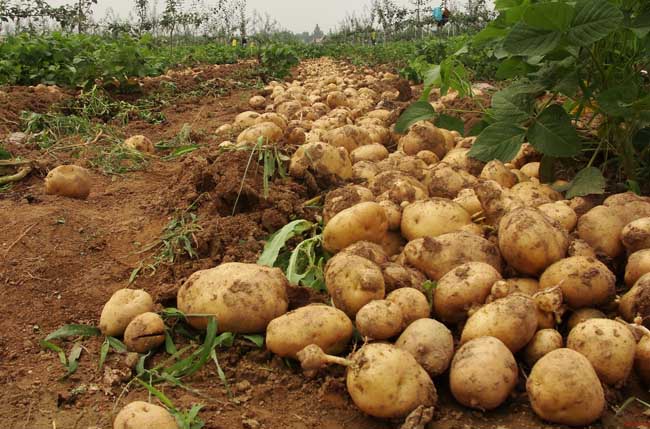
Potato late blight, also known as blight, is a widespread and severe epidemic disease. It occurs in all areas where potatoes are grown. When late blight epidemics occur in susceptible varieties, field yield losses can reach 20%-50%, and storage losses range from 5%-10% in mild cases to more than 30% in severe cases. Late blight not only harms potatoes but can also cause damage to tomatoes, peppers, eggplants, and others.
Host crops
Potato, tomato, eggplant.
Disease diagnosis
Leaves, petioles, stems, and tubers can all be affected, with symptoms mostly appearing around flowering. When leaves are infected, water-soaked spots appear starting from the leaf tip or leaf margin. Under high humidity, these rapidly expand into brown lesions with water-soaked edges, producing a ring of white mold-like growth, with the mold layer particularly obvious on the underside of leaves. When petioles and stems are affected, dark brown streaks form, with less white mold, often causing leaves to wilt, dry up, and droop, with the whole plant later becoming black and wet-rotted. When tubers are infected, the lesions are brown to purplish-brown, and the tuber flesh beneath the diseased area also turns reddish-brown. The lesions expand into irregular patches, and the boundary between diseased and healthy tissue is often unclear. The diseased area mostly does not extend inward, often appearing dry, hard, and necrotic. In the later stages, it is prone to secondary infection by miscellaneous bacteria causing soft rot, with an unpleasant odor, making it unfit for consumption. During storage, the diseased area can continue to develop, causing massive rotting.
The pathogen is Phytophthora infestans. The mycelium is colorless, non-septate, multinucleate, and slender. The sporangiophores are colorless, emerging singly or in bundles from stomata, branched, with uneven thickness in the upper portion appearing nodular. Sporangia are colorless, ovoid, with a papilla at the apex, and produce zoospores after absorbing water. Zoospores are kidney-shaped with two flagella laterally inserted. The pathogen can form dormant chlamydospores within the mycelium.
Disease cycle
The pathogen mainly overwinters as mycelium latent in tubers, becoming the primary source of infection. After planting diseased tubers, severe cases fail to sprout or the sprouts die before emerging, while mild cases develop disease after emergence and become center plants. The diseased areas produce sporangia. These spread via air currents and rain for secondary infection, expanding and spreading. Sporangia can also infiltrate the soil with water to infect tubers, forming diseased tubers that serve as the infection source for the following year. The pathogen favors warm days, cool nights, and high humidity. Relative humidity above 95% and temperatures of 18-22°C favor sporangium formation. In rainy years, with frequent morning and evening fog and dew and humid weather, disease occurrence and spread are favored. In northern potato-growing regions, the flowering period often coincides with the rainy season. If varieties are susceptible and warm, humid conditions occur, the disease can spread throughout the entire field into an epidemic 10-14 days after the appearance of center plants.
Control measures
1. Use resistant varieties
Each region should select disease-resistant, high-yielding varieties suitable for local conditions based on local characteristics.
2. Use disease-free seed tubers
Establish disease-free seed production fields, select disease-free seed tubers, and carry out strict procedures from autumn harvest and storage, winter storage inspection, spring removal from storage, cutting before planting, and through the vernalization process, strictly removing diseased tubers at each step to avoid planting diseased tubers and reduce the primary infection source.
3. Strengthen cultivation management
Plant early at the appropriate time, select loose-textured, well-drained plots, fertilize reasonably, keep plants vigorous, and enhance resistance. When center plants are found, promptly pull them up and destroy them.
4. Timely chemical control
Spray immediately upon finding center plants. Options include 40% fosetyl-aluminum wettable powder at 300 times dilution, or 70% mancozeb wettable powder at 600 times dilution, or 25% metalaxyl wettable powder at 800 times dilution, or 64% oxadixyl-mancozeb wettable powder at 400 times dilution, or 72.2% propamocarb aqueous solution at 800 times dilution, or 72% cymoxanil wettable powder at 600 times dilution, or 47% kasugamycin-copper oxychloride wettable powder at 800 times dilution, or 69% dimethomorph-mancozeb wettable powder at 1000 times dilution.