What are the control measures for rice lodging?
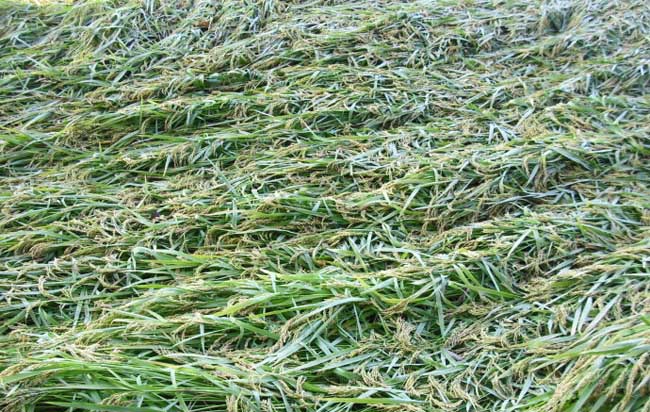
Types of rice lodging
1. Root lodging
Due to poor root development, the roots are shallow and unstable, lacking support, so that even slight wind and rain cause the plants to fall flat on the ground;
2. Stem lodging
Because the stems are not sturdy and cannot bear the weight of the upper part, lodging of varying degrees occurs.
Causes of rice lodging
1. Non-lodging-resistant varieties
Varieties with short internodes, thick stems, upright leaves, short flag leaves and well-developed roots are not prone to lodging; otherwise they are lodging-prone varieties. Planting lodging-prone varieties is the key factor in preventing rice lodging.
2. Unreasonable planting density
Too many hills (clumps) per mu or too many seedlings per hill seriously affects the ventilation and light penetration of rice, causing poor root growth, weak and slender plants, and lengthened basal internodes, which easily leads to lodging.
3. Inadequate fertilizer and water management
One-sided heavy application of nitrogen fertilizer makes the plants grow excessively, close the rows too early, elongate at jointing, and develop too large a leaf area at the heading stage, causing lodging; long-term deep flooding causes excessive elongation of the basal internodes of the stems, early death of the lower leaves, and poor root development, resulting in lodging.
4. Damage from diseases and insect pests
If diseases and insect pests are not controlled in time, the stem tissues are damaged, which also easily causes lodging.
Control measures
1. Select fertilizer-tolerant, lodging-resistant varieties
For example, choose semi-dwarf varieties with thick stems, well-developed roots and upright leaves that are tolerant to fertilizer.
2. Strengthen water and fertilizer management
Apply nitrogen fertilizer in appropriate amounts, rationally increase the application of phosphorus and potassium fertilizers, and apply small amounts of micro-fertilizers such as silicon fertilizer; irrigate frequently with shallow water. At each growth stage of rice, the method of shallow-wet intermittent irrigation should be adopted. At the booting stage, the water layer can be appropriately deepened, and after heading, continue to maintain a shallow water layer with frequent irrigation.
3. Reasonable close planting
Building a reasonable population structure can prevent excessive population density, ensure good ventilation and light penetration, keep stem and leaf tissues firm and healthy, enhance resistance to diseases and insect pests, and also enhance the lodging resistance of the stems.
4. Drain the field at the right time
Draining the field is an important measure to prevent rice lodging. Therefore, at the late tillering stage of rice, the field should be drained to control ineffective tillering, improve the soil environment, enhance root activity, and enable the rice seedlings to grow healthily and steadily.
5. Timely prevention and control of diseases and insect pests
Protect the lodging resistance of the stems from being destroyed by diseases and insect pests, or minimize the degree of damage to the stems.