Key Points of High-Yield Cultivation Techniques for Rice in the Late Growth Stage
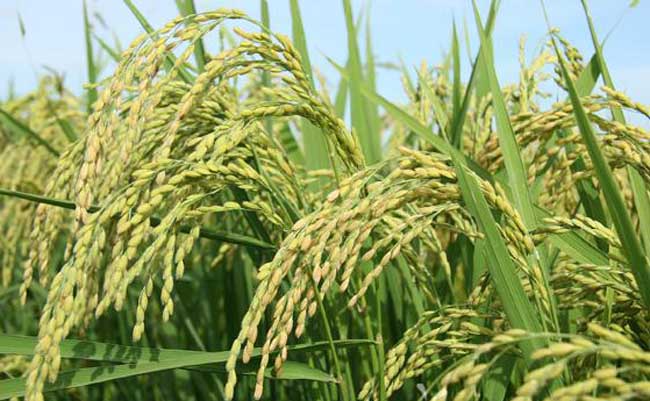
The period from heading to maturity in rice is called the late growth stage. The management tasks during this period: first, to properly control diseases and pests; second, to prevent premature senescence of rice; third, to prevent rice from excessive vegetative growth and late maturity. To achieve these three goals, it is recommended that farmers do the following work well:
Disease and Pest Control
1. Diseases
The main disease requiring control attention in the late growth stage of rice is rice blast. After rice heading, seize the opportunity to apply pesticide 2---3 times, with an interval of about 7 days. About 100 grams of tricyclazole wettable powder can be used per mu, sprayed on the leaf surface with 30 kg of water.
2. Pests
The main pests in the late growth stage of rice are white-backed planthopper, brown planthopper, armyworm and rice leaf roller. These four pests all have long-distance migratory and sudden outbreak characteristics, and timely control should be noted. The Shoulei insecticide series produced by Guangxi Jiuhe can be selected ---- the special insecticide for rice leaf roller mixed with the special insecticide for rice planthopper, both at 30 ml per mu, sprayed on the leaf surface with 45----60 kg of water. The control effect is particularly excellent.
Reinforce the field ridges
Dredge drainage, lower the groundwater level, enhance the vertical permeability of the soil, and through vertical percolation, carry away harmful substances such as salt, alkali and hydrogen sulfide in the soil, while bringing oxygen dissolved in water into the lower soil layer to enhance root vitality.
Implement shallow water irrigation
In the late grain-filling stage, implement intermittent irrigation with alternating dry and wet conditions. The water layer should be 2---3 cm; wait for it to seep dry naturally, and when the field can be entered without sinking and the soil does not crack, then irrigate the next round of water. The water cutoff period should be well controlled; it is generally about 40 days after full heading of rice, or 7---10 days before harvest. For paddy fields with a high groundwater level and relatively heavy salinity and alkalinity, water retention should be the main approach, and the water cutoff period should be appropriately postponed to prevent soil salinization from returning and premature senescence of rice.
Apply foliar fertilizer and plant growth regulators as topdressing
After full heading of rice, it is not advisable to apply nitrogen fertilizer as a topdressing to the root zone; instead, applying foliar fertilizer and plant growth regulators as topdressing is an auxiliary measure to prevent premature senescence and excessive vegetative growth with late maturity in rice. Spraying foliar fertilizers such as rare earth potassium dihydrogen phosphate at the conventional rate can promote grain filling and promote early maturity and increased yield; generally 1---2 applications are sufficient. Due to the relatively frequent rainy weather this year, especially the continuous rainy and low-temperature weather during the rice heading period, rice grain filling is slow. For a small number of paddy fields with a relatively long growth period and very late sowing and transplanting, 40% ethephon 400----800 times solution mixed with Huaguo Yisheng Guineng multi-element can be sprayed in the early grain-filling stage of rice. Ethephon has the effect of accelerating rice grain filling and advancing maturity. After applying ethephon, the nutrients in rice leaves rapidly transfer to the panicle, thereby making leaf color lighter and encouraging earlier yellowing. However, it should be noted that ethephon is only a plant growth regulator and does not increase yield for rice that can mature normally. Generally, paddy fields should avoid using ethephon as much as possible, especially rice sprayed with ethephon must not be retained for seed use.