The green-returning period of rice seedlings is long after transplanting; how to shorten it
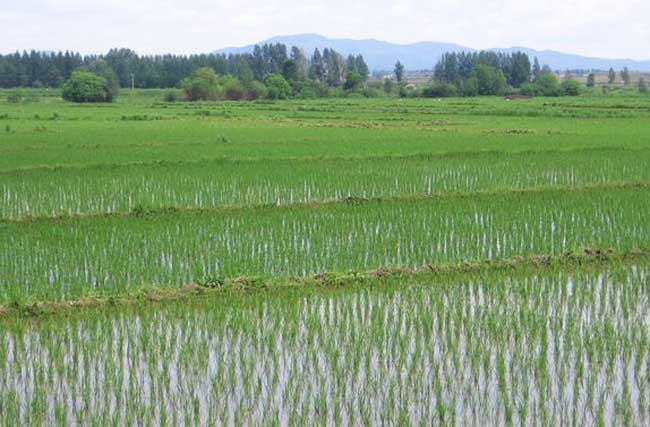
After rice transplanting, the plants generally turn from green to yellow, and then from yellow back to green; this period is called the green-returning period. The green-returning period is generally 7-10 days. If measures are taken to shorten the green-returning period to 2-3 days, then "one short" can promote "three earlies." That is, shortening the green-returning period promotes early growth, early tillering, and early full heading. In this way, more effective panicles can be obtained, the low-temperature cold damage in August can be avoided, and a high and bumper yield can be achieved. There are 5 measures to shorten the green-returning period of rice seedlings.
Cultivate strong seedlings
The farming proverb says: "Good seedlings are half the grain." On the basis of cultivating strong seedlings, apply a "send-off fertilizer" 4-6 days before transplanting to promote new root sprouting in the seedlings. In this way, seedling quality is good, and after transplanting the seedlings can grow day and night, shortening the green-returning period. The "send-off fertilizer" must be applied at the right time. If applied too early, the new roots sprout and grow too long, the seedlings become too tender, and the plants are severely damaged when pulled, causing the green-returning period to be delayed after transplanting. If applied too late, the seedlings have not yet absorbed it, and it cannot play the "send-off" role. As for the amount of fertilizer, generally apply 2-5 kg of urea per mu of seedling field; if seedling quality is good and soil fertility is high, less can be applied.
Apply sufficient base fertilizer
To make rice seedlings return green quickly after transplanting, sufficient base fertilizer must be applied. The base fertilizer should be mainly farmyard manure, with an appropriate combination of chemical fertilizer. The problems commonly existing in current production are: first, the amount of fertilizer applied is insufficient; second, the amount of farmyard manure applied is small, and the techniques for composting, management, and storage are extensive, so fertilizer quality is not high. To better give play to the role of base fertilizer, the application method of "coarse fertilizer as the bottom, fine fertilizer on the surface" should be adopted for base fertilizer. That is, spread farmyard manure evenly when preparing the field, plow it under into the plow layer, and before transplanting apply quick-acting fertilizer to the soil surface to meet the needs of green returning and the early tillering stage.
Pay attention to water-surface fertilizer
Water-surface fertilizer is also called harrow fertilizer. When rice is transplanted, air temperature and soil temperature are low, and fertilizer decomposes slowly. To facilitate early green returning after transplanting of rice seedlings, attention should be paid to applying water-surface fertilizer. Before the final field preparation and harrowing, spread quick-acting nitrogen chemical fertilizer evenly on the field surface, harrow in time, and harrow the fertilizer into the surface soil layer 3-6 cm deep. The amount applied is generally 3-5 kg of urea per mu, or 10 kg of ammonium bicarbonate. In this way, fertilizer can be supplied in time to promote green returning after seedling transplanting, promote early growth and rapid development, strengthen stems, and increase panicles.
Transplant at the appropriate seedling age
Master the seedling age well and transplant at the right time. If seedlings grow in the seedling field for too long, they will enter reproductive growth early, and young panicle differentiation has already begun at transplanting. Such overage seedlings are called by farmers "carried to the bridal sedan chair with a fetus." After transplanting, they return green very slowly and do not develop. Therefore, the key checkpoint of transplanting rice seedlings at the appropriate age must be well controlled to ensure that rice seedlings can grow normally and lay a good foundation for achieving high yield.
Timely management
In the early stage after rice transplanting, the seedlings are tender and weak, fearing both deep flooding and water cutoff and drought. At this time, shallow water and frequent irrigation should be carried out, which helps raise soil temperature and promote early green returning. 7-10 days after transplanting, apply the first topdressing to promote early tillering.