Detailed Explanation of Fertilizer Amounts and Application Methods at Different Growth Stages of Rice
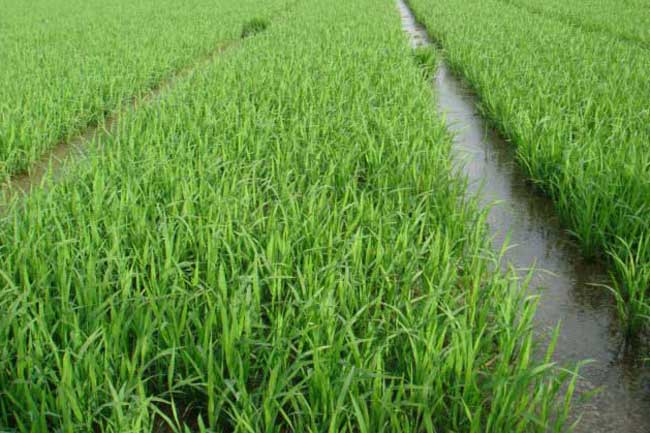
For rice to grow well, fertilizer is indispensable. Not only must it be applied generously, but the method must also be skillful. To promote early development, vigorous growth, and a bountiful harvest of rice, the following introduces scientific fertilization methods for rice.
Fertilizer Amounts for Each Growth Stage of Rice
1. Fertilizer amount. The fertilizer amount for rice can be calculated based on the expected yield, the rice's nutrient requirements, the soil's nutrient supply, and the nutrient content and utilization rate of the applied fertilizer.
2. Fertilization periods. These can be divided into 4 periods: base fertilizer, tillering fertilizer, ear fertilizer, and grain fertilizer (chosen depending on the rice's growth vigor). The application time and distribution ratio for each period are as follows.
(1) Base fertilizer. Applied to the soil before rice transplanting, the base fertilizer accounts for 40% of the total chemical fertilizer and is applied together with the final harrowing. On the basis of applying farmyard manure, generally one set of Chongzhidao combined with tubi is applied per mu by flushing.
(2) Tillering fertilizer. The tillering stage is an important period for increasing the number of plants, and it is applied half a month after transplanting or seedling planting. Per mu, one bucket of Jiuguo is applied by flushing with water, and Huaguo Yisheng Guoneng multi-element is sprayed on the leaves to supplement trace elements and promote tillering.
(3) Ear fertilizer. It is divided into flower-promoting fertilizer and flower-preserving fertilizer. Flower-promoting fertilizer is applied from the ear axis differentiation stage to the spikelet differentiation stage; applying nitrogen at this stage can increase the number of spikelets per ear. Flower-preserving fertilizer is applied slightly before the pollen mother cell meiosis stage and has the effect of preventing spikelet degeneration and increasing the accumulation of stored substances in the stem and sheath. Per mu, one set of Chongzhidao combined with tubi is applied by flushing.
(4) Grain fertilizer. Grain fertilizer has the effect of extending leaf function, increasing photosynthetic intensity, increasing grain weight, and reducing empty and blighted grains. Especially for rice fields with a relatively small population and varieties with large ears and a long grain-filling period, it is recommended to apply a small amount of urea, but nitrogen must not be excessive to avoid delayed maturity due to excessive vegetative growth. Per mu, 10-15 kg of Defuer drip irrigation fertilizer is applied by flushing.
Main Fertilization Methods for Rice
1. Light early - heavy middle - supplemental late method: Apply sufficient and appropriate base fertilizer and tillering fertilizer, apply ear fertilizer reasonably, and apply grain fertilizer as appropriate, so as to achieve early emergence and steady growth, no excessive growth in the early stage, flower promotion in the middle stage, and no premature senescence in the late stage. On the basis of ensuring a sufficient number of ears, this method also aims at large ears and grain weight. This fertilization method is mostly used for single-season late rice and late-maturing middle rice in the south.
2. Stable early - attack middle method: This method saves fertilizer and provides stable yield and high yield. It mainly improves the effective tillering rate, attacks large ears to increase the seed-setting rate, and increases grain weight to strive for high yield. Characteristics: strong plants with large tillers and a small population, controlling tillering in the early stage; strong stems and roots, attacking large ears in the middle stage, and attacking the seed-setting rate and ear weight in the middle-late stage.
3. Promote early - control middle - supplement late method. This method is similar to the "V"-shaped fertilization method. It applies heavy base fertilizer (accounting for more than 80% of the total) and heavy tillering fertilizer, and applies grain fertilizer as appropriate, so as to meet the requirements of "vigorous growth in the early stage, stable growth in the middle stage, and healthy and strong growth in the late stage." This fertilization method is mostly used in the Northeast rice region, most of the early rice in the south, and wheat stubble rice in North China. Its drawback is that excessive early growth easily causes field shading and relatively severe pests and diseases.
4. Promote-early fertilization method. On the basis of applying sufficient base fertilizer, apply tillering fertilizer early and heavily, especially nitrogen fertilizer, to promote early and rapid tillering and ensure more tillers and more ears. Base fertilizer accounts for 70% of the total fertilizer amount (nitrogen fertilizer accounts for 60%-80% of the total nitrogen), and the remaining 30% of fertilizer is all applied after transplanting and green-up. This method is suitable for rice regions where rainfall is concentrated during the rice growth period, fertilizer is easily lost, and low temperature and insufficient sunlight often occur. The base fertilizer is mainly farmyard manure.
5. Base fertilizer all-at-once fertilization method. All fertilizer is applied at one time during field preparation, so that soil and fertilizer are fully mixed. It is suitable for rice fields with strong fertilizer retention such as clay soil and heavy loam soil, and where fertilizer sources are sufficient. With this method, compared with base fertilizer plus tillering fertilizer and base fertilizer plus ear fertilizer, the nitrogen uptake rate of rice plants increases, tillering is faster, more ears are formed, light transmittance between rows is higher, and yield increases by 3.6%-17.9%.
6. Soil testing and formula fertilization method. Soil testing and formula fertilization is a fertilization technology system designed to coordinate the interrelationships among crop yield, agricultural product quality, soil fertility, and the crop environment. Based on crop nutrient demand patterns, soil nutrient supply characteristics, and fertilizer effects, it combines organic fertilizers with inorganic fertilizers, appropriately proportions essential nutrient elements and trace elements, and adopts corresponding fertilizer application methods. This method can, according to soil nutrient test results and the amounts of various nutrients required throughout the crop's life, scientifically match the proportions and application amounts of various nutrients, supply them reasonably, and meet the nutrient needs throughout the crop's life, thereby achieving the goals of increasing yield and efficiency; reducing unnecessary fertilization, lowering costs, reducing environmental pollution, and alleviating soil compaction and pests and diseases.