Key points and methods of standardized fertilization techniques for rice
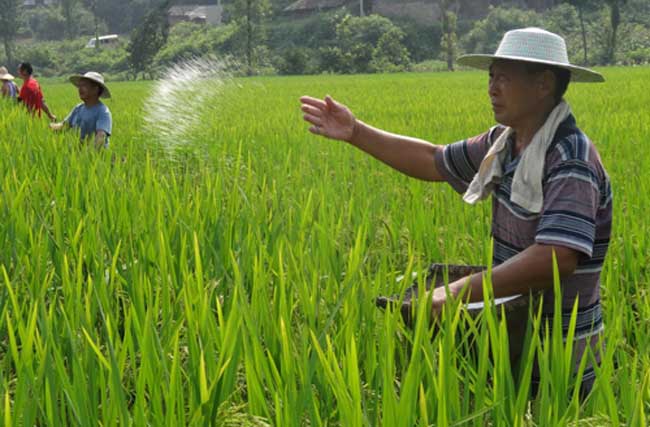
Fertilization principles
1. Implement balanced fertilization. According to the nutrient requirements of each crop, the soil nutrient supply status and the fertilizer effect, determine the corresponding fertilization amount and fertilization method. Based on the principle of combining organic fertilizer with inorganic fertilizer and combining base fertilizer with topdressing, achieve balanced fertilization.
2. Implement harmless treatment of organic fertilizer. Organic fertilizer produced and used by farmers themselves must undergo decomposition and fermentation, and harmless treatment to kill pathogenic microorganisms, insect eggs and weed seeds. The use of industrial waste, urban garbage and sludge, and farmyard manure that does not meet harmless treatment standards is prohibited.
3. Implement compound and specialized inorganic fertilizers. The fertilizer types selected should comply with the fertilizer varieties and quality requirements specified in fertilizer quality standards, and organic-inorganic compound fertilizers and compound fertilizers specially formulated for various crops should be selected as much as possible.
Standardized fertilization techniques for rice
Fertilization should focus on heavy application of base fertilizer, early topdressing of tillering fertilizer, skillful use of beneficial fertilizer, and supplementary application of grain fertilizer. The fertilization amount is based on nitrogen fertilizer as the standard, and the nitrogen-phosphorus-potassium ratio method is used to determine the amount of phosphorus and potassium fertilizers. Apply 225-300 kg of urea per hectare. After determining the nitrogen fertilizer amount, determine the amount of phosphorus and potassium fertilizers according to nitrogen:phosphorus:potassium = 1:0.5:0.3-0.5.
1. Seedbed soil preparation. Apply 10-15 kg of high-quality decomposed farmyard manure per square meter of seedbed soil, and 0.125 kg of strong seedling nutrient agent, and mix evenly with the prepared sifted seedbed soil. The seedbed soil thickness should be about 10 cm, and the pH value should be 4.5-5.5.
2. Seedbed topdressing. When fertilizer deficiency is found at the 2.5-leaf stage of the seedlings, use 1.5 g-2 g of ammonium sulfate and 0.25 g of zinc sulfate per square meter, dilute 100 times and spray on the leaves, and rinse the leaves with clean water promptly after spraying. Six days before lifting the seedlings, broadcast 150 g of diammonium phosphate per square meter, and after topdressing spray clean water to wash the seedlings.
3. Fertilization in the main field. Increase the application of farmyard manure and reduce the application of chemical fertilizers. Apply 30 tons of decomposed organic fertilizer per hectare, incorporated in combination with dry harrowing; apply 112.5-150 kg of diammonium phosphate and 75 kg of potassium sulfate per hectare, incorporated into the whole layer in combination with water land preparation.
4. Topdressing. Principles of rice topdressing: sufficient tillering fertilizer, stable panicle fertilizer, and light grain fertilizer.
Tillering fertilizer. From after transplanting to before tillering, apply 50-75 kg of urea per hectare.
Panicle fertilizer. Apply at the early stage of jointing, 50-75 kg of urea and 50-75 kg of potassium sulfate per hectare. Increasing potassium fertilizer can improve the seed-setting rate and 1000-grain weight, promote early maturity, and enhance disease resistance and lodging resistance.
Grain fertilizer. Apply before heading, 15-22.5 kg of urea per hectare. Although nitrogen uptake decreases after heading, if the soil nitrogen supply is insufficient, the photosynthetic efficiency of the leaves will be reduced. An appropriate amount of grain fertilizer topdressing can prevent premature senescence of roots and leaves.
Foliar topdressing. If zinc fertilizer was not applied as base fertilizer, 50-100 g of zinc sulfate can be formulated into a 0.2% aqueous solution for foliar supplementation at the tillering stage. Liquid fertilizers containing silicon and selenium can be sprayed on the leaves to enhance rice disease resistance, promote early maturity, improve the eating quality and nutritional quality of rice, and increase commercial value. Spraying liquid fertilizers such as 0.2%-0.3% potassium dihydrogen phosphate at the full heading to grain-filling stage can prolong the survival rate of functional leaves in the late growth period, accelerate the grain-filling speed, reduce the empty grain rate, increase the 1000-grain weight, and have a certain effect on preventing delayed-type cold damage.
Four precautions for rice fertilization
First, pay attention to applying sufficient organic fertilizer. Organic fertilizer contains various nutrients, can improve soil aeration and fertilizer and water retention characteristics, promote robust growth of rice plants, and achieve high yield and high quality. Organic fertilizer is mainly used as base fertilizer. Apply 30—40 loads of decomposed farmyard manure per mu, or 30—40 kg of cake fertilizer, and human and livestock manure of 40—50 loads can also be applied after plowing and before watering.
Second, pay attention to controlling nitrogen fertilizer. Excessive application of nitrogen fertilizer to rice will not only cause an increase in ineffective tillering, turning green, lodging, and aggravation of diseases and insect pests, resulting in many empty grains, a decreased seed-setting rate, and affecting rice yield. Nitrogen fertilizer is mainly used as topdressing. The first time, after rice transplanting, apply 6—7 kg of urea per mu; the second time, 13—15 days after transplanting, combined with field weeding, apply 4—5 kg of urea per mu, to facilitate tillering and strong tillers. In the middle stage, attention should be paid to drainage and fertilizer control, and only some balanced fertilizer should be supplementarily applied as appropriate to the poorer-growing second- and third-class seedlings. In the late stage, apply 3—4 kg of grain fertilizer as supplementary topdressing according to seedling condition.
Third, pay attention to the application of phosphorus and potassium fertilizers. Phosphorus and potassium fertilizers can enhance plant vitality, promote nutrient synthesis and transport, strengthen photosynthesis, prolong the functional period of leaves, make grains plump and full, and increase yield. Phosphorus fertilizer is suitable as base fertilizer, and potassium fertilizer is better as topdressing. In fields with sufficient organic fertilizer, apply 20—40 kg of phosphorus fertilizer per mu as base fertilizer, and before tillering, 3.5—5 kg of potassium chloride can be topdressed per mu. Spraying Huaguo Doctor Guoneng multi-element in the late stage of rice can promote grain filling and seed setting. Spray once each at the late heading and flowering stage and at the grain-filling stage, using 50—100 g of phosphorus and potassium fertilizers each time per mu, diluted with 50—60 kg of water, and sprayed in the evening.
Fourth, pay attention to increasing the application of micro-fertilizers. Zinc fertilizer and silicon fertilizer can not only improve the oxygen supply to rice roots, enhance the stress resistance and lodging resistance of rice plants, improve plant disease resistance, promote root development in the late stage, prolong the leaf functional period, and prevent premature senescence; they can also accelerate flower development, increase pollen quantity, promote flower grain germination, and help increase the panicle-bearing rate of rice; moreover, they can promote larger panicles and more grains, improve the seed-setting rate and grain plumpness, and increase rice yield.
In the optimized formula fertilization of rice, people often attach great importance to the combined application of macroelement fertilizers such as nitrogen, phosphorus and potassium, but ignore the application of elements such as silicon and zinc.
In fact, rice is a crop that absorbs relatively more silicon. Generally, stems and leaves contain 10-20% silicon dioxide. The silicic acid content in rice plants is about 10 times that of nitrogen and about 20 times that of phosphorus. Silicon deficiency in rice can easily lead to slender and weak stems, easy lodging and infection by diseases. Silicon deficiency in the early stage reduces the number of panicles in rice, while silicon deficiency in the late stage reduces the number of spikelets, so the high quality and high yield of rice cannot be guaranteed. Applying silicon fertilizer to rice can enhance rice resistance to diseases and insect pests and lodging resistance, improve plant type, increase light energy utilization, reduce leaf transpiration water loss, and improve water use efficiency. Generally, it can increase yield by more than 10% and can also improve rice quality. Especially in newly converted paddy fields, cold waterlogged fields and acidic soils, the effect of applying silicon fertilizer to rice is more obvious.