Detailed Explanation of Rice Fertilization Requirements and Scientific Fertilization Techniques
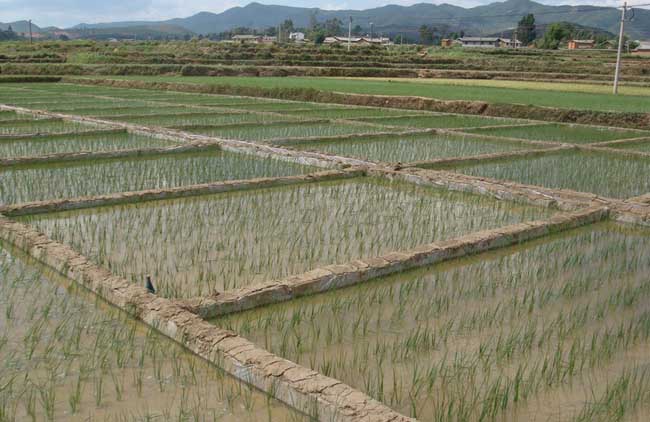
Rice Fertilization Requirements
Rice is one of the crops with relatively high fertilizer requirements. Generally, producing 100 kg of rice grain requires 1.6-2.5 kg of nitrogen (N), 0.8-1.2 kg of phosphorus (P2O5), and 2.1-3.0 kg of potassium (K2O), with a nitrogen, phosphorus, and potassium requirement ratio of approximately 2:1:3.
Nitrogen uptake in rice peaks during the vigorous tillering stage and the heading and flowering stage. Applying nitrogen fertilizer can increase starch production, and starch production is positively correlated with rice grain size, yield level, and grain quality. If nitrogen supply is insufficient before heading, it will cause reduced grain nutrition, insufficient grain filling, and lower rice quality.
Phosphorus uptake in rice shows little difference across growth stages, with the largest uptake period being from tillering to the young panicle differentiation stage. Phosphorus fertilizer can promote root development and nutrient uptake, enhance tillering, increase starch synthesis, and promote grain filling.
Potassium uptake in rice occurs mainly from panicle differentiation to the heading and flowering stage, followed by the tillering to panicle differentiation stage. Potassium is an essential nutrient for the synthesis and internal transport of starch and cellulose. It can improve root vitality, delay leaf senescence, and enhance resistance to pests and diseases.
In addition, two micronutrient fertilizers, silicon and zinc, have a relatively large impact on rice yield and quality. Rice stems and leaves contain 10%-20% silicon dioxide. Applying silicon fertilizer can enhance rice resistance to pests and diseases and lodging resistance, play a role in increasing yield, and improve rice quality; zinc fertilizer can increase the number of effective panicles, grains per panicle, and 1000-grain weight of rice, reduce the empty grain rate, and play a role in increasing yield, with a more obvious effect on calcareous soils. The application of silicon and zinc fertilizers is more effective in newly converted paddy fields, acidic soils, and cold waterlogged fields.
Rice Fertilization Techniques
1. Seedbed Fertilization
For seedbed base fertilizer, high-quality organic fertilizer should be applied heavily. Organic fertilizer has long-lasting fertilizer effects, complete nutrients, and contains large amounts of nutrient elements essential for rice growth. Generally, apply 500-1000 kg per mu, and at the same time apply 3-5 kg of urea, 8-15 kg of diammonium phosphate, 7-8 kg of potassium chloride per mu, or 20-30 kg of compound fertilizer per mu, to achieve the purpose of uniform fertilizer supply and promote strong and uniform seedlings. 4-5 days before transplanting, apply 6-7 kg of urea or 8-10 kg of high-nitrogen compound fertilizer per mu as send-off fertilizer, to help seedlings turn green and resume growth as soon as possible after transplanting.
2. Apply sufficient base fertilizer in the main field: The base fertilizer in the main field should also emphasize the application of organic fertilizer. Generally, apply 10-15 kg of Defuer drip irrigation flushing fertilizer per mu. And apply one set of Chongzhidao with soil ratio plus. In addition, apply 6-8 kg of silicon fertilizer and 1-1.5 kg of zinc sulfate per mu. The base fertilizer in the main field should be applied before transplanting in combination with plowing and harrowing the paddy field, and should be deeply applied into the soil at 12-20 cm, so that ammonium remains stable in a low-oxygen environment and is prevented from leaching.
3. Topdressing
(1) Apply tillering fertilizer early. Apply tillering fertilizer as early as possible after transplanting and turning green, to promote the growth of low-node tillers and play a role in increasing panicles. Tillering fertilizer is generally applied in two applications, each time applying 10 kg of Defuer drip irrigation flushing fertilizer per mu, to ensure uniform growth across the whole field and play a role in preserving tillers and forming panicles.
(2) Apply panicle fertilizer skillfully. When the penultimate leaf of rice begins to emerge and the young panicle is about 1 cm long, this is the foundational period for panicle formation and grain development, and ineffective tillers should be controlled. At this time, one bucket of Jiuguo can be applied as topdressing per mu, to ensure that sufficient nutrients in the middle stage shift to reproductive growth, increase the number of spikelets, prevent spikelet degeneration, promote large panicles and heavy grains, and at the same time have the effects of nourishing roots, strengthening leaves, strengthening stems, and preventing lodging. Fields with too small a population can apply it earlier at the panicle differentiation stage.
(3) Apply grain fertilizer supplementally. From heading to maturity, the main goal is to improve the seed-setting rate, ensure full maturity, and increase the 1000-grain weight. Topdressing should depend on the rice growth condition, and it is better to apply less rather than more. Generally, spray 50-60 kg per mu of a 0.2%-0.3% potassium dihydrogen phosphate solution mixed with Saisheng seaweed acid iodine; after zinc deficiency symptoms appear, spray 50-60 kg per mu of a 0.1%-0.3% zinc sulfate solution mixed with Huaguo Doctor Guoneng multi-element; for fields where leaves show chlorosis and yellowing before heading, apply one set of Chongzhidao with soil ratio plus per mu. Supplemental grain fertilizer can effectively enhance the plant's stress resistance and disease resistance; extend the leaf functional period and prevent premature senescence; improve oxygen supply to rice roots and increase root vitality; accelerate grain filling, promote maturity and full grains, thereby increasing rice grain yield and improving rice quality. It should be noted that fields with sufficient early-stage fertilizer, excessive and overly vigorous middle-stage tillering, dark green leaf color, poor light reception among the population, and a tendency toward delayed maturity with excessive vegetative growth should not be given supplemental grain fertilizer.
In addition, saline-alkali land should be drained and washed of salt before fertilization. About 3-4 days before fertilization, pay attention to irrigating during the day and draining at night, to prevent temporary salt accumulation from affecting the exertion of fertilizer efficiency.