Succulents growing slowly? Get watering under control in summer and the leaves will turn gorgeous
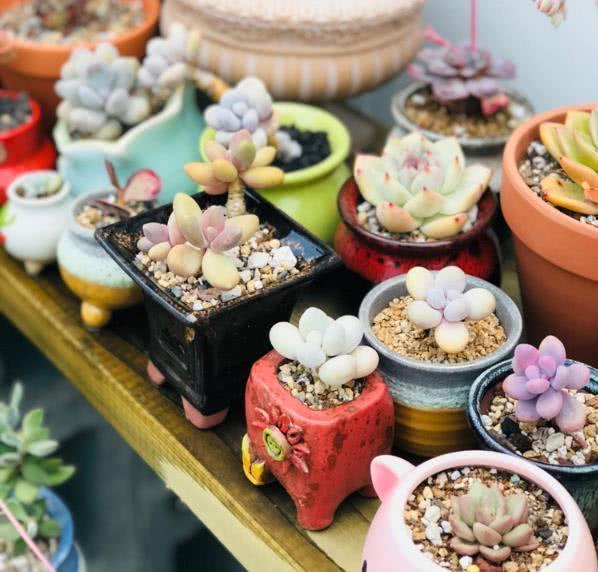
Watering succulents is a fine art: better dry than wet. It is hard to say how often to water these days, since the climate varies from place to place, with some areas drier and some more humid, making it hard to judge. A good trick is to use a pot with a tray at the bottom; when the water in the tray dries up, it proves the soil is basically dry. Another way is to wait until the leaves no longer look so plump before watering, which proves the plant is short of water. Of course, if you are a genius expert, you can judge for yourself just how much water a succulent really needs and water once whenever there is more of a need, which is even better.
As for the timing of watering succulents, in summer the morning is best, in winter it should be done before noon on a clear day, and in spring and autumn you can water in the morning or evening. Generally, do not pour water from the top, and always water thoroughly; for this reason you must loosen the soil regularly so the potting soil can evenly absorb enough water. For winter-growing and intermediate-type plants that are actively growing, keep the potting soil moist but not waterlogged; water so that it dries out completely and then is watered thoroughly, neither waterlogged nor overly dry. Summer-growing types can be given a little water, but not too much. If there is rainy weather or the temperature suddenly drops, stop watering.
To water scientifically and sensibly, first learn to observe carefully and judge correctly. Some succulents, when exposed to scorching sun or when their roots rot, develop dark red leaves and dry, withered leaf tips and old leaves; watering at this point is harmful to the succulent. During the growing season, while watering, you can also mist appropriately to increase air humidity. The water used for misting must be clean and free of any pollutants or harmful substances; avoid hard water containing too many calcium and magnesium ions. Stop misting at low winter temperatures to avoid frost damage from excessively high air humidity. The water temperature for watering should not be too low or too high; close to room temperature is best.
If the leaves wrinkle or soften, they will basically recover the very next day after watering, or at the latest by the third day. If they still have not recovered long after watering, then the roots must be damaged, causing dehydration because the plant cannot absorb water. Sometimes wrinkled, softened leaves are not necessarily a sign of water shortage, so you need to judge based on your usual watering schedule and recent weather conditions. Generally speaking, if it is a case of water shortage, watering that evening will make the leaves plump up the next day. But if the condition does not change for several days after watering, you need to pay attention. This situation usually means the plant's roots have not grown out, or the original roots have already rotted.
When succulents do not get enough light, they tend to grow leggy, so full sun is best. If you cannot meet that condition, you just have to prune regularly; do not waste the cut branches, as they can be used for re-cuttings, and once the cuttings take root, you will have one more pot of succulents. The method is fairly simple: just use gritty soil for the cuttings, but keep it moist and mist twice a day, with one misting in the morning and one in the evening being essential; if it is too dry, the branches will dehydrate and dry out and will not grow roots.
As for pots, breathable ceramic pots are quite suitable for growing succulents, because there is no risk of drowning the plant; even if it gets a little dry, as long as the succulent does not die, its condition will still improve after watering, making them very suitable for beginners. But ceramic pots also have drawbacks: water evaporates too quickly and the bottom of the pot does not retain water, which slows the growth rate of succulents. This is because there is not enough water for the succulent to grow, as the water evaporates completely before the plant can fully absorb it. Especially in summer, many enthusiasts mistakenly believe that red clay pots are good for breathability and that a completely dry environment is very good for succulents, so they simply stop watering, which directly causes the succulents to dry out and die.
This is a gathering place for succulent lovers, sharing succulent care tips; you are welcome to follow and exchange ideas.