Succulent black rot prevention in summer: control watering to get blooms and a full pot
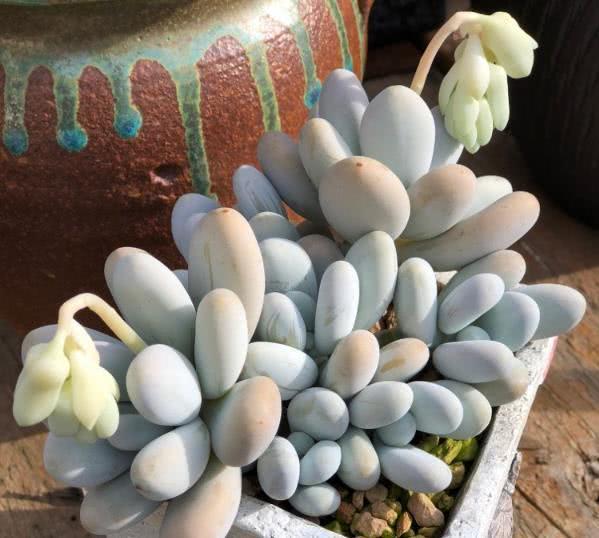
The main reason black rot occurs is still too much watering; the fungal infection is caused by a potting soil environment that is too damp. Usually when a succulent gets black rot, it starts from the middle of the stem, the leaves fall off at a touch, and the leaf growth point begins to turn black and rot and spreads to the leaves. To prevent black rot in succulents, you must control watering; between two waterings the soil should be allowed to dry out completely, and when watering you can mix in some carbendazim for a soil drench, which is very effective in the early stage. Second, the soil medium for planting succulents must be breathable, and there is also ventilation.
Succulent black rot is mostly caused by saprophytic fungi. It occurs mostly in summer when temperatures are high and the resistance of succulents is low during their dormant period; currently there is no specific cure for this problem. Black rot does not only occur in succulents; it can also happen to other animals and plants. It is just like how food molds easily in summer and animal wounds become infected easily. Succulent black rot generally occurs in summer, but black rot can also occur in winter; black rot fungus likes to grow in damp and stuffy spaces, but because winter temperatures are lower and the environment is relatively dry, black rot cases still appear.
What to do about succulent black rot, and what to apply after beheading the plant? When beheading for black rot, you must cut down to a position where the stem is not infected, otherwise it will continue to spread upward. After beheading, apply some carbendazim to the cut surface; if you do not have it, you can apply cigarette ash, let it dry for two days, and then take cuttings. Leggy succulents are more prone to black rot than normal ones. Legginess itself is an abnormal growth state; generally after crops become leggy, their disease resistance drops noticeably and they are prone to disease. Succulents are the same. Several of my succulents with black rot all had leggy characteristics, and their stems were noticeably thinner than those of the others.
You must pay attention when watering succulents. Many people like to use trays. Based on my experience over the past few years, if the bottom of the flower pot can also breathe, that is excellent. Some people use upper and lower layers, and you must pay attention to whether the water flowing down from above will drip into the flower pot below; this is a big taboo. Regarding the amount of water for watering: some people say to water a little every day, some say to water thoroughly at one time, and some say to use ice; I think it depends on the actual situation (isn't that obvious), but actually, however you usually water, in summer just follow your previous method and reduce the frequency. It is not necessarily better to suddenly change your watering method in summer and use some other expert's watering method; on the contrary, the succulent may not be able to take it.
Sometimes root mealybugs can also cause black rot in succulent plants, because wounds make fungal infection easy. So we should often observe the discolored areas of the plant, as well as stems and leaves that have become soft and mushy. Poor soil lacks nutrients. People get sick easily when lacking nutrients, and plants are the same; nutrients in the soil cannot meet the plant's growth needs, the plant is malnourished and its resistance is low, so it naturally becomes susceptible to infection by pathogens. Weak roots are prone to black rot. In agricultural production, one of the methods to prevent black rot is to use Genfukang to strengthen the root system and prevent root rot and black rot. Plants with weak roots have low disease resistance and are prone to black rot; several of my 'Jingye' (Echeveria derenbergii) with black rot also had relatively weak roots.
In winter, succulents only need a little water, and it should be poured directly onto the soil; never pour it from directly above the succulent, and try to let the water have zero contact with the plant. If too much water is poured, find a well-ventilated place and leave it there for a period of time; succulents can still tolerate short-term water accumulation or overly damp soil. In winter, most succulents need to keep their potting soil relatively dry and their environment dry, especially when temperatures are on the low side, and in winter they almost do not need fertilizing. Too much watering not only causes root rot but also easily makes succulents leggy, so their color will gradually fade. When winter temperatures are on the low side, you can see that succulents are already not very active, so they really do not need too many nutrients; if you still fertilize normally at this time, it will cause fertilizer burn and harm the succulent. If the succulent is sick, will its color still be bright?
This is a gathering place for succulent enthusiasts, sharing succulent care tips; you are welcome to follow and exchange ideas.