Spider mite season is here again: treat your flowers and plants this way so they can thrive
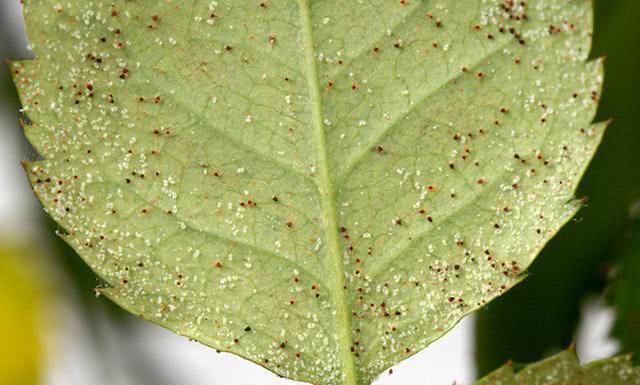
If you find small white dots and small red dots on the undersides of leaves, plus a few things that look like spider silk, it is really enough to make you panic. No need to guess what pest it is; it must be a spider mite outbreak! Gardeners who have been through it will find that spider mites are tiny, but their destructive power is by no means small. They come back again and again, and they are troublesome and hard to control!
What exactly are spider mites?
If spider mites break out on your flowers and plants, it first shows that there is a problem with your growing environment. "High temperature, dryness, and poor ventilation" - once these three factors are all present, it is very likely to trigger spider mites to come out in full force!
Are spider mites really related to spiders? Why have you never seen a spider in the flower pot, only small red and white dots? Attention! Spider mites are not "spiders"; they belong to the class Arachnida, order Acari. Recognizing this is very important, and this is also why insecticides have poor results! It is like being ill for many years and suddenly realizing that the treatment has never targeted the right cause!
Spider mites, also known as leaf mites, are plant-feeding mites. Their head has a sucking organ that feeds on chlorophyll and other juices in leaves. Their reproductive capacity is extremely strong, and their generation turnover is extremely fast. In addition to astonishing sexual reproduction with no rest all year round, they can also reproduce parthenogenetically, meaning that without males they can still lay eggs and hatch. They can truly be called the "cockroach" of the microscopic world.
Spider mites may be holding a grand "family feast" on your plants right now!
The small white dots and small red dots on the undersides of leaves are spider mites at different growth stages. Perhaps a spider mite family "with four generations under one roof" is holding a grand "family feast" on your green plants! At this "family feast," you will see four growth forms of spider mites: egg, larva, nymph, and adult. (There is also a saying that spider mites have five growth stages: egg stage, larval stage, early nymph stage, late nymph stage, and adult stage.) Imagine the scene: it is quite lively, with feeding on sap, spinning silk and making webs, and laying and hatching eggs in a busy flurry. What a pity for the flowers and plants at home, and for the gardeners who are completely unaware.
The truth behind the spider mite's immortality!
Why are spider mites so troublesome, impossible to drive away completely and impossible to eradicate? The following four truths can be summarized:
Truth one: spider mites are small, reproduce quickly, and are highly adaptable, and they very easily develop pesticide resistance.
Truth two: spider mites mostly do damage on the undersides of leaves, making them very easy to overlook. If pesticide spraying is not comprehensive, it will completely fail to kill the mites.
Truth three: large numbers of spider mites spin silk and form webs to defend against pesticides, greatly weakening the effectiveness of the pesticide.
Truth four: a single acaricide cannot easily cover multiple growth stages of spider mites at the same time.
Even the strongest opponent has weaknesses!
Although it sounds quite powerful, there is a saying: no matter how perfect a person is, they have flaws; no matter how strong a person is, they have weaknesses. Spider mites, no matter how strong an enemy, also have their weaknesses, and we need to use wisdom to give them a fatal blow. As mentioned at the beginning of the article, the three major causes that trigger spider mites are "high temperature, dryness, and poor ventilation." So first, the environment must be adjusted in time: "lower the temperature, retain moisture, and strengthen ventilation," changing the external environment.
In addition, for gardeners with small seedlings in small pots and not many infested pots, you can try the method of washing plus soaking. Spider mites are afraid of water. As soon as they are found, rinse quickly with water, twice a day in the morning and evening, focusing on the undersides of leaves, and persist for about a week. Remember that every leaf must be rinsed, and check regularly. For soaking, as shown in the picture below, tie the pot and soil securely with a plastic bag and completely submerge the infested flowers and plants in water.
This method is suitable for small seedlings in small pots. Doing this for three or five pots is no problem. However, you may say that if there are many pots, if the outbreak is in a planted courtyard, or if the plants are large woody or climbing plants, then this method will not work. Does that mean you can only wait helplessly for disaster?
The nemesis of spider mites: personally tested highly effective remedies!
If there are not many, rinse off the spider mites. Once the situation develops on a large scale and a plant is infested up to 20%, then it is time to bring out the sure-kill formula summarized by Squirrel Jun. Below are three personally tested mite-killing remedies, and the results are still quite good. This can also be considered the ultimate ace in the hole for mite control. Spraying must be persistent; working by fits and starts will not do. Interruption will instead cause pesticide resistance. In addition, be sure to pay attention to the ratio of mite-killing remedies; it is better to make it weaker than stronger, otherwise pesticide damage will occur, making things even worse.
The three great nemeses of spider mites: abamectin, Eikamite+Jinmanzhi, pyridaben
Abamectin: after application, adult mites, nymphs, and larvae that come into contact with abamectin become paralyzed. The peak killing effect usually appears 3 days after application. However, on the day of application, it already has an impact on spider mites, immediately stopping feeding and preventing further damage to leaves. Abamectin can last 7 to 15 days, and the control effect can reach more than 90%. It is the first choice for wiping out spider mites.
Eikamite + Jinmanzhi: these two agents need to be used together. First use Eikamite. Eikamite is relatively viscous in the packaging bag and needs to be drawn out with a syringe. 1 milliliter of Eikamite needs to be diluted with 2500 milliliters of water, which means one drop is diluted with about 600 milliliters of water. After three days, begin using Jinmanzhi, diluting 1 milliliter with 1500 milliliters of water. Likewise, be careful to spray the pesticide thoroughly, especially on the undersides of leaves. You can tilt the flower pot and rotate it while spraying around the pot. At the same time, spray the upper sides of leaves, branches, and the soil surface. For severely affected leaves, they can be removed, but be sure not to strip all the leaves so that only bare stems remain. Also remember to wash your hands with soap after spraying.
Pyridaben: it has a broad acaricidal spectrum and can target various types of mites. It has a good effect on the entire growth period of spider mites and has an obvious rapid-kill effect. Pyridaben is not affected by temperature changes. Whether used in early spring or autumn, it can achieve a mite-killing effect. However, its efficacy can be unstable due to the influence of light conditions, so spraying is best done in the evening and at night.
Most pesticide spraying for killing spider mites follows a 7-day cycle, for example: spray on Monday, stop on Tuesday, stop on Wednesday, spray on Thursday, stop on Friday, stop on Saturday, spray on Sunday. Only through such a process can adult spider mites and the larvae hatched from eggs be completely wiped out.
Welcome to follow Plant Fanatic. Would you like to obsess over flowers and plants together with Squirrel Jun?
What pest or disease annoys you the most?
Leave a comment to share with everyone and brainstorm together. Maybe it will be solved!