Snake plants not only look great but can also purify indoor air and create a natural oxygen bar
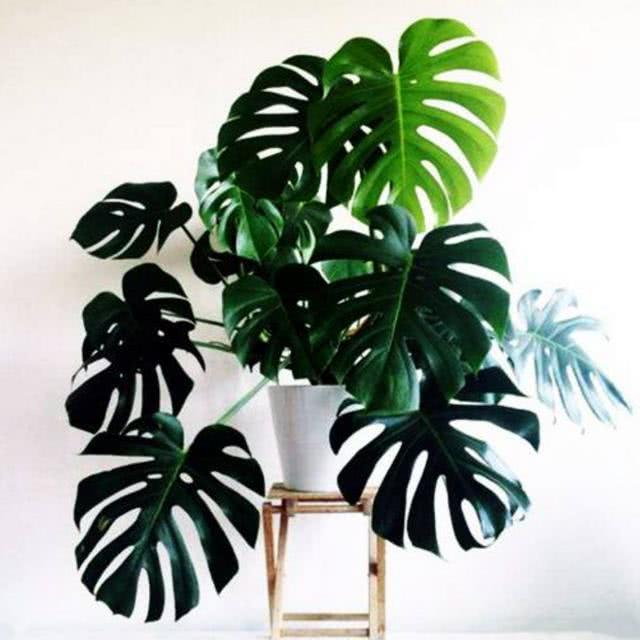
When it comes to green plants that can purify indoor air, gardening enthusiasts can always list a whole bunch, such as spider plants, pothos, rubber plants, snake plants, and so on - they are all masters of indoor air purification. There is another plant that, when grown indoors, not only does not compete with people for oxygen, but also absorbs carbon dioxide at night, greatly helping to improve indoor air quality. It is the Swiss cheese plant (Monstera deliciosa). It also has the advantage of preferentially absorbing harmful gases such as formaldehyde and benzene. The formaldehyde absorption capacity of one Swiss cheese plant is equivalent to that of 10 grams of coconut shell activated carbon, achieving the effect of purifying indoor air and creating a "natural small oxygen bar" for your home at any time. It is an ideal indoor foliage plant.
The Swiss cheese plant has peculiarly shaped leaves with holes and splits, closely resembling a turtle shell. Its stems and nodes are thick and strong, with dark brown aerial roots crisscrossing like electrical wires. The leaves are dark green, and it is shade-tolerant year-round, making it very suitable for indoor cultivation. Some gardening enthusiasts, based on its plant form characteristics, affectionately call it "the little monster with bared fangs and claws." For the Swiss cheese plant, this "nickname" is not exaggerated at all. The lifespan of the Swiss cheese plant is just like its name - impossible to measure with data. As long as the environment is suitable, it will grow indefinitely. Even when the roots and stems age, it still has a large number of aerial roots that can absorb water and nutrients to keep the plant reproducing and growing, and it will not die.
The Swiss cheese plant's original growing environment is beneath large trees in tropical rainforests, so it greatly prefers a warm, humid, and shaded climate. When growing the Swiss cheese plant at home, during spring, autumn, and winter when sunlight is not very intense, you can give it appropriate sun exposure. But in summer, you must provide it with shade, or move it to a cool, ventilated environment with scattered light, avoiding direct sunlight to prevent the leaves from getting sunburned. If conditions permit, near a bedroom windowsill or on a balcony with scattered light is its best habitat.
The Swiss cheese plant prefers loose, fertile soil with good drainage. Its root system grows very rapidly, so it is recommended to repot and change the soil every one to two years. For soil mixing, it is recommended to use decomposed pine needle soil, garden soil, and river sand or perlite in a 3:2:1 ratio. Before potting, you can add a small amount of compound fertilizer or decomposed chicken manure, soybean cake, etc. at the bottom of the pot as base fertilizer.
The Swiss cheese plant has modest water requirements. Water according to the principle of "water when dry, stop when wet" - do not water if the potting soil is not dry and not thoroughly dry. The Swiss cheese plant prefers a humid air environment. In daily care, you can use a spray bottle to mist the plant or leaves. On one hand, this maintains the air humidity it needs; on the other hand, it can wash dust off the leaves, creating favorable conditions for leaf photosynthesis.
The Swiss cheese plant likes fertilizer. Spring, summer, and autumn are its vigorous growth periods. In the hot summer, try to create a cool growing environment for it. If you notice new leaves growing, also apply fertilizer in a timely manner. For fertilization, it is recommended to apply light fertilizer frequently. You can apply a quick-acting compound fertilizer to the plant once every 20 days, dilute it with water until dissolved, and pour it around the roots; you can also use decomposed organic fertilizer, such as soybean cake water or rice washing water, diluted 50 times with water and poured along the pot wall. If you find organic fertilizer smelly, you can move the plant to a cool, ventilated outdoor spot after fertilizing, and move it back indoors once the smell has dissipated. The Swiss cheese plant prefers slightly acidic soil. To prevent iron deficiency yellowing of the leaves, you can pour a 1:2000 ferrous sulfate solution around the roots once a month.
The Swiss cheese plant, like pothos, belongs to the Araceae family. The sap of plants in this family is mildly toxic, and if it accidentally enters a wound, it may cause redness, swelling, and other reactions. Gardening enthusiasts with young children at home should place the Swiss cheese plant somewhere children cannot reach, to prevent skin infections.