Detailed Explanation of Key Technical Points for Rice Seedling Stage Management
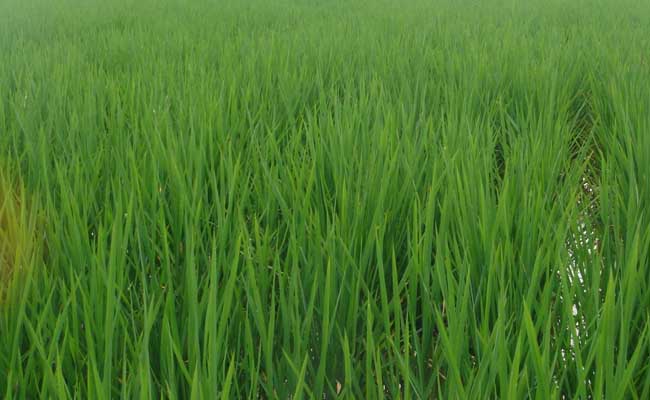
Seedbed Temperature Management
1. From sowing to the emergence of the first leaf tip, the priority is to maintain warmth. The temperature inside the shed should be 28-30°C, with the optimum temperature at 25-28°C. During the 2-leaf stage, maintain 25°C, and during the 3-leaf stage, maintain 20-22°C, with the minimum temperature not falling below 10°C. Since nighttime temperatures are relatively low, measures such as turning on electric lights inside the greenhouse or burning rice husks should be taken to raise the temperature. For small-shed seedling cultivation, measures such as covering with rice straw or cold-proof blankets on the outside of the shed should be taken to raise the temperature, ensuring that the minimum temperature requirements for each leaf age of the seedlings are met, so that the rice seeds can grow and develop normally on the seedbed.
2. Seedbed ventilation management. After the rice seedlings emerge and turn green, the plastic film should be removed. It is best to remove the film in the morning or evening when the temperature difference inside and outside the shed is small, so the seedlings can adapt to the new environment quickly. If the film is removed at noon when the temperature is high, the above-ground seedlings transpire quickly while root absorption is slow, which can easily cause physiological water loss in the seedlings. After removing the film, small ventilation can begin. When ventilation reaches the minimum temperature threshold for each leaf age, the shed should be closed promptly. As leaf age increases, the ventilation and hardening time should be extended accordingly. Especially during the 2.5-leaf stage, the temperature must not exceed 25°C. If it exceeds 25°C, ventilation should be used to cool down to prevent premature heading. After the 3-leaf stage, gradually increase ventilation so that the temperature inside and outside the shed becomes nearly consistent. If there is no frost at night, there is no need to cover with film; wait for transplanting.
Seedbed Moisture Management
1. When the base water has been thoroughly watered, in principle, avoid watering before the 2-leaf stage as much as possible. Afterwards, watering the seedbed should follow the "three observations": first, observe whether there are dew drops on the leaf tips in the morning and evening; second, observe whether the newly unfolded leaves curl at noon during high temperatures; third, observe whether the seedbed soil surface turns white. If the leaves do not release water in the morning and evening, the newly unfolded leaves curl at noon, and the bed soil surface turns white, water that has been warmed in the sun for a morning should be applied all at once, thoroughly and generously, minimizing the number of waterings. Do not irrigate the bed with cold water, as this will cause cold-water-induced seedling stunting and affect the growth and development of rice seedlings.
2. Aim for dry cultivation of strong seedlings as much as possible. Water promotes shoot growth, while dry conditions promote root growth. To achieve good root wrapping of seedlings, seedbed moisture must be controlled. Only under dry cultivation conditions can seedling root development be promoted. Especially 2-3 days before transplanting, it is best not to water, keeping the seedling roots under dry cultivation. If the seedlings do not wrap roots well before transplanting, apply root-promoting agent 1-2 days before transplanting, which can make rice seedlings develop more roots, more white roots, longer root systems, and good root wrapping.
Controlling Seedling Excessive Growth, Dwarfing to Promote Tillering
The key to cultivating strong seedlings is controlling excessive growth. Paclobutrazol has the effect of inhibiting seedling elongation and promoting tillering. It can increase the chlorophyll content of seedlings, enhance enzyme activity, facilitate metabolism, and strengthen drought and cold resistance. Practice has proven that spraying 15 days after emergence, using 0.2-0.3 grams of 15% paclobutrazol per square meter mixed with Jiumiao seaweed acid iodine for dwarfing and tillering promotion yields good results. Standards for strong seedlings: seedling age 30-35 days, leaf age 3-3.5 leaves, seedling height 12-14 cm, root number per seedling 9-11, stem diameter 2.5-3 mm, dry weight per 100 plants 3-3.5 grams, tillering rate above 30%.
Preventing Rice Seedling Stage Damping-off and Bacterial Wilt
Based on the alternating cold and hot weather conditions in late April, seedling stage diseases are prone to occur.
1. Rice damping-off is mainly caused by multiple factors such as low temperature and high humidity, large temperature differences, alkaline soil, insufficient light, excessive seeding rate, and weak thin seedlings. It seriously affects the quality of rice seedlings and the improvement of rice per-unit yield. Therefore, comprehensive prevention and control measures focusing on prevention must be adopted to prevent the occurrence and spread of rice damping-off.
2. Damping-off is a fungal disease. Based on the timing of onset, it can be divided into three types: bud rot, basal rot, and yellow wilt. Bacterial wilt is a physiological disease, mostly occurring after the 3-leaf stage, with leaves turning blue-green, no water droplets on leaf tips, curling, and the central leaf rolling into a tube shape. In severe cases, the entire rice seedling dies.
3. Prevention and control methods
(1) Damping-off prevention and control. Perform good seed and bed soil disinfection, control seedbed temperature and humidity well, cultivate strong seedlings, and improve seedling disease resistance. When damping-off occurs in seedlings, spray with Likukeixing mixed with Jiumiao seaweed acid iodine, which can effectively prevent and control damping-off.
(2) Bacterial wilt prevention and control. Reduce seeding rate and advocate the use of isolation layer seedling cultivation, which can raise soil temperature. During ventilation and hardening, attention should be paid to blocking below the greenhouse openings with woven materials, etc., to avoid strong winds directly causing bacterial wilt. When the disease is relatively severe, irrigate water onto the bed, and immediately drain the water after the leaves unfold. In severe cases, use Ruimiaoqing aqueous solution, spraying 1 milliliter per square meter, which can cure the disease.
Before transplanting, achieve the “three carries” and implement fitness cultivation
Before transplanting, the “three carries” work for seedlings should be done well. First, carry soil, which ensures transplanting quality and helps seedlings quickly revive and survive. Second, carry fertilizer: apply 150 grams of diammonium phosphate per square meter of seedbed, then water to wash the seedlings, which can promote root development. Third, carry pesticide: use 4 grams of Aimaiyue per 100 square meters of seedbed, diluted with water and sprayed on the seedbed to prevent leaf miners, while also spraying 75% tricyclazole or Tianfengsu 1500-fold solution for fitness cultivation. Advocate early land preparation and early transplanting. Transplanting 1 day earlier can capture more than 20°C of active accumulated temperature, which helps rice mature before frost.