Detailed Explanation of Key Techniques for High-Yield Rapeseed Cultivation
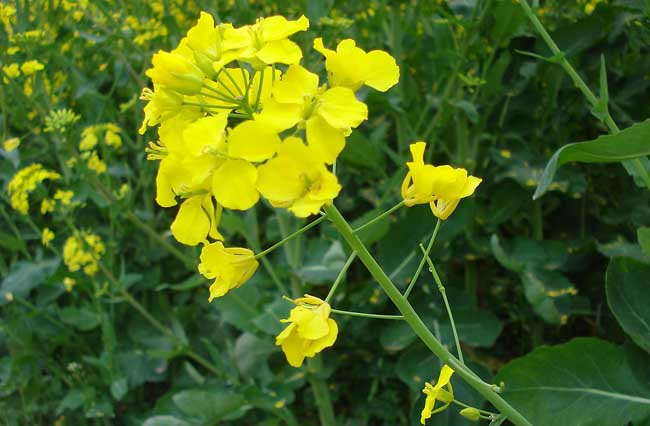
Rapeseed contains a variety of nutrients and is rich in vitamin C. Its seeds have an oil content of 35-50%. Rapeseed oil is rich in fatty acids and various vitamins, with high nutritional value. It is not only a good edible vegetable oil but also has a wide range of industrial uses.
Fine Seedbed Preparation
After the mid-season and late rice is harvested, plow the land and break up the soil, form beds and open furrows. The beds should be 1.5 m wide and 12-17 cm high, with a fine and level bed surface. Field furrows and drainage ditches around the perimeter should be properly opened.
Sow at the Right Time and Cultivate Strong Seedlings
Mid- and late-maturing varieties are best sown from late September to mid-October; early-maturing varieties are best sown from mid-October to late October. If the late rice harvest is not timely, sowing and seedling raising should be done 30 days before harvest.
The seedling nursery should be a fertile, sunny, well-drained sandy loam field or vegetable garden plot. Prepare the seedbed finely and apply sufficient basal fertilizer. Apply 1000-1250 kg of decomposed pig and cattle manure and 30-40 kg of phosphate fertilizer per 667 sq m. Divide into sections with measured quantities and sow evenly, sowing 0.5-0.7 kg per 667 sq m, then cover with 1 cm of soil. Thin seedlings at the 2-leaf stage, removing weak ones and keeping strong ones. Final thinning at the 4-leaf stage (keep seedlings in the nursery bed and main field at a ratio of 1:5). After final thinning, apply 2-3 kg of urea or 250-300 kg of human and animal manure diluted with water per 667 sq m. Timely control of pests and diseases to ensure strong seedlings.
Transplant at the Right Time and Plant at Reasonable Density
Transplant promptly when seedlings reach 30-35 days of age, with a row spacing of 40 cm and a plant spacing of 20-27 cm. For mid- and late-maturing varieties, plant 8,000-10,000 plants per 667 sq m; for early-maturing varieties, plant 12,000-14,000 plants per 667 sq m. Early-maturing varieties can also be direct-seeded in holes, with a hole spacing of 27 cm × 33 cm, sowing 5-8 seeds per hole, then thinning to leave 1 plant. After transplanting, check for missing plants and fill gaps promptly.
Scientific Fertilization
1. Apply sufficient basal fertilizer. Farmyard manure and phosphate fertilizer should be composted and decomposed before application at sowing or transplanting. Apply 1000 kg of high-quality farmyard manure and 20-25 kg of phosphate fertilizer per 667 sq m.
2. Apply seedling fertilizer early. For direct-seeded rapeseed, once 3 true leaves have emerged, apply a seedling-promoting fertilizer combined with thinning and final thinning, applying 4-5 kg of urea and 2-3 kg of potassium chloride per 667 sq m. For transplanted seedlings, apply 1000 kg of dilute manure water per 667 sq m or 8-10 kg of urea per 667 sq m at the green-turning stage.
3. Timely topdressing of bolting and flowering fertilizer. When rapeseed buds and begins bolting, apply 5-7 kg of urea and 3-4 kg of potassium chloride per 667 sq m, or 7-8 kg of nitrogen-phosphorus-potassium compound fertilizer per 667 sq m.
4. Foliar topdressing. Spray 0.2% borax solution or monopotassium phosphate on the leaves at the seedling stage and the full-bloom pod-setting stage respectively to increase the seed-setting rate.
Intertillage and Weeding
For direct-seeded rapeseed, carry out intertillage and weeding together with thinning and final thinning. For transplanted seedlings, carry out intertillage and weeding together with fertilization 20-30 days after transplanting.
Scientific Irrigation and Drainage
Rapeseed growth is both drought-sensitive and waterlogging-sensitive. In water management, it should be possible to irrigate in drought and drain in waterlogging, keeping the bed furrows and surrounding ditches unobstructed to facilitate irrigation and drainage. Water demand is high during the bolting and flowering stages, so water supply should be ensured. During the seedling stage and the flowering and pod-setting stages, care should be taken to prevent waterlogging in the field.
Pest and Disease Control
The main insect pests of rapeseed include cutworms, aphids, leaf-mining leafhoppers and diamondback moths, which can be controlled with dichlorvos, dimethoate and pyrethroid pesticides. The main diseases include sclerotinia rot and downy mildew, which can be controlled with thiophanate-methyl, carbendazim and mancozeb pesticides.
Harvest at the Right Time
About 30 days after the end of the full-bloom stage, when about 2/3 of the siliques have turned yellow and most of the seeds inside the siliques have changed from green to yellow or red, harvest can begin. After harvesting, spread out to dry for 1 day, then thresh, dry promptly and process promptly.