How to Grow Potatoes for High Yield? A Detailed Guide to Cultivation and Planting Techniques
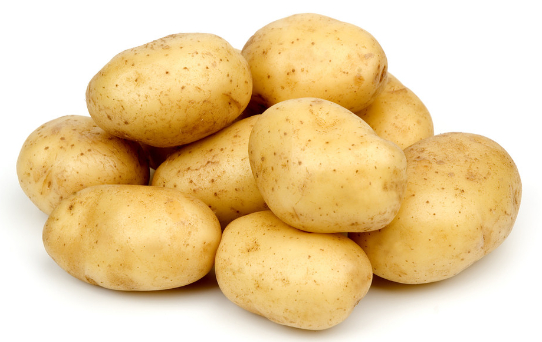
The potato is an annual herbaceous plant of the genus Solanum in the nightshade family, also known as earth egg, foreign taro, potato, and so on. The potato grows 30-80 cm tall, hairless or sparsely pubescent. The stem is divided into two parts: the aboveground stem and the underground stem. The potato is one of China's five major staple foods, with high nutritional value, strong adaptability, and large yields; it is the world's third most important food crop, after wheat and corn. The potato reproduces by tubers and can be used medicinally; it is neutral in nature and sweet in taste, and is mainly used to treat stomach pain, rib swelling, carbuncles and swellings, and other conditions. As a food, its storage period should not be too long, and it must be kept at low temperature, dry, and sealed.
Selecting Good Varieties
Selecting good varieties is an important part of high-yield potato cultivation. Research shows that excellent potato varieties and their high-quality virus-free seed potatoes can contribute about 60% to potato yield. Virus-free seed potatoes sprout early, have robust plants, thick leaves, well-developed root systems, strong stress resistance, and great yield-increasing potential. Therefore, in production, virus-free G2 and G3 generation improved varieties must all be selected.
Site Selection and Land Preparation
The potato is a crop that does not tolerate continuous cropping. The plot for planting potatoes should be chosen from land that has not grown potatoes or other nightshade crops within three years. Potatoes are very sensitive to continuous cropping, and continuous cropping must be avoided in production. If potatoes are planted continuously on one plot, it will not only cause severe diseases such as bacterial wilt, but also cause soil nutrient imbalance, especially of certain trace elements, resulting in poor potato growth, short plants, low yield, and poor quality. Crop rotation of potatoes with corn, wheat, and other plants gives a better yield-increasing effect.
Potato tuber expansion requires loose, fertile soil. Therefore, the plot for planting potatoes should preferably be flat, have irrigation conditions, and be well-drained, deep-tilled, loose sandy loam. After the previous crop is harvested, deep plowing and fine harrowing should be carried out, then beds should be made. The width and height of the beds should depend on the terrain and soil moisture. Where the terrain is high and drainage is good, wide beds can be made; where the terrain is low and drainage is poor, narrow beds or high beds should be made.
Applying Sufficient Base Fertilizer
During its growth period, the potato forms a large amount of stems, leaves, and tubers, so it needs relatively more nutrients. Among the three major fertilizer elements, potassium is needed in the largest amount, followed by nitrogen, and phosphorus the least. Applying sufficient base fertilizer plays an important role in increasing potato yield. The base fertilizer for potatoes should account for 3/5 or 2/3 of the total fertilizer applied. The base fertilizer is mainly decomposed manure, stable manure, and human and livestock manure and other organic fertilizers, combined with phosphorus and potassium fertilizers. Generally, 1000-1500 kg of organic fertilizer, 15-25 kg of superphosphate, and 100-150 kg of plant ash are applied per mu. The base fertilizer should be applied in combination with bed-making or hole-digging into the soil layer below 10 cm, so as to facilitate plant absorption and loosen the tuber-setting layer. When sowing, 20-30 loads of decomposed human and livestock manure and urine per mu, or 5-8 kg of nitrogen chemical fertilizer, are used as seed fertilizer, so that seedlings emerge quickly and evenly and grow robustly.
Seed Potato Treatment
1. Carefully Selecting Seed Potatoes
On the basis of selecting good varieties, choose healthy seed potatoes that are regular in shape, have the typical characteristics of the variety, smooth skin, bright color, and a moderate size of 1-2 liang in weight. When selecting seed potatoes, strictly remove tubers with cracked skin, deformities, pointed ends, dead bud eyes, disease spots, or black rot at the navel end.
2. Cutting into Pieces and Using Small Whole Potatoes as Seed
Planting cut seed potato pieces can promote oxygen exchange inside and outside the tuber, break dormancy, and speed up germination and emergence. However, when cutting into pieces, disease is easily transmitted through the cutting knife, causing seed rot, missing plants, or increased disease incidence in the field and accelerating variety degeneration. If the pieces are too large, the amount of seed used is large, so generally cutting into 20-30 g pieces is suitable. Cut lengthwise so that each piece carries a bud eye with apical dominance. When cutting, remove diseased potatoes, and strictly disinfect the cutting tools to prevent disease transmission.
Using small whole potatoes as seed can avoid disease transmission through the cutting knife, and small whole potatoes have strong vitality and drought resistance, emerge early and evenly after sowing, and increase the number of buds, main stems, and tubers per hill. Therefore, using robust small potatoes of about 25 g as seed has a significant effect on disease prevention and yield increase. However, small potatoes generally have a short growth period, low maturity, a long dormancy period, and often show premature aging in the later stage. In cultivation, it is necessary to grasp an appropriate density, do a good job of sprouting treatment, apply more potassium fertilizer, and combine it with corresponding nitrogen and phosphorus fertilizers, so as to bring out the production potential of small potatoes used as seed.
3. Sprouting
Sprouting is an important measure for disease prevention and high yield in potato cultivation. Sprouting before sowing can promote early maturity and increase yield. At the same time, during the sprouting process, diseased and rotten potatoes can be eliminated, reducing the rate of diseased plants or missing plants and gaps in the field after sowing, which is conducive to full and robust seedlings. Sprouting method: place seed potatoes and sand in alternating layers, about 3-4 layers thick, and keep them at the optimum temperature of about 20°C and in a constantly moist state; after about 10 days the seed potatoes will sprout. During sprouting, soaking the seed potatoes in 0.5-1 ppm gibberellin solution or 0.1-0.2% potassium permanganate solution for 10-15 minutes, or soaking in 2% thiourea for 20 minutes, can all improve the sprouting effect.