Detailed Explanation of the Cultivation Technology for Replanting Green Onions after Spring Wheat
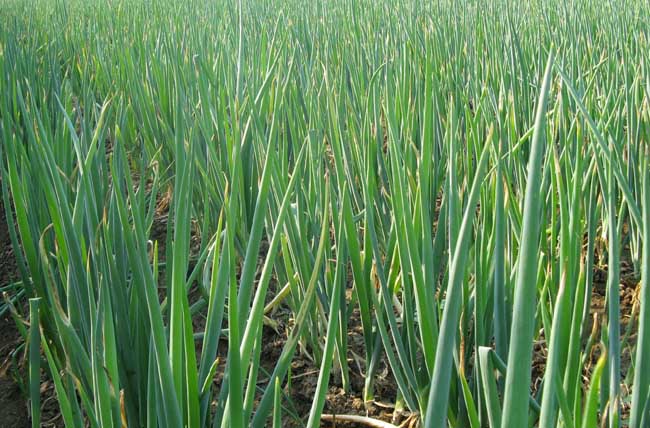
Yield and Output Value
Green onions generally yield 2000-4000 kg per mu, with an output value of 400-800 yuan per mu.
Main Cultivated Varieties
Zhangqiu onion, Linbang onion.
Key Cultivation Points
①Select fertile, high, dry land with irrigation and drainage conditions for seedling raising.
②Grow strong seedlings and transplant at the right time. Sow seeds for seedlings in early to mid-March, with a sowing rate of 2.5-3 kg per mu; one mu of seedlings can transplant 4-6 mu. During the seedling stage, do a good job of topdressing, killing maggots, and disease prevention. After the wheat harvest, promptly prepare the land, make ridges and apply sufficient base fertilizer, applying 15-25 kg of diammonium phosphate per mu. The latest transplanting time should be no later than July 25; in frost-free periods the planting density can be 60 cm row spacing and 5 cm plant spacing, keeping 22,000 plants per mu.
③Field management. After rain, promptly hoe and loosen the soil to improve soil aeration. As the onions grow, gradually earth up 2 times to increase the length of the white stalks and prevent lodging.
④Pay attention to the prevention and control of green onion purple blotch, downy mildew, root maggots, and other diseases and pests.
⑤Fertilizer and water management. In late August, apply about 15 kg of diammonium phosphate per mu, or 25 kg of standard nitrogen, so as not to lack fertilizer, and combine topdressing with irrigation. Do not let irrigation water flow over the ridge tops, and regularly maintain the soil at 70-80% of maximum water-holding capacity; pay attention to drainage if there is excessive rainfall.
⑥Harvest at the right time. Generally harvest onions in early October. Late harvesting causes the white stalks to become hollow and reduces yield.