How to carry out field management during the green-up stage of winter wheat?
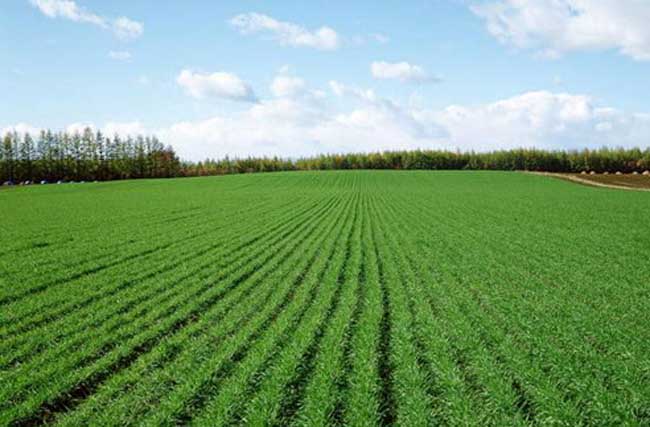
The green-up stage of wheat is a critical period for producing spring tillers and forming new spring roots. If managed improperly, it can easily lead to a conflict between aboveground growth and underground growth, as well as a conflict between effective tillers and ineffective tillers, affecting the robust growth of wheat seedlings. In order to cultivate strong seedlings, the focus should be on preserving soil moisture and increasing temperature, supplemented by fertilization. Main objectives: promote winter tillers, increase spring tillers, promote root growth, control excessive growth, ensure a sufficient number of effective ears, achieve large ears with many grains, and lay a solid foundation for a bountiful and high yield.
Management according to seedling condition
The main objective during the green-up stage is to combine promotion and control to cultivate strong stems and large ears. ① For strong seedlings with a total stem number above 700,000 per 667 sq m before winter, control should be the main approach, combining promotion with control. The key is to loosen the soil for aeration, increase temperature and preserve moisture, control aboveground growth and promote underground growth, increase effective tillers, and reduce ineffective tillers. ② For medium seedlings with a total stem number of 500,000 to 700,000 per 667 sq m before winter, insufficient total stem number before winter and inadequate ear number are the main reasons affecting yield. The key measures are to preserve winter tillers and increase spring tillers, focus on ear number, apply green-up fertilizer in a timely manner, irrigate with green-up water, and strive for as many ears as possible. ③ For fields that were sown late, have poor soil fertility, insufficient base fertilizer, or wheat seedlings that have suffered freeze damage, with a total stem number below 500,000 per 667 sq m (weak seedlings), irrigate promptly, apply an appropriate amount of extra green-up fertilizer, strive for early spring tillering, and promote rapid recovery of wheat seedlings.
Field management measures
1. Spring harrowing
Spring harrowing can loosen the soil and preserve moisture, raise soil temperature, promote root growth and strengthen tillers, and eliminate weeds. In our region, it is mostly carried out in early April. Spring harrowing must ensure quality, otherwise it will not achieve the desired effect. To ensure the quality of spring harrowing, it is generally advisable to harrow when the soil surface just begins to turn white after the beginning of spring. Harrowing too early when the soil is wet will not break up the soil, while harrowing too late when the soil is dry will create clods. The suitable tool for harrowing is an iron T-shaped harrow, with a harrowing depth of 3 to 4 cm. Attaching a willow-woven willow drag behind the iron harrow can improve the effect of breaking up soil and clearing seedlings, and enhance the quality of harrowing.
2. Irrigation
Irrigation can begin when the 5 cm soil temperature steadily passes above 5°C and the wheat field has completely thawed. Generally, the first irrigation is applied in mid-to-late April. Along with irrigation, apply 10 to 15 kg of urea per 667 sq m, and irrigate the second time at an interval of 8 to 12 days. Before the second or third irrigation, apply additional urea as needed based on the seedling stage. The total topdressing amount is 20 to 30 kg per 667 sq m.
3. Weed control
Weeds in wheat fields are mainly dicotyledonous weeds. When using chemical weed control, the following three points must be mastered:
① Select herbicides according to local conditions. Years of practice have proven that, in addition to wheat-specific herbicides such as Puma and Mengpiao (mainly controlling monocotyledonous weeds such as foxtail grass, barnyardgrass, and wild oat), the main herbicides suitable for use in wheat fields are 2,4-D butyl ester and MCPA, which mainly control dicotyledonous weeds such as field bindweed, lamb's quarters, and shepherd's purse. Each has its advantages: MCPA has lower temperature requirements, is non-drifting, and when sprayed is less likely to injure surrounding dicotyledonous crops such as safflower, melons, and certain trees. However, the dosage required is larger, and compared with 2,4-D butyl ester, the weed-killing effect is less ideal. 2,4-D butyl ester has higher temperature requirements, generally showing significant effect above 15°C, but it has drift potential and can easily damage surrounding dicotyledonous crops with the wind; its weed-killing effect is good. Choose according to actual conditions.
② Grasp the timing of spraying. The best time for chemical weed control in winter wheat fields is before the wheat seedlings jointing. The best period for controlling weeds is the 2-to-4-leaf stage, because at this time overwintering weeds and early spring weeds are not large, and late spring weeds are still tender and small, so the herbicide solution can exert its normal efficacy with obvious results. If sprayed after jointing, because the weeds are larger, the weed-killing effect is poor, and it is also easy to cause phytotoxicity to crops.
③ Dosage. For controlling dicotyledonous weeds: use 200 to 300 g of MCPA per 667 sq m, mixed with 30 kg of water for spraying; or use 60 to 100 g of 2,4-D butyl ester, mixed with 30 kg of water for foliar spraying.
Use 40 to 50 mL of Puma per 667 sq m, or 60 to 70 mL of Mengpiao, mixed with 30 kg of water for foliar spraying, to control monocotyledonous weeds.
When broadleaf weeds and grass weeds grow together in wheat fields, Puma can be tank-mixed with 2,4-D butyl ester or MCPA to achieve the purpose of controlling both dicotyledonous and monocotyledonous weeds in one application, increasing the Puma dosage to 70 to 80 mL per 667 sq m.
The spraying dosage depends on the temperature and the amount of weeds, but it must not be excessive, otherwise phytotoxicity will occur. Regardless of which dosage is used, spraying should be uniform according to terrain and wind direction. Generally, spray in the evening, when the physiological water absorption of the plants is strongest, the efficacy is significant, and the weed-killing effect is good.