Analysis of the Causes of Poor Corn Harvests and Treatment Measures
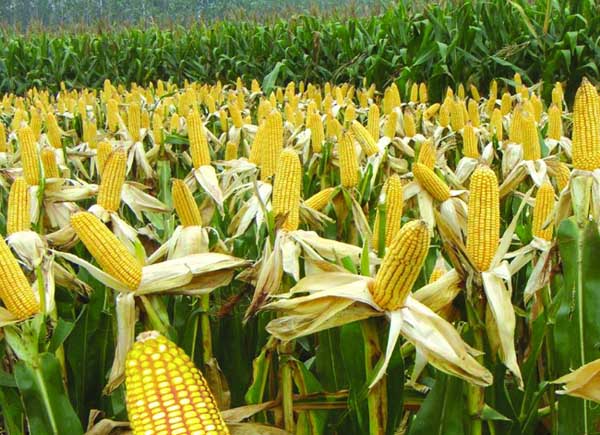
In our region's corn production fields, phenomena such as corn failing to set ears, or setting ears that do not fill out, or kernels that are not plump, are widespread, thereby hindering the improvement of corn yields.
Influencing Factors
1. Variety Selection
Inbred lines are severely mixed and degraded, parent seed quality is poor, purity is low, and individual development is poor, thereby reducing the yield-increasing effect of the hybrid; intrinsic seed factors, such as physiological function degeneration, metabolic disorders, and obstacles in the plant's internal transport system, cause earlessness and affect yield.
2. Soil Fertility
The field's fertility is relatively poor, organic matter content is low, the ratio of nitrogen, phosphorus, and potassium fertilizers is imbalanced, boron and zinc fertilizers are lacking, and topdressing is insufficient, causing slow ear development, preventing normal pollination, and increasing the rate of empty stalks.
3. Planting Density
Planting density is too high, and plants shade each other, thereby causing poor development of the female ear silks and poor pollination, resulting in reduced yield.
4. Damage from Diseases and Pests
Corn has many diseases and pests, especially northern (southern) leaf blight, smut, corn borer, and leafhoppers, which destroy the corn female ear tissue, consume nutrients in the plant, affect ear development, and lower yield.
5. Climatic Factors
Excessive rain, poor ventilation and light penetration, dry hot winds, or mid-season low-temperature cold damage, and untimely tasseling, affect or inhibit young ear differentiation, causing reduced yield.
Treatment Measures
1. Variety Selection
Select varieties with good yield performance, high yield potential, excellent quality, strong stress resistance, wide adaptability, and a compact type. In the northern Xinjiang region, the main varieties planted are Xinyu No. 18, Denghai No. 9, SC-704, and Nongda 108.
2. Seed Treatment
Before sowing, carry out seed coating and sun-drying of seeds, and dress seeds with carbendazim powder at 1:1000 to prevent and control disease and pest damage.
3. Sowing Time
The determination of sowing time in each area must be based on the local climate data over the years and the patterns of meteorological disasters, arranging the corn tasseling and pollination period before the summer drought. For corn with plastic film mulching and seedling transplanting, the sowing time should be 10-15 days earlier than conventional planting, and it is best for the transplanting period and the emergence period of film-mulched corn to avoid the local frost period. Within the suitable sowing period, sow early while taking advantage of soil moisture, making full use of the favorable climatic conditions of late spring and early summer, and avoiding the summer drought. In our region, temperatures are low in the early stage, aboveground growth is slow, and seedlings are prone to being kept short and strong, which can enhance drought resistance. Timely early sowing can also prolong the growth period, increase the accumulation of nutrients, and create conditions for large ears, more kernels, plump kernels, and increased kernel weight.
4. Fertilizer and Water Management
Fertilize according to a formula, apply potassium fertilizer skillfully, and supplement boron, zinc, and other micronutrients. For topdressing, apply seedling fertilizer lightly, apply jointing fertilizer skillfully, apply ear-promoting fertilizer heavily, and apply grain fertilizer as appropriate. When phosphorus and potassium fertilizers in the base fertilizer are insufficient, appropriately increase them at the jointing or large trumpet stage. At the corn jointing stage, apply 10 kg of urea per 667 sq m, and keep field water-holding capacity at 65%-70%. At the large trumpet stage, apply 10-15 kg of urea per 667 sq m, and keep field water-holding capacity at 70%-80%. If soil water-holding capacity is below this level, irrigate promptly. During the flowering, pollination, and grain-filling stage, apply 5 kg of urea per 667 sq m. During the corn growth period, spray plant growth regulators on the leaves to prolong the functional period of the leaves, promote root growth and strengthen stalks, and meet the nutrient demands of ear differentiation.
5. Planting Density
Determine corn planting density according to factors such as soil fertility, fertilization level, variety characteristics, and cultivation level. For example, for mid-to-late maturing, longer growing period, large-ear varieties, retaining 3800-4000 plants per 667 sq m is appropriate; for mid-to-early maturing, relatively short growing period, small-ear varieties, retaining 4200-4500 plants per 667 sq m is appropriate. When determining density, for the same variety, not only the plant architecture must be fully considered, but also the sowing time and the fertility level of the planting plot. Fertile fields should be sparser, and lean fields should be denser, adjusting to local conditions and mastering it flexibly.
6. Field Management Measures
When corn seedlings grow to 3 leaves, thin them, removing crowded seedlings, weak small seedlings, and diseased or damaged seedlings. When corn seedlings grow to 5 leaves, finalize the seedlings according to the planned retained seedling density, removing the weak and keeping the strong, removing the small and keeping the large, striving for uniform and complete seedlings and strong seedlings. Do a good job of intertillage and weeding, and carry out disease and pest monitoring. Focus on spot and patch control, and prohibit blanket chemical control. When insect pests occur, use the methods of dropping into the heart and spraying, which have obvious control effects. For each 667 sq m, use 1.5-2 kg of carbofuran granules plus 15-20 kg of sand or fine cinder, mix evenly, and broadcast it into the corn whorl.
Before flowering, detassel every other row. If the husk leaves are too long, cut off 3-7 cm from the top. At the same time, on sunny mornings after the dew has dried, use the rope-pulling method or plant-shaking method for pollination, once every 2-3 days, for 2-3 consecutive times, which can increase pollination opportunities and promote plump ears. In the middle and late stages of corn silking, for individual plants that have not yet set ears, gently bend the stalk between the first and second leaves above, to the extent that it is not broken, to increase the chance of pollination.